
Main Courses
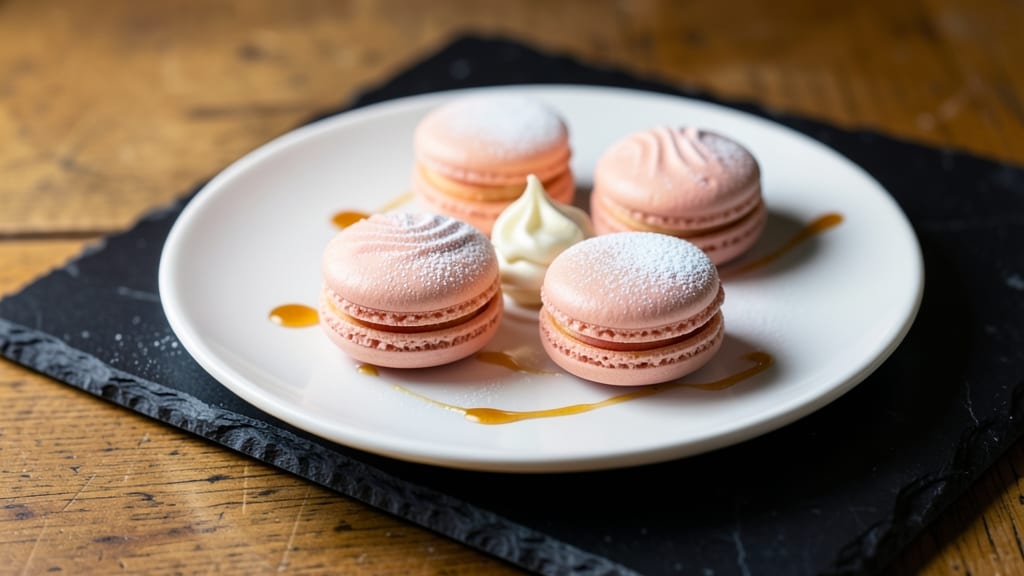
This 1-egg macaron recipe delivers crispy shells with a silky yolk center that's surprisingly foolproof for beginners. 💛 The secret lies in precise technique—whipping the egg whites to stiff peaks and carefully folding in the sweetened almond flour mixture.
I've perfected this method after years of baking experiments, ensuring consistent results every time.
What makes this recipe special is the balance between structure and tenderness. The shells develop a delicate crunch while maintaining a soft interior, all while using just one egg—a game-changer for those short on ingredients.
The yolk filling adds rich, velvety contrast that transforms these into decadent treats without requiring professional equipment.
By following the exact piping technique and baking time, you'll achieve perfectly rounded shells with smooth tops and crisp edges. The yolk center remains silky and flavorful, creating a texture that's both elegant and satisfying. This recipe proves you don't need complicated methods to achieve bakery-quality results at home.
Whether you're making them for a special occasion or simply indulging in a sweet treat, these macarons deliver professional-quality results with minimal effort. The key is patience—letting the shells rest before baking ensures they develop their signature structure and crispness.
Ingredients for 1 egg macaron
Precision ingredients for delicate shells and velvety yolk centers—no shortcuts needed.
| Ingredient | Amount | Notes |
|---|---|---|
| Large Egg 🥚 | 1 whole | Room temperature for best results |
| Granulated Sugar 🍚 | 1 cup | Superfine preferred for smooth texture |
| Almond Flour 🌰 | 1 ½ cups | Blanched, finely ground preferred |
| Cornstarch 🌾 | ¼ cup | Ensures crispy shells |
| Unsalted Butter 🧈 | ¼ cup | Softened, for yolk filling |
| Heavy Cream 🥛 | ¼ cup | Full-fat for richness |
| Egg Yolk 🥚 | 1 whole | Separated from white |
| Vanilla Extract 🌿 | ½ tsp | Pure, high-quality preferred |
| Diamond Crystal Kosher Salt 🧂 | ¼ tsp | Fine grain for delicate flavor |
| Food Coloring (optional) 🎨 | 2 drops | Gel-based for vibrant color |
| Powdered Sugar 🍚 | 1 cup | For dusting finished macarons |
The almond flour is non-negotiable for that signature macaron texture. Bob's Red Mill or Anthony's Goods brands deliver consistent quality—avoid pre-ground flour from bulk bins, as it lacks the fine particle size needed for smooth shells. If you can't find blanched almond flour, toast regular almond flour in a dry pan for 5 minutes to remove bitterness before grinding finely. The egg whites must be at room temperature—cold whites won't whip properly, and you'll end up with dense shells. Use a digital thermometer to confirm 70°F before starting.
Substitutions are tricky with macarons—compromises affect texture. Coconut flour can replace 25% of almond flour, but expect a denser shell. For the yolk filling, vegan butter and coconut cream work (reduce by 1 tbsp to account for moisture), though the texture will be slightly less rich. The vanilla extract? Madagascar Bourbon adds depth, but pure vanilla will suffice. Food coloring is optional—if omitting, add an extra 0.25 tsp cornstarch to the batter to maintain structure. And never, ever use cake flour as a cornstarch substitute; it introduces gluten and ruins the delicate crumb.
Store finished macarons in an airtight container with parchment between layers to prevent sticking. They'll keep for 3 days at room temperature, though the shells lose crispness after day 2. For longer storage, freeze the filled macarons (unfrosted) for up to 1 month
Why You'll Love This Recipe
- I’ll be real: almond flour isn’t cheap, but this recipe uses just enough to make it feel special without breaking the bank. One egg, a handful of sugar, and a stick of butter stretch farther than you’d think. Plus, the leftovers? They last for days, so you’re not scrambling to use them up before they dry out. That’s efficiency I can get behind.
- No Fuss, No Fail: Honestly, I’ve made macarons that looked like they belonged in a bakery—this isn’t one of them. But the beauty? You don’t need a scale, a siphon, or even a food processor. Just fold the almond flour, cornstarch, and sugar into the egg until smooth, then pipe (or drop) onto a sheet pan. That’s it. Even my "I can’t be bothered" days end with a batch.
- Butter-Soft Magic: Here’s what sold me—the butter. Not just any butter, but that moment when the baked shells cool just enough for the buttercream to sink in. The result? A shell that’s crisp on the outside but gives way to a tender, almost marshmallow-like center. It’s the kind of texture that makes you pause mid-bite, and trust me, you’ll want to pause often.
- Weeknight or Wowed Crowd: Between us, these are my secret weapon for when I need something impressive but don’t want to slave away. Whip up a batch for your book club, and no one will guess they took less than an hour. Or make a double batch on Sunday—store them in an airtight container, and you’ve got dessert covered for days. (Yes, even on a Tuesday night.)
Step-by-step instructions for 1 egg macaron recipe
Mastering these precise techniques ensures the signature crispy shells and silky yolk centers.
👨🍳 Step 1: Prepare the Macaronage Mixture
In a stand mixer fitted with the whisk attachment, combine the 1 whole Large Egg and 1 cup Granulated Sugar at room temperature. Whisk on medium-high speed for 3-4 minutes until the mixture forms a pale, glossy ribbon when the whisk is lifted—this indicates proper emulsification. The mixture should triple in volume and hold its shape briefly before dissolving back into the bowl.
I press the whisk against the bowl's side to check consistency—if it leaves a clean, glossy trail that slowly dissolves, you're ready. If it's too thick, add a few drops of water; if too thin, whisk in 1 teaspoon of the 1.5 cups Almond Flour. This step is critical for achieving those signature macaron shells.
👨🍳 Step 2: Incorporate Dry Ingredients and Color
With the mixer running on low speed, gradually add the 1.5 cups Almond Flour, 0.25 cup Cornstarch, 0.25 tsp Diamond Crystal Kosher Salt, and 0.5 tsp Vanilla Extract. Mix just until combined—about 30 seconds—to avoid developing gluten. The batter should be smooth and slightly thick, like pudding.
Add the 2 drops Food Coloring (optional) and mix for an additional 10 seconds until evenly distributed. For vibrant color, use gel-based food coloring and avoid overmixing. Here's the thing—this batter needs to be thick enough to hold its shape when piped but fluid enough to spread slightly on the baking sheet.
🍳 Step 3: Pipe and Rest the Macarons
Transfer the batter to a piping bag fitted with a ¼-inch round tip. Pipe 1-inch circles onto a parchment-lined baking sheet, spacing them 1 inch apart. Tap the sheet firmly on the counter 10-15 times to release air bubbles and create a smooth, flat surface. Let the macarons rest at room temperature for 30-60 minutes until a dry skin forms on top.
This resting period is non-negotiable—it allows the alcohol in the egg whites to evaporate, preventing cracked shells. You'll know they're ready when the edges feel firm to the touch and the tops no longer look wet. Real talk: Skipping this step leads to uneven baking and weak shells.
🔥 Step 4: Bake the Shells to Crispy Perfection
Preheat your oven to 300°F (convection if available) and bake the macarons for 15-18 minutes. Rotate the baking sheet halfway through for even baking. The shells are done when they're light golden and firm to the touch. They should release cleanly from the parchment with minimal resistance.
Don't overbake—they'll continue setting as they cool. Let them cool completely on the baking sheet before removing. This step is where the magic happens: 300°F ensures gentle, even baking that develops that signature crispy texture without burning the delicate shells.
🥘 Step 5: Prepare and Fill with Yolk Magic
In a small bowl, mix the 1 whole Egg Yolk, 0.25 cup Unsalted Butter (softened), 0.25 cup Heavy Cream, and 0.25 tsp Diamond Crystal Kosher Salt until smooth. This filling is the heart of your macarons—rich, silky, and perfectly balanced.
Using a small piping bag, pipe a ½-inch dot of filling onto the flat side of each cooled macaron shell. Press a second shell on top to create a sandwich. Dust the tops with 1 cup Powdered Sugar using a fine-mesh sieve for that classic macaron finish. Chill for 1 hour before serving to let the filling set.
Pro Tips For Making 1 Egg Macaron
- STRAIN THE EGG WHITE: No, you don’t need a fine-mesh sieve—just fold a square of cheesecloth into a cone and pour the egg white through it. I learned this the hard way after struggling with clumpy meringue from unstrained whites. It’s worth the 30-second effort, especially when you’re working with just one egg.
- WEIGH THE ALMOND FLOUR: Scooping almond flour leads to inconsistent batches—this recipe is picky about ratios. Use a kitchen scale for precise measurements (aim for 100g). I was skeptical until I tried it; the texture difference is noticeable, and you won’t end up with a dense, crumbly mess.
- REST THE BATTER 30 MINUTES: Skip this, and you’ll get uneven shells that crack or collapse. Let the batter sit uncovered in the fridge—this helps the air bubbles rise and the sugar dissolve properly. I used to rush it, but now I treat it like a good wine: patience pays off.
- USE ROOM-TEMP BUTTER: Cold butter from the fridge won’t emulsify smoothly, and you’ll end up with greasy shells instead of a clean, glossy finish. Let it soften to 65°F (about 20 minutes out of the fridge) before mixing. Sounds weird, but it works—your shells will look and taste better.
Wine and beer pairings for this recipe
Wine Pairings
For these delicate macarons, I reach for dry sparkling wines like Champagne or Prosecco—their crisp acidity and effervescence mirror the shells' crisp texture while cleansing the palate between bites.
A Brut Champagne from Moët & Chandon or Laurent-Perrier provides the perfect balance, with its green apple and citrus notes complementing the vanilla and almond flavors. 🍷
If you prefer still wines, a dry Riesling with its bright acidity and hints of peach works beautifully. Look for German Rieslings like Dr. Loosen Blue Slate—their mineral notes enhance the macarons' nutty undertones without overpowering the delicate filling.
Beer Pairings
A crisp Belgian Witbier like Hoegaarden or Stella Artois offers a refreshing contrast with its coriander and citrus notes. The effervescence cuts through the richness of the yolk filling, making each bite feel fresh.
For a darker option, try a light German Pilsner such as Warsteiner—its clean, grassy profile won't compete with the macarons' flavors.
Craft beer lovers should try a hazy IPA with low bitterness, like Hazy Little Thing from Tree House Brewing. The juicy hop flavors add a fun, unexpected twist that pairs surprisingly well with the sweetness. Just avoid overly hoppy or malty beers—they'll overpower the delicate macaron.
Non-Alcoholic Options
For a sparkling alternative, San Pellegrino Aranciata or Fever-Tree Blood Orange Soda bring vibrant citrus notes that enhance the vanilla and almond flavors. The carbonation mimics wine's cleansing effect, making it a perfect match for the crisp shells. 🥤
Herbal teas like jasmine green tea or Earl Grey with a splash of lemon provide aromatic contrast without alcohol. Serve them chilled to highlight the tea's floral notes against the macarons' rich filling.
For a creamy option, try vanilla chai latte—the warm spices complement the macarons' vanilla and butter flavors beautifully.
Nutrition facts
Frequently asked questions
Why does my macaron batter look too thin or too thick?
If your batter is too thin, it needs more almond flour—add 1 teaspoon at a time while mixing on low speed. Too thick? Add 2-3 drops of water and mix gently. The ideal consistency should resemble pudding and hold its shape when piped. Remember, the batter should flow slightly when tapped but not spread excessively on the baking sheet.
How do I fix cracked macaron shells?
Cracks usually happen when air bubbles form during the resting phase. To prevent this, tap the baking sheet firmly 10-15 times after piping to release air, and ensure your batter has rested 30-60 minutes until a dry skin forms. If cracks already appear, bake them anyway—the filling will still taste delicious, and you can cover cracks with extra powdered sugar for presentation.
Can I make these macarons without a stand mixer?
Yes! Use a hand mixer or even a whisk—just whip the egg whites and sugar vigorously for 5-7 minutes until glossy. For the dry ingredients, fold them in gently with a spatula to avoid overmixing. The key is patience: whisk until the mixture forms ribbons when the whisk is lifted, just like with a stand mixer.
What’s the best way to store leftover macaron shells?
Store unbaked shells in an airtight container with parchment between layers for up to 3 days at room temperature. Baked shells keep for 5 days but lose crispness after 2 days. For longer storage, freeze filled macarons (unfrosted) for 1 month
How do I adjust the recipe for a nut-free version?
Replace almond flour with 1.5 cups gluten-free oat flour or 1 cup coconut flour + 0.5 cup tapioca starch. Note that texture will differ—expect slightly denser shells. For the filling, use a coconut cream-based ganache instead of the yolk mixture. Always test small batches first to adjust consistency.