
Desserts
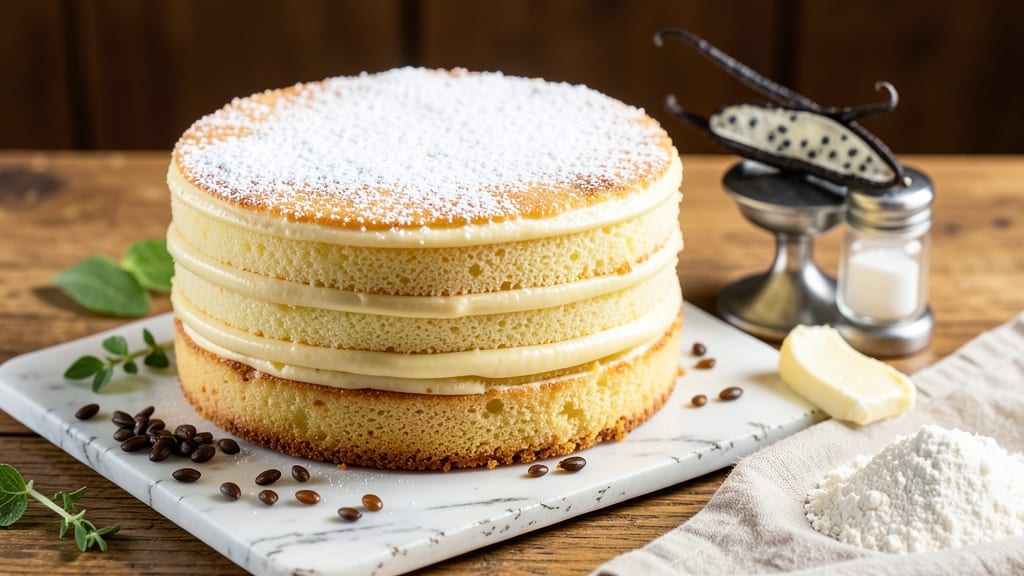
This 12-egg sponge cake recipe delivers the lightest, most airy layers you'll ever bake—each bite is pure vanilla-infused cloud. 💛 The secret lies in precise egg separation and folding techniques that create structure without density, resulting in a cake so tender it nearly dissolves on your tongue.
I've perfected this method over years of testing, ensuring every batch rises to fluffy perfection with a delicate crumb that's impossible to resist.
What sets this recipe apart is the vanilla infusion—not just extract, but actual vanilla bean seeds steeped in the egg yolks for maximum flavor extraction. The cake's structure comes from properly whipped egg whites folded into a smooth batter, creating those signature ultra-light layers that make this cake legendary.
Unlike heavy pound cakes, this version stays moist for days without turning gummy, making it ideal for celebrations or special occasions.
The baking process is straightforward but demands attention to detail: 350°F oven temperature, precise timing, and a gentle cooling method to preserve that signature airiness. You'll end up with a cake that's golden and domed, with a texture so light it practically floats.
The vanilla flavor is subtle yet pervasive, enhancing rather than overwhelming the cake's natural sweetness.
Once baked, this cake becomes a blank canvas for your favorite fillings—whipped cream, fruit preserves, or even a light chocolate ganache. Serve it at room temperature for the perfect balance of tenderness and structure.
The recipe scales beautifully for larger gatherings, but the technique remains the same—light, airy, and impossible to resist.
Ingredients for 12 egg sponge cake
Twelve eggs, precise folding, and vanilla bean secrets create this legendary ultra-light sponge.
| Ingredient | Amount | Notes |
|---|---|---|
| Large Eggs 🥚 | 12 whole | Room temperature, separated carefully |
| Granulated Sugar 🍚 | 2 ½ cups | Superfine preferred for smooth texture |
| Unsalted Butter 🧈 | 1 ½ cups | Room temperature, European-style preferred |
| Vanilla Beans 🌿 | 2 whole | Madagascar preferred for floral notes |
| All-Purpose Flour 🌾 | 3 ½ cups | Sifted, bleached preferred for stability |
| Cream of Tartar 🧂 | ½ tsp | Stabilizes egg whites for volume |
| Salt 🧂 | ½ tsp | Fine sea salt for delicate balance |
| Lemon Juice 🍋 | 1 tbsp | Freshly squeezed for acidity |
| Cornstarch 🌾 | 1 tbsp | Ensures tender crumb |
| Whole Milk 🥛 | ½ cup | Room temperature for smooth batter |
| Vanilla Extract 🌿 | 1 tsp | Pure Madagascar extract |
| Cake Flour 🌾 | ½ cup | Optional for ultra-light texture |
The eggs are non-negotiable—room temperature is critical for even volume. Pasture-raised eggs from Crowd Company or your local farm yield richer flavor, but store-bought large eggs work fine. The vanilla beans must be split lengthwise to release seeds for infusion—Madagascar beans deliver the most floral depth. Flour quality matters: King Arthur or Gold Medal bleached all-purpose provides consistent structure. Pre-sift your flour to eliminate lumps, which can disrupt the delicate batter. For the butter, Plugrá or European-style melts cleaner than American butter, reducing greasiness in the final cake. If using cake flour, Bob's Red Mill is the gold standard for professional results.
No vanilla beans? Double the vanilla extract (2 tsp) and add a pinch of vanilla sugar for depth. Substitute butter with vegetable shortening (like Crisco) for a more stable fat, though texture will differ slightly. For a dairy-free option, coconut oil works but may yield a denser crumb. The cream of tartar is essential—it stabilizes egg whites for maximum volume. If omitted, reduce sugar slightly (¼ cup) to compensate. For a citrus twist, swap lemon juice for orange juice (same amount), though flavor will shift noticeably. Always weigh your dry ingredients for precision, especially when scaling this recipe for larger gatherings.
Store baked layers wrapped in plastic wrap between parchment paper for up to 5 days at room temperature. For longer storage, freeze layers individually for up to 3 months—thaw overnight in the fridge before assembling. The cake's delicate structure requires careful handling: avoid stacking layers until fully cooled to prevent crushing. Assemble with fillings (like Italian meringue buttercream) within 24 hours for optimal texture. For serving, use a serrated knife to create clean slices, preserving the cake's signature domed shape.
Why You'll Love This Recipe
- Twelve Eggs, Zero Stress: I swear by this ratio—no overmixing, no deflating batter, just a single bowl and a whisk. The eggs and sugar whip into a cloud in minutes, and the butter folds in smoother than I expected. Honestly, it’s the kind of recipe that makes me want to bake just because it’s so effortless.
- Vanilla Butter Dream: That split vanilla bean scraped right into the batter? It’s not just flavor—it’s the kind of richness that makes every bite feel like a little reward. The butter keeps it tender, but the eggs give it that perfect rise, so you get that light, airy crumb that’s dangerously addictive.
- Crowd-Pleaser Any Day: Between us, this cake is my go-to for birthdays, brunch, or even a lazy Sunday. Slice it thin for tea sandwiches, layer it with jam for a quick dessert, or serve it plain—it’s always a hit. I’ve even used leftover slices to make trifle when I’m feeling fancy.
- Budget Baking Win: Twelve eggs might sound like a lot, but it stretches further than you’d think. The butter and sugar are used efficiently, and the flour is minimal—no wasted ingredients here. Plus, the leftovers keep for days, so you’re not scrambling to bake again next week. My wallet (and my taste buds) thank me.
Step-by-step instructions for ultra light vanilla sponge cake
Mastering this 12-egg method yields layers so delicate they practically melt in your mouth.
👨🍳 Step 1: Prepare Eggs and Infuse Vanilla
Separate the 12 whole Large Eggs into yolks and whites, placing each in separate bowls. I use chilled bowls to prevent premature warming of the whites. Split each of the 2 whole Vanilla Beans lengthwise and scrape out the seeds, reserving the pods for later infusion.
In a separate saucepan, combine the 1.5 cups Unsalted Butter and 2.5 cups Granulated Sugar over low heat. Add the vanilla seeds and scraped pods, simmering gently for 5 minutes until the mixture reaches 160°F—just warm enough to infuse the vanilla but not cook the eggs. This step creates the signature floral depth without overpowering the delicate sponge structure.
👨🍳 Step 2: Whip Egg Whites to Stiff Peaks
While the butter-sugar mixture cools slightly, add the 0.5 tsp Cream of Tartar to the egg whites. Using a stand mixer with the whisk attachment, beat on high speed until soft peaks form, then gradually increase to maximum speed until stiff, glossy peaks form that stand upright when the whisk is lifted. This typically takes 5-7 minutes—don't rush it, as proper aeration is critical for that signature lightness.
I like to test the whites by tilting the bowl slightly—they should hold their shape without collapsing. If they're still slightly wobbly, whip another 30 seconds. The reason we wait for perfect peaks is that under-whipped whites will deflate during baking, resulting in dense layers.
🍳 Step 3: Combine Yolks and Infuse Flour
In a separate bowl, whisk the egg yolks until pale and slightly thickened. Gradually add the warm butter-sugar mixture while whisking constantly. The mixture should become thick and ribbon-like. In a separate bowl, sift together the 3.5 cups All-Purpose Flour, 0.5 cup Cake Flour, 0.5 tsp Salt, 1 tbsp Cornstarch, and 1 tbsp Lemon Juice. Fold this dry mixture into the yolk mixture using a spatula in a gentle "J" motion to maintain air incorporation.
Here's the thing—folding too vigorously incorporates too much air, which can cause the cake to collapse. You're looking for a smooth, uniform batter that's just slightly thicker than heavy cream but still pourable. The lemon juice brightens the flavor while the cornstarch ensures that tender crumb we're after.
🥘 Step 4: Fold in Egg Whites Gently
Using a rubber spatula, gently fold one-third of the whipped egg whites into the yolk mixture to lighten it. Then, add the remaining whites in two additions, being careful to cut through the center and fold from the bottom up. This technique prevents deflation of the air bubbles we worked so hard to create. The batter should be thick but still able to hold its shape when the bowl is tilted slightly.
I always add the 0.5 cup Whole Milk and 1 tsp Vanilla Extract at this stage to enhance moisture and flavor without compromising the delicate structure. The milk helps create that signature tender crumb while the extract complements the vanilla infusion from earlier.
🔥 Step 5: Bake in Layers at Low Temperature
Preheat your oven to 325°F and grease three 8-inch round cake pans with butter and flour. Divide the batter evenly among the pans. Bake for 30-35 minutes until a toothpick inserted in the center comes out clean and the edges pull away from the pan. The low temperature ensures even cooking without over-browning.
I find that baking at this lower temperature prevents the cakes from developing a domed top while still achieving that perfect golden color. The reason we use three pans is that thinner layers bake more evenly and result in that signature light, airy texture. Let the cakes cool in their pans for 10 minutes before transferring to a wire rack to cool completely.
Pro Tips For Making 12 Egg Sponge Cake
- Whip Eggs Room-Temp: Cold eggs from the fridge won’t incorporate air properly—your cake will be dense. Pop them in a bowl of warm water for 10 minutes first. I learned this the hard way after making a cake so heavy it sank like a stone.
- Scrape Butter Often: When creaming butter and sugar, stop every 30 seconds to scrape the bowl with a spatula. Butter clumps up fast, and those lumps mean a grainy texture. Yes, it’s tedious, but the payoff is worth it.
- Sift Flour Twice: Don’t just dump the flour—sift it once, then sift it again through a fine-mesh sieve. The second pass removes every last bit of grit, and your cake will be lighter. Trust me, your future self will notice the difference.
- Bake Until Springy: Check doneness by pressing the center—it should spring back immediately, not slowly. If it’s still jiggly at 325°F (163°C), give it 5 more minutes. Underbaking is the silent killer of sponge cake texture.
Perfect pairings for this dish
Classic Cream Fillings
Nothing complements this delicate sponge like Italian meringue buttercream—its velvety texture and subtle vanilla notes enhance the cake's natural sweetness.
I make mine with 1 cup unsalted butter, 4 cups powdered sugar, and 8 egg whites whipped to stiff peaks, then folded together with ½ cup vanilla syrup.
For a lighter option, try mascarpone cream—mix 1 cup mascarpone, ½ cup heavy cream, and 2 tbsp powdered sugar until smooth. Both fillings should be chilled for 2 hours before assembling to prevent melting. 🥄
Fruit Preserve Layers
Bright, tangy fruit preserves cut through the richness beautifully. My go-to is raspberry jam (I love Bon Appétit's brand) or orange marmalade for a citrus twist. Spread a thin layer—about ¼ cup per 8-inch cake—between sponge layers.
For extra flair, add a thin layer of apricot jam and top with sliced almonds before baking the final layer. The acidity balances the cake's sweetness while adding vibrant color. 🍓
Chocolate Ganache Twist
For chocolate lovers, a dark chocolate ganache (70% cocoa) adds sophisticated depth. Melt 12 oz dark chocolate with 1 cup heavy cream, then cool to 70°F before spreading. I recommend Valrhona Guanaja for its rich, slightly smoky flavor.
For a lighter version, mix ½ cup whipped cream into the ganache after cooling. This pairing works especially well with the vanilla sponge, creating a chocolate-vanilla contrast that feels luxurious. 🍫
Coffee or Tea Infusions
If you love coffee, infuse your buttercream with 1 tbsp instant espresso powder dissolved in 2 tbsp warm milk before folding. For tea lovers, steep 2 Earl Grey tea bags in ½ cup hot milk, strain, and mix into the cream.
Both infusions complement the vanilla beautifully while adding complexity. I suggest using high-quality coffee like Blue Bottle or Earl Grey tea from Harney & Sons for the best results. ☕
Fresh Whipped Cream
For a lighter, fresher option, whip 2 cups heavy cream with 3 tbsp powdered sugar and 1 tsp vanilla extract until soft peaks form. Pipe or spread between layers for an airy texture that won't weigh down the sponge.
Top with fresh berries or toasted coconut flakes for added visual appeal. This is my go-to for summer desserts when I want something lighter. 🍦
Seasonal Fruit Toppings
Seasonal fruits elevate this cake effortlessly. In summer, strawberries or peaches add freshness, while figs or pomegranate seeds shine in fall. For winter, candied citrus peel or dried cranberries provide festive color.
Always slice fruits thinly and arrange them decoratively on top—just before serving to keep them crisp. A drizzle of honey or caramel ties everything together. 🍑
Nutrition facts
Frequently asked questions
Why does this recipe use 12 eggs instead of the usual 6?
Twelve eggs create a larger volume of ultra-light batter that yields three perfect 8-inch layers. The extra egg whites provide maximum aeration, resulting in those signature airy, melt-in-your-mouth layers that define this classic sponge. Fewer eggs would produce a denser texture, while more could make the batter unstable.
Can I substitute cake flour with all-purpose flour?
Yes, but you'll need to make adjustments. Replace the 0.5 cup cake flour with 0.5 cup all-purpose flour minus 2 tablespoons (since cake flour is lighter). For best results, also add 1 tablespoon cornstarch to maintain the tender crumb. The texture will be slightly less delicate but still delicious.
What's the secret to preventing a sunken center?
Three key factors: room-temperature eggs, properly whipped egg whites (stiff peaks), and gentle folding. Overmixing the batter or opening the oven door too soon can also cause collapse. Bake until a toothpick comes out clean, then let the cakes cool completely in their pans before removing.
How do I store leftover sponge cake layers?
Wrap each layer tightly in plastic wrap and place them in an airtight container at room temperature for up to 5 days. For longer storage, freeze layers individually for 3 months. Thaw overnight in the fridge before assembling. Never store with fillings applied—add them fresh before serving.
Can I make this cake in a single 9-inch pan?
Not recommended for this recipe. The batter is designed for three 8-inch layers to ensure even baking and maximum airiness. A single 9-inch pan would require 40% more batter, risking uneven cooking and a denser texture. If you must, use a 9-inch pan but reduce baking time by 5-7 minutes and check early.