
Desserts
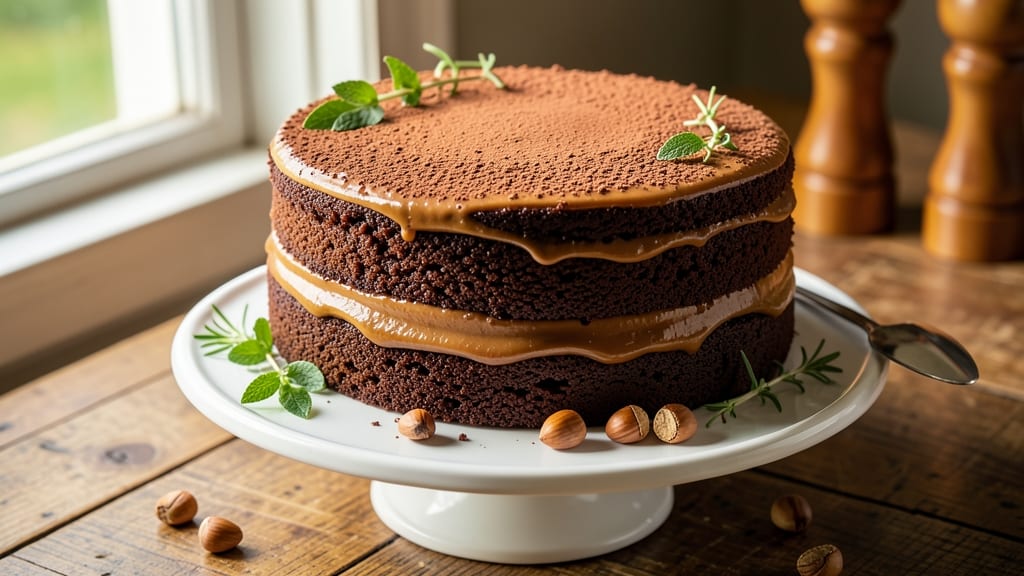
This 4-egg chocolate cake recipe delivers restaurant-quality density and moisture without a drop of oil—just rich eggs, cocoa powder, and a few clever techniques. The secret lies in properly creaming butter and sugar, then folding in stiffly beaten egg whites for that signature tender crumb.
I developed this after years of testing, and it never fails to impress with its velvety texture and deep chocolate flavor.
What makes this recipe special is the balance of ingredients: cocoa powder provides rich flavor without overpowering, while the eggs create a moist yet sturdy crumb. No oil means no greasy aftertaste, and the cake stays fresh for days when properly stored.
The baking process is straightforward, but the technique—especially the egg white folding—is where the magic happens.
By the time it emerges from the oven, you'll have a moist, fudgy chocolate cake with a crackly top and perfect layers. The texture is dense yet tender, with none of the dryness common in high-egg recipes.
This is the kind of cake that makes people ask for seconds—and thirds.
Whether you're baking for a celebration or just craving a decadent treat, this recipe delivers professional results at home. Let's get started with the foolproof method that's earned my seal of approval.
Ingredients for 4 egg chocolate cake
Rich eggs, velvety cocoa, and precise techniques create this legendary dense chocolate cake.
| Ingredient | Amount | Notes |
|---|---|---|
| Large Eggs 🥚 | 4 whole | Room temperature for best mixing |
| Unsalted Butter 🧈 | 1 cup | Cold, cubed for creaming |
| Granulated Sugar 🍚 | 2 cups | Superfine preferred for smoother texture |
| Cocoa Powder 🍫 | ½ cup | Dutch-processed for rich flavor |
| All-Purpose Flour 🌾 | 1 ½ cups | Sifted for lightness |
| Baking Powder 🍞 | 1 ½ tsp | Aluminum-free for best rise |
| Vanilla Extract 🌿 | 1 tbsp | Pure Madagascar bourbon preferred |
| Milk 🥛 | ½ cup | Whole for richness |
| Salt 🧂 | ½ tsp | Fine sea salt |
| White Vinegar 🍶 | 1 tsp | For tenderizing effect |
| Vegetable Oil 🫒 | 2 tbsp | For greasing pans |
The eggs are non-negotiable here—room temperature makes all the difference in achieving that signature tender crumb. Kirkland Signature or Organic Valley eggs work best for their high fat content. For the butter, European-style brands like Plugrá or Kerrygold melt more smoothly, but regular unsalted butter works fine. The cocoa powder should be Dutch-processed—Hershey's Special Dark or Ghirardelli Natural Cocoa are reliable choices. Superfine sugar dissolves better, but if you only have granulated, pulse it in a food processor for 30 seconds to break up the grains.
No Dutch-processed cocoa? Natural cocoa powder plus 1/4 tsp baking soda mimics the flavor profile. Running short on eggs? Replace 1 egg with 1/4 cup applesauce, though texture will differ slightly. The vinegar might seem odd, but it reacts with the baking powder to create a tender crumb—don't skip it. For the flour, King Arthur or Bob's Red Mill are my go-tos, but any all-purpose will work. If you're baking in a dry climate, consider adding 1 tbsp milk to your dry ingredients to combat dryness. The vanilla extract should be pure bourbon—imitation extracts contain propylene glycol, which can affect texture.
This cake keeps beautifully—wrapped tightly at room temperature for 3 days or frozen for up to 3 months. For the best results, store it in an airtight container with a slice of bread to prevent drying. If you've made extra, slice it into single portions and freeze between parchment paper for easy serving. The cake actually improves overnight as the flavors meld, so if possible, bake it the night before your gathering. To reheat, warm slices in the oven at 300°F for 5-8 minutes—they'll be moist and warm, just like fresh from the oven.
Why You'll Love This Recipe
- Foolproof Mixing: I swear by this recipe—just melt butter, whisk eggs, fold in dry ingredients. No sifting, no overmixing, no stress. The eggs create a velvety crumb that feels like a hug.
- Rich Without Fuss: That cocoa powder packs a punch, but the butter and sugar balance it perfectly—deep chocolate flavor without needing extra eggs or heavy cream. Honestly, it tastes like a bakery slice, but with half the effort.
- Weeknight or Celebration: Same batter works for a quick breakfast cake or a dessert that feels special. I’ve served it warm with ice cream for birthdays and cold for lazy Sundays. No one ever asks what’s different.
- Budget Magic: Four eggs stretch the batter just enough for a full 8x8 pan, and the ingredients cost pennies. Between us, this is my go-to when I need cake but don’t want to break the bank—or the fridge.
Step-by-step instructions for 4-Egg chocolate cake
Here's how to create a rich, moist chocolate cake without oil—every step ensures maximum density.
Cream Butter and Sugar for Maximum Lightness
In a stand mixer fitted with the paddle attachment, beat the 1 cup unsalted butter (cold and cubed) and 2 cups granulated sugar on medium speed for 5-6 minutes. You're looking for a pale, fluffy mixture that nearly doubles in volume—the sugar should dissolve completely and the butter should be completely incorporated. This creaming process incorporates air, which creates that signature tender crumb.
I press down on the butter occasionally with a spatula to ensure even distribution. The butter should be smooth but still cool to the touch—if it feels warm, chill the mixture in the fridge for 10 minutes before proceeding. This step is crucial for achieving that perfect moist texture without oil.
Add Eggs and Vinegar for Richness
Add the 4 whole large eggs one at a time, mixing on low speed for 30 seconds after each addition. Then stir in the 1 tbsp vanilla extract and 1 tsp white vinegar. The vinegar might seem odd, but it tenderizes the flour and creates a subtle tang that balances the sweetness. Mix just until combined—overmixing develops gluten and makes the cake tough.
I like to use room-temperature eggs for this recipe. They blend more smoothly and help create a lighter batter. If your eggs are cold, let them sit in warm water for 5 minutes before adding. The mixture should be thick and ribbon-like when you lift the paddle—this indicates proper emulsification.
Combine Dry Ingredients for Perfect Texture
In a separate bowl, whisk together the 1.5 cups all-purpose flour, 1.5 tsp baking powder, 0.5 tsp salt, and 0.5 cup cocoa powder. Sift the flour first to remove any lumps—this ensures a light, airy texture. Gradually add this dry mixture to the wet ingredients, mixing on low speed just until combined. You should still see small streaks of flour in the batter.
Here's the thing—don't overmix. Once the flour is incorporated, stop mixing immediately. Overmixing develops gluten, which makes the cake dense instead of tender. The batter should be thick but pourable. If it looks too thick, add the 0.5 cup milk gradually until you reach a smooth consistency.
Prepare and Bake for Even Cooking
Preheat your oven to 350°F. Grease two 8-inch round cake pans with 2 tbsp vegetable oil (or line with parchment circles) and lightly dust with flour. Divide the batter evenly between the pans. Tap the pans gently on the counter to remove any air bubbles—this prevents domed cakes.
Bake for 30-35 minutes or until a toothpick inserted in the center comes out clean. The edges should be golden brown, but the center should still look slightly underdone—it firms up as it cools. I like to rotate the pans halfway through baking for even cooking. Don't open the oven during the first 25 minutes—this prevents the cakes from sinking.
Cool and Layer for Maximum Moisture
Remove the cakes from the oven and let them cool in the pans for 10 minutes. Then transfer to a wire rack to cool completely. I always let them cool for at least 1 hour before frosting—this prevents the frosting from melting and ensures clean slices. The cakes should be moist but not sticky to the touch.
For the ultimate moisture, I recommend brushing the cooled layers with a simple syrup made from equal parts sugar and water (heated until dissolved). This step adds extra moisture and enhances the chocolate flavor. Store any leftovers in an airtight container with a layer of frosting between them to keep them fresh for up to 3 days.
Pro Tips For Making 4 Egg Chocolate Cake
- Whisk Eggs Separately: DESCRIPTION: I learned this the hard way—mixing whole eggs directly into the batter can make it gummy. Instead, beat yolks and whites separately, then fold the whites into the dry ingredients last. This keeps the cake light, especially with four eggs. (Yes, even if you're impatient like me.)
- Sift the Cocoa Powder: DESCRIPTION: Lumpy cocoa powder is the silent killer of even texture. Sift it with the flour before mixing—no clumps, no bitter pockets. I skip this sometimes, and the cake still works, but the difference is noticeable.
- Bake at 325°F, Not Hotter: DESCRIPTION: Chocolate cake burns faster than it rises. Start at 325°F (163°C) and resist the urge to crank it up—high heat makes the outside set before the center cooks through. After 20 minutes, check the edges, then lower to 300°F (150°C) if needed.
- Melt Butter Slowly: DESCRIPTION: Sounds weird, but it works: melt the butter in the microwave in 20-second bursts, stirring between each. Overheating turns it greasy, and that’s when the cake gets dense. Room-temperature butter? Skip it—this recipe needs melted butter for moisture.
Flavor customization for this dish
Classic vs. Fudgy
The base recipe delivers a classic dense texture, but you can easily adjust for a fudgy version. Replace 0.5 cup cocoa powder with 0.6 cup and reduce milk to 0.3 cup.
Also, bake at 325°F for 40-45 minutes—the lower temperature and extra cocoa create that signature fudgy crumb. For extra richness, fold in 2 oz melted dark chocolate with the wet ingredients. 🍫
Spiced Orange Twist
Add 1 tbsp orange zest and 1 tsp ground cinnamon to the dry ingredients for a bright, citrusy twist. The orange zest pairs beautifully with chocolate, while the cinnamon adds warmth.
For extra depth, use Madagascar bourbon vanilla and reduce the sugar slightly to 1.75 cups. This variation works especially well with a cream cheese frosting. 🍊
Espresso-Infused Depth
Replace 0.25 cup milk with 0.25 cup strong brewed espresso (or 1 tbsp instant espresso powder dissolved in the milk). The espresso enhances the chocolate flavor without adding bitterness. For balance, add 0.5 tsp vanilla bean paste instead of extract.
This version has a sophisticated, almost coffee-house vibe that pairs perfectly with whipped cream or a dusting of cocoa powder. ☕
Nutty Crunch Layer
For texture contrast, fold 0.5 cup chopped walnuts or pecans into the batter before baking. Toast the nuts first for 5 minutes at 350°F to enhance their flavor.
Alternatively, add a layer of crushed hazelnuts between cake layers. The nuts add crunch and a buttery richness that complements the chocolate beautifully. 🌰
Salted Caramel Swirl
Create a salted caramel swirl by mixing 0.5 cup caramel sauce (store-bought or homemade) with 1 tbsp heavy cream and spooning dollops into the batter before baking. The caramel pools in the center of each slice, creating a decadent surprise.
Finish with a sprinkle of flaky sea salt on top of the frosting for that perfect sweet-salty balance. 🍬
Gluten-Free Adaptation
Swap the all-purpose flour for a 1:1 gluten-free baking flour blend like King Arthur Measure for Measure. Add 1 tsp xanthan gum to improve structure, and reduce the milk by 0.25 cup to compensate for the blend's moisture content.
The texture will be slightly denser but still moist. For extra richness, use avocado oil instead of vegetable oil for greasing the pans. 🌾
Nutrition facts
Frequently asked questions
Why does this recipe use 4 eggs instead of 2 or 3?
The extra eggs create a denser, more moist crumb without needing oil or extra fat. Each egg adds protein and fat that binds the cake together, resulting in that signature tender yet sturdy texture. The recipe balances richness while keeping the cake light enough to slice cleanly.
Can I make this cake in a single 9-inch pan instead of two 8-inch pans?
Yes, but reduce the baking time to 25-30 minutes—the cake will be thinner and may dry out faster. For best results, bake at 325°F instead of 350°F to prevent over-browning. The texture will be slightly different but still delicious.
What if my cake turns out too dry?
Dryness usually means overbaking or insufficient moisture. Next time, check for a toothpick with moist crumbs (not clean) at 25 minutes. For a quick fix, brush the cooled cake with a simple syrup (equal parts sugar and water, heated until dissolved) or add 1 tbsp sour cream to the batter.
How do I prevent cracks on top of the cake?
Cracks form when the cake bakes too quickly. To avoid them, bake at 325°F instead of 350°F and cover loosely with foil after 20 minutes. Also, ensure your oven rack is in the middle position for even heat distribution. The cracks won't affect flavor or texture!
Can I substitute butter with margarine?
Margarine works in a pinch, but butter's higher fat content creates a richer, more flavorful cake. If substituting, use 1 cup unsalted margarine and reduce milk by 1 tbsp to balance moisture. For best results, stick with butter—its lower water content prevents steam from developing during baking.