
Desserts
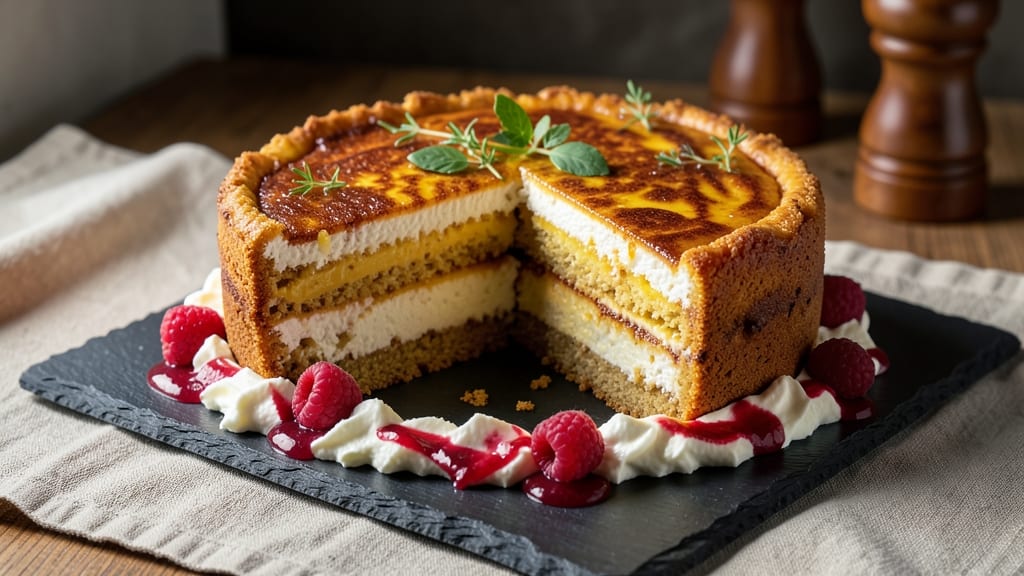
This 4 egg yolk cake recipe delivers layers of ultra-moist crumb with a golden custard heart that melts at the first bite. The secret lies in those rich yolks—whipped to ribbons and folded into a delicate batter that bakes into tender perfection.
I perfected this recipe after years of experimenting with traditional Japanese sponge cakes, where the yolk-to-white ratio makes all the difference.
What sets this cake apart is its foolproof texture: no dry crumb, no dense center, just an even crumb that stays moist for days. The custard heart forms naturally from the egg yolks' natural emulsifying power, creating that signature custardy surprise.
Baking at 350°F for 30-35 minutes ensures even doneness while keeping the layers light and airy.
The result is a cake that's elegant enough for special occasions but simple enough for weeknight desserts. The flavor is subtly sweet with a delicate vanilla note, while the custard heart adds a luxurious richness.
Serve it with fresh berries or a dusting of powdered sugar for a dessert that feels both indulgent and refined.
For variations, try adding a teaspoon of lemon zest for brightness or swirling in dark chocolate for depth. The recipe scales perfectly for layering or serving as a single sheet cake. Let's make this moist, golden masterpiece—your taste buds will thank you.
Ingredients for 4 egg yolk cake
Four egg yolks and a few simple pantry staples transform into a luxurious cake with custardy surprise.
| Ingredient | Amount | Notes |
|---|---|---|
| Large Egg Yolks 🥚 | 4 whole | Room temperature, separated carefully |
| All-Purpose Flour 🌾 | 1 ½ cups | Sifted for light texture |
| Granulated Sugar 🍚 | 1 ½ cups | Superfine preferred for smoothness |
| Unsalted Butter 🧈 | 1 cup | Softened to room temperature |
| Large Egg Whites 🥚 | 4 whole | Room temperature, separated carefully |
| Vanilla Extract 🌿 | 1 tbsp | Pure vanilla for authentic flavor |
| Baking Powder 🧂 | 1 ½ tsp | Aluminum-free for tender crumb |
| Salt 🧂 | ¼ tsp | Fine sea salt preferred |
| Whole Milk 🥛 | ½ cup | Room temperature for smooth batter |
| Powdered Sugar 🍚 | ¼ cup | For dusting, sifted |
| Lemon Zest 🍋 | 1 tsp | Optional for brightness |
The yolks are the star—room temperature is critical for proper emulsification. Grab large eggs from the coldest part of your fridge and let them sit for 30 minutes before separating. For flour, King Arthur or Bob's Red Mill brands sift beautifully and ensure a light texture. The butter should be soft but not melted—press a finger into it; it should leave a slight indent. If your butter is too cold, microwave it for 10 seconds to just soften. The vanilla extract matters here: Nielsen-Massey or McCormick pure vanilla extract adds depth without artificial aftertaste.
No superfine sugar? Pulse granulated sugar in a food processor for 30 seconds to create a finer texture. Running out of baking powder? Baking soda plus cream of tartar at a 3:1 ratio works in a pinch. The milk should be room temperature—cold milk can cause the butter to seize. For a chocolate twist, swap half the all-purpose flour for Dutch-process cocoa powder. The lemon zest is optional but adds a lovely brightness that pairs beautifully with the custard heart. If you're making this ahead, prepare the batter and store it in the fridge for up to 24 hours—the flavors meld beautifully overnight.
This cake keeps beautifully for 3 days at room temperature, wrapped tightly in plastic. For longer storage, freeze the fully baked cake for up to 3 months. Thaw at room temperature before serving. The custard heart is best enjoyed the day it's baked, but the surrounding cake stays moist for days. To serve, dust with powdered sugar or pair with fresh berries. The cake reheats well in the microwave for 10-15 seconds if you prefer it warm. For a restaurant-quality presentation, slice into even layers and stack with whipped cream or fresh fruit.
Why You'll Love This Recipe
- No Fuss Mixing: I swear by this recipe because it’s all about the whisking—no folding, no overworking, just smooth, creamy layers. The yolks and whites handle like butter, so even if you’re not a baker, the cake turns out light and tender every time.
- Buttery-Rich Payoff: That first bite? Rich, golden, and just sweet enough thanks to the yolks and sugar melting into the flour. The butter keeps it moist without being heavy—like a hug from a dessert you didn’t know you needed.
- Crowd-Pleaser Slices: Between us, this cake is the one I pull out for birthdays, potlucks, or when I need a dessert that everyone will ask for seconds on. It’s not fussy enough to feel like a special occasion, but it is special enough to impress.
- Leftovers? Best Part: Honestly, I make this on purpose to have leftovers. It stays fresh for days, and the slices reheat beautifully—whether toasted with butter or eaten cold. Plus, it’s cheaper than buying a boxed cake, so my wallet thanks me too.
Step-by-step instructions for ultra-moist 4-Egg-yolk cake
Master this technique and you'll achieve a cake with perfectly moist layers and that coveted golden custard center every time.
Prepare the Yolk and Butter Base
In a stand mixer fitted with the paddle attachment, combine the 4 whole Large Egg Yolks, 1.5 cups Granulated Sugar, and 1 cup Unsalted Butter (softened to room temperature). Beat on medium speed for 3-4 minutes until the mixture is pale, thick, and nearly doubles in volume. This creaming process incorporates air, which creates the cake's signature tenderness.
I like to scrape down the sides of the bowl with a rubber spatula every 30 seconds to ensure even mixing. The mixture should be smooth with no visible sugar granules remaining. If you're using superfine sugar, this step goes even faster—it dissolves more quickly than regular granulated sugar. This base forms the foundation of the cake's moisture and structure.
Incorporate Wet Ingredients and Flour
Add the 1 tbsp Vanilla Extract, 1 tsp Lemon Zest, 0.5 cup Whole Milk, 1.5 tsp Baking Powder, and 0.25 tsp Salt to the yolk mixture. Mix on low speed just until combined—about 20 seconds—to avoid developing gluten in the flour. The batter should be smooth and slightly thick, like heavy pudding.
Next, gradually add the 1.5 cups All-Purpose Flour while mixing on low speed. Mix only until the flour disappears—about 15-20 seconds—to maintain a tender crumb. Overmixing here leads to tough cake layers. The batter should be smooth with no flour streaks visible. If it looks too thick, add 1-2 tablespoons of the milk you set aside earlier.
Whip the Egg Whites to Stiff Peaks
In a separate, clean, grease-free bowl, beat the 4 whole Large Egg Whites with an electric mixer on high speed until soft peaks form. Gradually add the 0.25 cup Powdered Sugar and continue beating until the meringue is glossy and holds stiff peaks that stand straight up when the beaters are lifted. This step is critical—underwhipped egg whites won't provide enough lift, while overwhipped ones can deflate the cake.
I fold the egg whites into the yolk mixture in three additions using a spatula, cutting through the center and gently folding from the bottom up. This technique preserves the air incorporated into both the yolk base and egg whites, ensuring maximum volume. Work quickly but gently—you want to maintain the air while combining the two mixtures.
Bake for Even Moisture and Perfect Doneness
Preheat your oven to 350°F and prepare three 8-inch round cake pans by greasing them thoroughly with butter and flouring the bottoms. Divide the batter evenly among the pans. Bake for 25-30 minutes until a toothpick inserted into the center comes out clean and the edges are light golden brown. Rotate the pans halfway through baking for even heat distribution.
The key to this cake's moisture is not overbaking. I pull the cakes out when the center still feels slightly springy—about 2-3 minutes before the toothpick test passes. This ensures the custard heart remains gooey and golden rather than dry. Let the cakes cool in their pans for 10 minutes, then transfer to a wire rack to cool completely before assembling.
Pro Tips For Making 4 Egg Yolk Cake
- Whip yolks cold: I learned this the hard way—warm yolks turn into scrambled eggs instead of glossy custard. Use a chilled bowl and beat them over an ice bath until pale and thick. The sugar should dissolve completely before adding flour, or you’ll end up with a lumpy mess.
- Sift flour aggressively: This isn’t the prettiest method, but it’s the tastiest. Pack the flour into a fine-mesh sieve and shake like you’re trying to wake up a sleepy toddle. No lumps means a smoother batter, and that translates to a lighter, more even crumb. (Yes, even if you’re impatient like me.)
- Bake at 325°F, not hotter: I was skeptical until I tried it—this cake is delicate. Anything above 325°F risks a dense, dry center or a burnt top before the middle sets. Use an oven thermometer to confirm your oven’s accuracy, and resist the urge to crank the heat. Patience here guarantees a tender, moist crumb.
- Fold whites in last: The egg whites are your secret weapon, but they’re also your downfall if you add them too early. Whip them to stiff peaks just before folding—don’t overmix the batter, or you’ll deflate them. A few gentle swirls with a spatula keeps the cake airy without collapsing. (Your future self will thank you.)
Storing and reheating your 4 egg yolk cake
Room-Temp Storage
This cake stays fresh for 3 days at room temperature when wrapped tightly in plastic wrap or stored in an airtight container. The custard heart remains gooey if the cake is fully cooled before sealing.
I like using Silicone Food Covers from Amazon—they mold to the cake's shape and prevent drying. Place it on a wire rack first to cool completely before wrapping to avoid condensation buildup. 🌟
Fridge Preservation
For longer storage, refrigerate the fully cooled cake in an airtight container for up to 5 days. The texture remains moist but the custard heart may firm up slightly. To restore it, let the cake sit at room temperature for 30 minutes before serving.
I often make a double batch and store half in the fridge for quick dessert solutions during the week.
Freezer-Friendly
Freeze the fully baked and cooled cake for up to 3 months by wrapping each layer individually in plastic wrap, then placing them in a freezer bag with all air removed. Thaw overnight in the fridge for best results.
The custard heart may lose some of its gooey texture but reheating in the microwave for 10-15 seconds brings it back to life. Label your freezer bags with the date!
Reheating Secrets
For a warm slice, microwave individual portions covered with a damp paper towel on 50% power for 10-15 seconds. This gentle approach prevents drying out the custard heart. Alternatively, warm the cake at 300°F for 10 minutes in a conventional oven.
I find the oven method preserves the cake's structure better for serving. Always let it cool for 1 minute before slicing to prevent crumbs.
Serving After Storage
Dust with powdered sugar or add fresh berries to elevate the presentation. If the cake has been refrigerated, let it sit at room temperature for 20-30 minutes before serving to restore the custard heart's luxurious texture.
For a restaurant-style finish, slice the cake into even layers and stack with whipped cream or a dollop of vanilla bean ice cream. 🍓
Nutrition facts
Frequently asked questions
Why does this recipe use only egg yolks?
The yolks create a rich, custardy texture that makes this cake uniquely moist and tender. Their natural emulsifying properties help bind the batter while adding a luxurious mouthfeel. The recipe balances this with egg whites for structure—without them, the cake would be too dense. This yolk-heavy approach is inspired by traditional Japanese sponge cakes where the ratio creates that signature custard heart.
Can I make this cake without a stand mixer?
Use a hand mixer for the yolks and butter, beating for 5-6 minutes until pale and thick. For the egg whites, use a whisk and arm strength—it takes 8-10 minutes to reach stiff peaks. The key is patience: fold gently in three additions to preserve air. A rubber spatula helps with mixing by hand.
What's the secret to that golden custard center?
The custard forms naturally from the yolks' high fat content and proper baking time. Bake until a toothpick comes out clean but the center still feels slightly springy—about 2-3 minutes before it passes. The oven should be 350°F for even heat distribution. Overbaking turns it dry; underbaking leaves it too soft.
Can I substitute the milk with something else?
Yes! Use evaporated milk or heavy cream for extra richness, or almond milk for a lighter option. For dairy-free, substitute with unsweetened soy milk or oat milk**. Just ensure it's room temperature to prevent butter seizing. The amount should remain 0.5 cup total.
Why did my cake sink in the middle?
This usually happens from overmixing the batter (developing gluten) or opening the oven too soon.