
Desserts
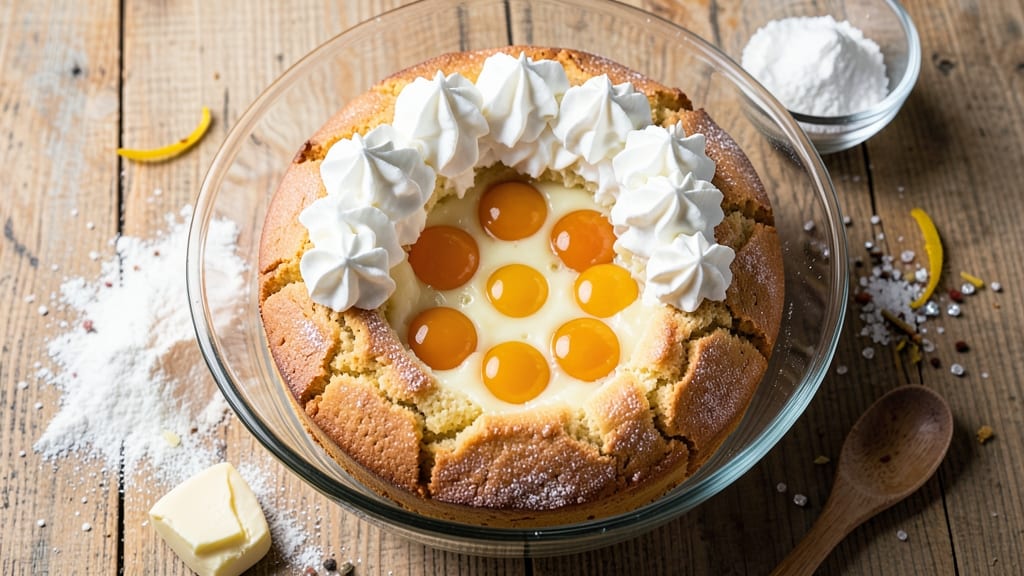
A 7-egg cake delivers that signature fluffiness and golden crust that makes every slice irresistible. The secret lies in the eggs—each one contributes to the cake's signature texture, creating layers that are light yet sturdy.
This recipe balances precision with simplicity, ensuring you achieve restaurant-quality results at home without the fuss.
The magic happens in the mixing: whisking eggs and sugar until pale and thick creates the foundation for that signature airy crumb. Adding dry ingredients gently preserves the structure, while baking at the right temperature yields a perfectly golden top. It’s a technique that transforms basic ingredients into something extraordinary.
What you’ll end up with is a cake that’s tender yet sturdy, with a crisp crust that holds up beautifully. The layers stay moist for days, making it ideal for celebrations or a special treat.
Whether you’re baking for a crowd or just craving a classic dessert, this recipe delivers every time.
Ready to bake? Let’s get started with the ingredients and step-by-step instructions that will guide you to a flawless finish.
Ingredients for 7 egg cake
Seven eggs, precise measurements, and gentle technique create this restaurant-worthy cake with signature fluffiness and golden crust.
| Ingredient | Amount | Notes |
|---|---|---|
| Large Eggs 🥚 | 7 whole | Room temperature, separated for best volume |
| Granulated Sugar 🍚 | 2 cups | Superfine preferred for smoother texture |
| All-Purpose Flour 🌾 | 2 ½ cups | Sifted, spooned lightly for accurate measurement |
| Unsalted Butter 🧈 | 1 ½ cups | Cold, cubed, for proper creaming |
| Baking Powder 🍞 | 2 tsp | Freshly opened for optimal leavening |
| Salt 🧂 | ½ tsp | Fine sea salt for balanced flavor |
| Vanilla Extract 🌿 | 2 tsp | Pure vanilla, not imitation |
| Milk 🥛 | 1 cup | Whole milk for richness |
| Cornstarch 🌾 | 2 tbsp | For tender crumb structure |
| Lemon Zest 🍋 | 1 tbsp | Freshly grated for bright flavor |
| Vegetable Oil 🫒 | ¼ cup | Light neutral oil for moisture |
Eggs are the foundation here—room temperature is critical for proper volume. Organic pastured eggs from Crowd Company or Vital Farms deliver superior texture, but any large eggs work. The sugar should be superfine if possible—Domino brand is widely available and dissolves smoothly. For the butter, Plugrá or Land O'Lakes unsalted are reliable choices, but avoid salted. The flour must be sifted to prevent dense layers; King Arthur or Bob's Red Mill all-purpose flour is ideal. Lemon zest should be freshly grated—organic lemons from the produce section yield more vibrant flavor.
No superfine sugar? Pulse granulated sugar in a food processor for 30 seconds. Running short on vanilla? Almond extract at half the amount works in a pinch, though the flavor differs. Substituting milk? Oat milk or coconut milk adds richness, but whole dairy is preferred. For a lighter texture, replace 2 tablespoons of flour with arrowroot powder. The baking powder must be fresh—Diamond Crystal is a reliable brand that's twice as potent as others. Need to adjust for altitude? Increase flour by 1-2 tablespoons for every 500 feet above sea level. The vegetable oil can be swapped for melted butter if you prefer.
Store baked layers wrapped in plastic wrap at room temperature for up to 3 days or refrigerated for 5 days. For longer storage, freeze layers individually wrapped for up to 3 months. When ready to serve, assemble with fresh whipped cream or a simple glaze of powdered sugar and milk. The cake reheats beautifully—warm slices in the oven at 300°F for 10 minutes to restore moisture. This cake's structure makes it perfect for layering with fillings like jam or custard between servings.
Why You'll Love This Recipe
- No Mixer Needed: The only "mixing" you’ll do is cracking eggs and stirring—no stand mixer, no food processor, just a big bowl and a whisk. Honestly, the butter and sugar cream so smoothly by hand, it almost feels like cheating.
- Rich Without Fancy Ingredients: Seven eggs? That’s the secret—no artificial flavors, no specialty items, just pure, creamy richness from the yolks and a touch of sugar to balance the flour’s mildness. Between us, the butter makes it taste like a bakery treat, not a weeknight shortcut.
- Breakfast or Dessert: Serve it warm with a dusting of powdered sugar for a decadent brunch, or slice it cold for a quick snack—no one will question why you’re eating cake at 9 AM. My daughter swaps out the sugar for cinnamon sometimes, and it’s still a hit.
- Pantry Staple Magic: You’re already stocked for this—flour, sugar, butter, eggs—all things you’d buy anyway. And because it’s dense, a single batch feeds four for breakfast or two for dessert, meaning fewer grocery runs and zero food waste. (Yes, even on a Tuesday night.)
Step-by-step instructions for 7 egg cake
Precision matters here—each step builds the signature fluffiness and golden crust.
Separate Eggs and Cream Butter and Sugar
Begin by separating the 7 whole large eggs, placing yolks in one bowl and whites in another. Let both come to room temperature for 10 minutes—this ensures even incorporation later. In a stand mixer fitted with the paddle attachment, beat the 1.5 cups unsalted butter and 2 cups granulated sugar on medium speed for 5-6 minutes until light and fluffy. You'll see the mixture nearly double in volume and become pale, almost like whipped buttercream.
Here's the thing—this creaming process aerates the batter, creating those signature air pockets that make the cake rise beautifully. If your butter isn't cold enough, it will melt too quickly, and you'll end up with a dense cake instead of fluffy layers. I press down gently on the butter cubes during the first minute to ensure they emulsify properly with the sugar.
Incorporate Dry Ingredients and Wet Additions
In a separate bowl, whisk together the 2.5 cups all-purpose flour, 2 tbsp cornstarch, 2 tsp baking powder, 0.5 tsp salt, and 1 tbsp lemon zest. Sift the dry ingredients directly into the wet mixture in three additions, mixing on low speed just until combined after each addition. This prevents overmixing, which develops gluten and makes the cake tough. You should still see small flour streaks when you stop mixing.
Next, add the 7 egg yolks, 2 tsp vanilla extract, and 1 cup milk to the butter-sugar mixture. Mix on low speed for 1-2 minutes until fully incorporated but not overmixed. The batter should be smooth and ribbon-like when you lift the paddle. If it looks too thick, add 1 tablespoon milk at a time until it reaches a pourable consistency—this ensures even distribution of ingredients throughout the cake.
Fold in Egg Whites to Peak Softness
In a clean, grease-free bowl, beat the 7 egg whites on medium speed until soft peaks form. Gradually add the 0.25 cup vegetable oil while continuing to beat. The oil helps stabilize the egg whites, making them easier to fold in without deflating. Once the oil is fully incorporated, increase the speed to high and beat until the egg whites form stiff, glossy peaks. They should hold their shape when you lift the whisk.
With the mixer running on low speed, gently fold one-third of the egg whites into the batter to lighten it. Then, using a spatula, fold in the remaining egg whites in two additions, being careful not to overmix. The batter should be smooth and uniform, with no visible streaks of egg white. This step is critical—if you overmix, you'll lose all that precious air you worked so hard to incorporate.
Bake in Two Layers for Even Rise
Preheat your oven to 350°F. Divide the batter evenly between two 8-inch round cake pans lined with parchment paper and greased with vegetable oil. Tap the pans gently on the counter to remove any air bubbles. Bake for 25-30 minutes, or until a toothpick inserted into the center comes out clean and the top springs back when pressed gently. Rotate the pans halfway through baking for even browning.
Here's where precision pays off: the cake should be golden brown with a slightly domed top, indicating it's fully set. If the edges brown too quickly, tent the pans with foil after 15 minutes to prevent overbrowning. Let the cakes cool in the pans for 10 minutes, then transfer to a wire rack to cool completely before assembling. This resting period ensures the layers hold their shape when stacked.
Pro Tips For Making 7 Egg Cake
- Preheat to 325°F: This isn’t a guess—use an oven thermometer. I learned the hard way that most home ovens run hot, and 350°F turns your 7-egg cake into a dense brick. The lower temp lets the eggs set gently without curdling, giving you that light, fluffy texture you’re after.
- Sift the Flour Twice: Skimping here means lumps, and lumps mean a cake that’s heavy in spots. Use a fine-mesh sieve and do it right before mixing—no need to overthink it, just shake it like you’re dusting a shelf. The extra effort keeps the crumb silky smooth.
- Don’t Overmix the Batter: After the third batch where the cake turned out tough as a boot, I realized: stop mixing when the flour just disappears. Overworking the batter introduces too much air, then collapses during baking. Two minutes max with a spatula—no need to turn it into a science project.
- Grease the Pan And Dust with Flour: Butter alone won’t cut it—this cake sticks like glue if you skip the flour. Use a pastry brush for the butter, then shake in a handful of flour, tapping out the excess. Yes, it’s extra steps, but your cake will slide out like a dream. (Trust me, I’ve cried over stuck cakes.)
Essential equipment for great 7 egg cake
Stand Mixer Essentials
Your stand mixer is the MVP for this recipe, especially for the egg whites and butter-sugar mixture. I swear by a KitchenAid Artisan Series with the paddle and whisk attachments—the sturdy motor handles the heavy egg whites without deflating them.
If you're on a budget, the Cuisinart SM-50BC delivers similar results for less. Always use the whisk attachment for egg whites to maximize volume, and the paddle for creaming butter and sugar to avoid overwhipping. 🔥
Precision Scales
For accurate measurements, especially with the 7 eggs and 2.5 cups flour, a digital kitchen scale is a game-changer. The OXO Good Grips model is my go-to—it measures in both grams and ounces, and the tare function makes it easy to weigh ingredients directly in mixing bowls.
This cake relies on the exact ratio of ingredients, so don't skip this step. Even a slight mismeasurement can throw off the texture.
Offset Spatulas
An offset spatula is your best friend when folding egg whites into the batter. I reach for the OXO Good Grips version—its flexible head helps you scrape every last bit of batter from the bowl without overmixing.
The angled shape also makes it easier to fold in ingredients gently, preserving that critical airiness. Keep one handy for leveling batter into pans too.
8-Inch Cake Pans
Invest in two high-quality 8-inch round cake pans with removable bottoms—I love the USA Pan brand for their even heat distribution and nonstick surfaces. If you don't have removable bottoms, line the pans with parchment paper cut to fit snugly.
Grease the pans with vegetable oil (not butter) to prevent sticking, and tap them gently on the counter to eliminate air bubbles before baking.
Thermometer for Accuracy
A candy or oven thermometer ensures your oven is at the perfect 350°F—many home ovens run hot or cold. The Thermoworks Thermapen is my top pick for its instant-read accuracy. Baking at the right temperature prevents overbrowning and ensures even rise.
I also recommend checking the internal temperature of the cake with a toothpick test—it should come out clean when fully baked.
Mixing Bowls Set
Use three large, nesting mixing bowls (like the Pyrex Prepware set) to keep ingredients organized. One for dry ingredients, one for the butter-sugar mixture, and one for the egg whites.
The glass bowls stay cool while whipping egg whites, preventing them from overheating and losing volume. Avoid metal bowls—they can react with acidic ingredients like lemon zest.
Nutrition facts
Frequently asked questions
Why does this recipe use 7 eggs instead of the usual 3-4?
The extra eggs create that signature ultra-fluffy, moist texture—each one adds lightness and structure without heaviness. The high egg-to-flour ratio also helps stabilize the airy crumb, making every slice tender yet sturdy. This ratio is perfect for layered cakes that need to hold fillings beautifully.
Can I make this cake with fewer eggs?
You can reduce to 5 eggs, but the texture will be denser and less airy. Replace the missing eggs with 1/4 cup aquafaba (chickpea brine) per egg for vegan versions, or use 1/4 cup melted butter or oil to compensate for lost moisture. The cake will still be delicious but won't have the same signature lightness.
How do I prevent the cake from cracking?
Cracking usually happens from uneven baking or opening the oven too soon. Rotate pans halfway through baking and avoid peeking! Let the cake cool completely in the pan for 10 minutes before removing. For extra insurance, brush the tops with simple syrup (equal parts sugar and water) right after baking.
What's the best way to store leftover cake?
Wrap layers tightly in plastic wrap and store at room temperature for up to 3 days or refrigerate for 5 days. For longer storage, freeze layers individually for up to 3 months. To serve, let thaw at room temperature for 1 hour—never microwave frozen cake directly.
Can I use this batter for cupcakes instead?
Divide the batter into 24 standard cupcake liners (fill 2/3 full) and bake at 350°F for 18-20 minutes. The egg-rich batter creates cupcakes with domed tops and ultra-moist crumbs. For extra stability, chill the batter 30 minutes before baking to prevent spreading.