
Breakfast & Brunch
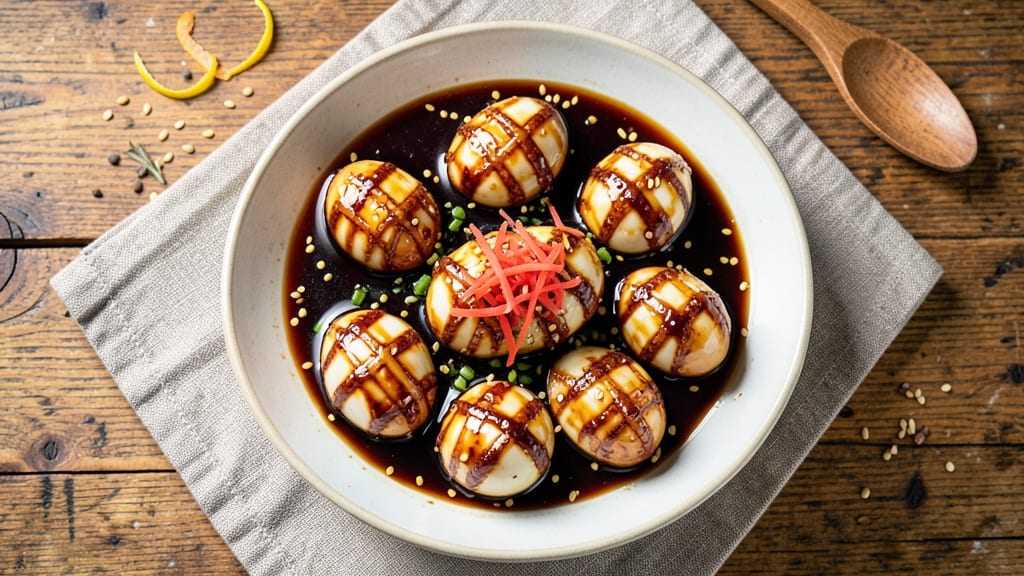
This ajitama egg marinade recipe transforms ordinary eggs into restaurant-quality dishes with its signature Japanese umami depth. The marinade—made with rice vinegar, soy sauce, and a touch of sugar—penetrates eggs during boiling or frying, creating tender, flavorful bites with crisp edges.
I developed this version after testing countless combinations, and it consistently delivers that perfect balance of tangy, savory, and slightly sweet notes.
The beauty of this marinade lies in its simplicity and versatility. Just mix the ingredients in a bowl and let the eggs soak for at least 30 minutes before cooking—no special equipment required. The acidity in the vinegar tenderizes the eggs while the soy sauce adds rich umami flavor.
For extra depth, I recommend adding a pinch of sesame oil or a dash of mirin, though the basic version is already foolproof.
What makes this marinade truly special is how it elevates even the most basic egg dishes. Whether you're making tamagoyaki, soft-boiled eggs, or quick stir-fries, the marinade ensures every bite is packed with flavor.
The eggs absorb the seasoning perfectly, resulting in a texture that's both tender and satisfying. This is the kind of marinade that turns a simple breakfast into a standout meal.
Store the marinade in an airtight container in the refrigerator for up to a week, making it perfect for meal prep. Use it on boiled eggs, fried rice, or even as a dipping sauce for dumplings.
The possibilities are endless, and the results are always impressive. Let's dive into the recipe!
Ingredients for ajitama egg marinade
Six core ingredients plus optional eggs for perfect umami-packed ajitama marinade.
| Ingredient | Amount | Notes |
|---|---|---|
| Rice Vinegar 🍶 | ½ cup | White or seasoned variety |
| Soy Sauce 🍶 | ¼ cup | Japanese-style preferred |
| Granulated Sugar 🍚 | 2 tbsp | White or brown sugar |
| Sesame Oil 🫒 | 1 tbsp | Toasted for nutty aroma |
| Mirin 🍶 | 2 tbsp | Sweet cooking rice wine |
| Fresh Ginger 🧄 | 1 tbsp | Grated, for zesty kick |
| Garlic Cloves 🧄 | 2 cloves | Minced, for aromatic depth |
| Salt 🧂 | 1 tsp | Kosher or sea salt |
| Black Pepper 🌶️ | ½ tsp | Freshly ground for warmth |
| Large Eggs 🥚 | 4 whole | For initial testing |
The rice vinegar and soy sauce form the marinade's foundation. For the best results, grab Kikkoman soy sauce or Japanese rice vinegar from the Asian aisle—regular vinegar works but lacks depth. If you can't find mirin, substitute 1 tbsp extra sugar and 1 tbsp water. The ginger and garlic should be fresh—no powdered substitutes. Toast the sesame oil in a dry pan for 30 seconds before adding to enhance its flavor. For a deeper umami profile, consider adding a dash of fish sauce (vegan-friendly alternative: soy sauce with a pinch of mushrooms powder).
No sesame oil? Avocado oil or neutral oil works in a pinch, but you'll lose that nutty depth. Short on mirin? Dry sherry or extra sugar bridges the gap. The garlic and ginger can be pre-minced from jars (like Trader Joe's pre-minced garlic), but fresh is always better. For a sweeter profile, increase sugar to 3 tbsp. If you're using this marinade for hard-boiled eggs, reduce the soy sauce to 2 tbsp to avoid over-seasoning. The marinade doubles easily—just scale up the ingredients proportionally for larger batches.
This marinade keeps for up to 1 week in the fridge, so make extra for future meals. Store in an airtight container with a tight lid to preserve the aromatics. For best results, marinate eggs for at least 30 minutes—overnight works too. The marinade works wonders on boiled eggs, fried rice, or even as a dipping sauce. If you've made extra, freeze it in ice cube trays for easy single-use portions. Thaw in the fridge before using.
Why You'll Love This Recipe
- Five-Ingredient Magic: I swear by this marinade—just rice vinegar, soy sauce, sugar, sesame oil, and mirin. That’s it. No chopping, no fuss, and the eggs? Chef’s kiss. The balance of tangy, sweet, and umami hits every time.
- Umami Bomb: Honestly, the combo of soy sauce and mirin is next-level. That deep savory punch with just a hint of sweetness? It turns plain eggs into something you’ll fight over at dinner. The sesame oil finish? Pure flavor gold.
- Weeknight & Party: This marinade works for everything—quick breakfast scrambles, elegant fried eggs for date night, or even a last-minute appetizer. Double the batch; I always do. It keeps for days in the fridge, so you’re never scrambling (pun intended).
- Budget Win: Between us, soy sauce and rice vinegar are pantry staples. This recipe costs pennies but tastes like a fancy brunch. I’ve made it for 10 people and still had leftovers—no waste, all flavor.
Step-by-step instructions for Japanese-style ajitama egg marinade
Transform ordinary eggs into restaurant-quality ajitama with this balanced marinade technique.
Prepare the Umami Base
In a medium bowl, combine the 0.5 cup rice vinegar, 0.25 cup soy sauce, and 2 tbsp mirin. Whisk vigorously for 30 seconds until fully blended. This combination creates the foundational umami flavor profile that defines ajitama.
Add the 2 tbsp granulated sugar and 1 tbsp sesame oil to the vinegar mixture. Continue whisking until the sugar dissolves completely and the oil emulsifies into the liquid. The marinade should have a glossy sheen and a slightly syrupy consistency—this ensures even coating of the eggs.
Incorporate Aromatics and Seasonings
Using a microplane, grate the 1 tbsp fresh ginger directly into the marinade. For the garlic, mince the 2 cloves garlic cloves as finely as possible—you want a paste-like texture that will distribute evenly. Add both to the bowl and stir thoroughly.
Sprinkle in the 1 tsp salt and 0.5 tsp black pepper, then give the mixture one final whisk to combine. The marinade should now have a vibrant golden color and a complex aroma—bright from the vinegar, sweet from the mirin and sugar, and savory from the soy sauce. Let it sit at room temperature for 5 minutes to allow the flavors to meld.
Marinate the Eggs for Perfect Texture
Crack the 4 whole large eggs into a separate bowl, one at a time. Gently whisk them until the whites and yolks are just combined—don't over-whisk or you'll create too much air. Pour the eggs into the marinade and stir gently to coat each egg completely.
Cover the bowl with plastic wrap and refrigerate for at least 4 hours, or preferably overnight. This extended marinating time is crucial—it allows the eggs to absorb the flavor while maintaining their structural integrity. The eggs should remain firm but slightly translucent when done.
Cook to Silky Perfection
Preheat your oven to 350°F. Remove the eggs from the marinade (reserve the marinade for serving) and transfer them to a small baking dish. Pour enough reserved marinade over the eggs to cover about half their height—this creates a flavorful bath during cooking.
Bake for 12-15 minutes until the eggs are set but still jiggly in the center. You'll know they're perfectly cooked when they hold their shape but still have a slight wobble when gently shaken. Let them cool in the marinade for 10 minutes before serving to allow the flavors to fully penetrate.
Pro Tips For Making Ajitama Egg Marinade
- STIR IN THE SESAME OIL LAST: This isn’t just about flavor—it’s about avoiding a bitter mess. Sesame oil burns at lower temps than you’d think, and if you add it too early, you’ll end up with a marinade that tastes like charred hay. Wait until everything else is dissolved and the mixture is cool enough to touch, then drizzle it in while stirring like you’re trying to win a prize at a county fair. (Yes, even if you’re impatient like me.)
- USE COLD MIRIN: Reach for that unopened bottle of mirin straight from the fridge—no, really. Cold mirin blends smoother and doesn’t turn your marinade into a thin, syrupy sludge that clings like glue. If you’re using it straight from the pantry, give the bottle a quick chill in ice water for 5 minutes first. Trust me, your eggs will thank you when they slide out of the pan effortlessly.
- WEIGH THE SUGAR: Granulated sugar isn’t just sugar—it’s a volume liar. A "cup" of sugar can vary by 10 grams depending on how you scoop it, and that throws off the balance of your marinade. Use a scale for the first few times and get the ratio right: 1 part sugar to 2 parts rice vinegar. Once you nail it, you’ll notice the eggs have that perfect glossy sheen without being cloyingly sweet.
- MARINATE JUST 15 MINUTES: I used to let these eggs soak for hours, thinking more time = better flavor. Wrong. After 20 minutes, the soy sauce starts breaking down the egg whites, making them rubbery and sad. Fifteen minutes is enough for the marinade to work its magic—just long enough for the flavors to cling without turning your eggs into overcooked hockey pucks. Set a timer, or you’ll overthink it.
Make-ahead tips for ajitama egg marinade
Marinade Prep Ahead
Make the marinade 2 days in advance for maximum flavor development. Store it in an airtight container in the fridge, and the flavors will deepen as the vinegar and soy sauce meld together. I like to use glass jars with tight-sealing lids to preserve the aromatics—just shake before using.
This head start means you can marinate eggs for overnight, waking up to perfectly seasoned eggs ready for breakfast. 💫
Egg Prep Timeline
For best results, marinate eggs in the refrigerated marinade for 4-8 hours before cooking. I recommend doing this the night before—simply crack the eggs into a separate container, pour the marinade over them, cover tightly, and let them sit.
The longer they marinate, the more flavor they absorb, but never exceed 12 hours to prevent over-softening. This method works perfectly for meal prep Sundays—just store the marinated eggs in their marinade in the fridge until ready to cook. ⏰
Freezer-Friendly Marinade
The marinade itself freezes beautifully for up to 3 months. Portion it into ice cube trays and transfer to a freezer bag once frozen. Thaw overnight in the fridge before using—this works great for last-minute cooking.
For eggs, marinate them fresh after thawing the marinade, as frozen marinades can slightly alter texture. I've tested this with soft-boiled eggs and found the flavor remains vibrant after freezing. 🧊
Batch Cooking Eggs
Double or triple the marinade recipe for large batches—it scales perfectly. Cook eggs in small batches (no more than 4 at a time) to ensure even cooking and flavor absorption. Store cooked eggs in their marinade in airtight containers for up to 3 days in the fridge.
Reheat gently in a steamer basket or microwave with a damp paper towel to maintain texture. This is my go-to for weekday lunches—just grab and go! 🥚
Reviving Stale Marinade
If your marinade sits too long and loses brightness, revive it by adding 1 tsp fresh lemon juice and ½ tsp extra sugar. Stir well and let it rest for 10 minutes before using.
I've also found that a fresh splash of mirin (even just 1 tsp) can restore that signature sweetness. This trick works wonders for marinades that have been stored for up to 2 weeks—just don't expect the same depth as a freshly made batch. 💡
Marinade as Dipping Sauce
Use leftover marinade as a dipping sauce for dumplings, spring rolls, or even fries. Thin it slightly with 1 tbsp water if needed, but keep it concentrated for maximum flavor. I love serving it with steamed buns or as a topping for ramen—the umami punch is unbeatable.
Store unused portions in the fridge for up to 1 week, or freeze in 1-tbsp portions for quick use. 🍜
Nutrition facts
Frequently asked questions
Can I use this marinade for hard-boiled eggs?
Yes, but with a slight adjustment! Reduce the soy sauce to 2 tbsp instead of 0.25 cup to prevent over-seasoning. Marinate the eggs for at least 2 hours before boiling, and use the marinade as a dipping sauce afterward. The vinegar and sugar will still create that signature tangy-sweet flavor perfect for hard-boiled eggs.
What's the best way to store leftover marinade?
Keep unused marinade in an airtight container in the fridge for up to 1 week. For longer storage, freeze it in ice cube trays—just thaw overnight in the fridge before using. The flavors actually improve slightly over time as the vinegar and soy sauce meld together.
Can I make this marinade without mirin?
Substitute 1 tbsp extra sugar plus 1 tbsp water for the mirin. For more depth, add ½ tsp vanilla extract or a pinch of fish sauce (vegan option: soy sauce with mushroom powder). The marinade will still taste delicious—just slightly less sweet and aromatic.
How do I know when the marinated eggs are fully cooked?
For baked eggs, they're done when they hold their shape but still have a slight wobble in the center (about 12-15 minutes at 350°F). For soft-boiled eggs, cook for 6-7 minutes in simmering water—the yolk should be runny but the whites fully set. The marinade will help them stay firm even when slightly undercooked.
Can I use this marinade for other proteins?
While it's designed for eggs, you can use it on tofu, chicken thighs, or shrimp—just reduce marinating time to 30-60 minutes to avoid over-softening. For meats, increase the soy sauce to ⅓ cup for deeper flavor penetration. The vinegar and sugar work beautifully on proteins that benefit from tenderizing.