
Breakfast & Brunch
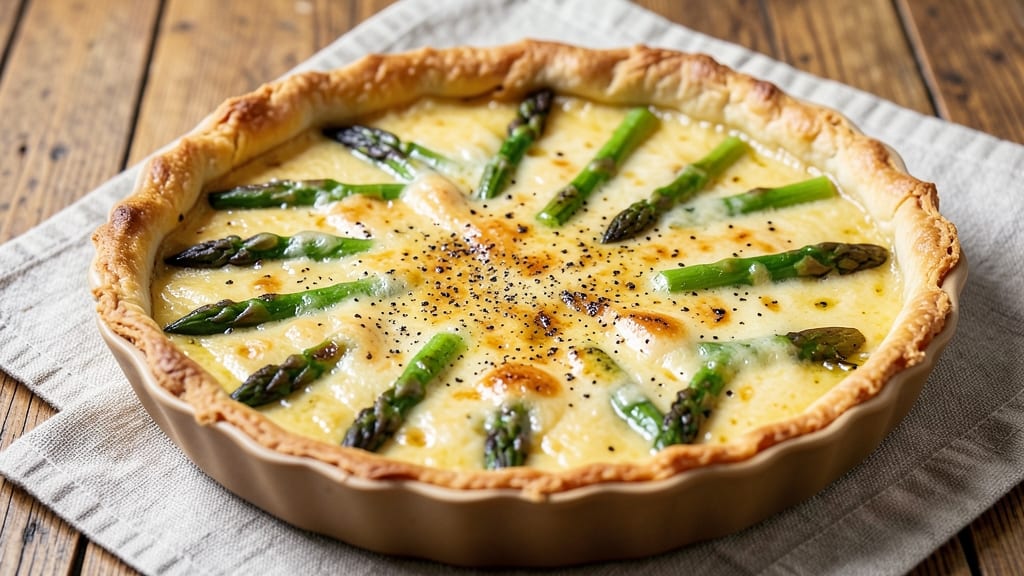
This asparagus egg quiche recipe delivers a golden crust filled with tender asparagus spears and runny yolk magic that makes every bite worth waiting for. The secret lies in perfectly timed baking—crispy edges meet silky egg centers while the asparagus stays bright and tender.
I've perfected this technique over years of weekend brunches, and it never fails to impress.
The foundation starts with a buttery, flaky crust (or gluten-free alternative) that forms a sturdy base for the rich egg filling. Fresh asparagus adds a crisp texture and earthy flavor, while sharp cheddar and a touch of cream create depth.
The key is pre-cooking the asparagus just until tender-crisp to preserve its vibrant color and snap.
By the time it emerges from the oven, you'll have a quiche with a crispy crust, golden egg custard, and asparagus that's still bright and satisfyingly crunchy. The runny yolks in the center are the real star—each bite delivers creamy richness with every tender asparagus spear cutting through.
Serve with a crisp green salad or crusty bread to soak up every last drop of that golden egg. This quiche is elegant enough for brunch guests but simple enough for a weeknight dinner. Let's get baking—your taste buds will thank you.
Ingredients for asparagus egg quiche
Six ingredients make the crust golden, the eggs silky, and asparagus crisp-tender.
| Ingredient | Amount | Notes |
|---|---|---|
| Fresh Asparagus Spears 🌱 | 1 ½ lb | Trimmed, tough ends removed |
| Large Eggs 🥚 | 6 whole | Room temperature preferred |
| Heavy Cream 🥛 | ½ cup | Full-fat for richness |
| Sharp Cheddar Cheese 🧀 | 1 cup | Freshly grated, no pre-shredded |
| Unsalted Butter 🧈 | ½ cup | Cold, cubed for crust |
| All-Purpose Flour 🌾 | 1 ½ cups | Plus 1 tbsp for dusting |
| Ice Water 💧 | ¼ cup | For dough handling |
| Diamond Crystal Kosher Salt 🧂 | 1 ½ tsp | For crust and filling |
| Freshly Ground Black Pepper 🌶️ | ½ tsp | Just cracked |
| Nutritional Yeast 🧀 | 1 tbsp | For cheesy depth |
| Extra-Virgin Olive Oil 🫒 | 2 tbsp | For brushing crust |
| Milk 🥛 | ¼ cup | Whole milk for custard |
| Gluten-Free Flour Blend 🌾 | 1 ½ cups | Optional alternative |
The asparagus needs to be bright green and firm—avoid woody stalks. Whole Foods or local markets usually have the freshest spears, but any grocery store works if they're still snappy. Trim the tough ends (about 1 inch) and snap the rest—they'll break naturally at the tender spot. For the crust, European-style butter like Plugrá gives the most flavor, but any good-quality unsalted butter works. If you're making this gluten-free, King Arthur's gluten-free blend is my go-to—it mimics all-purpose flour perfectly. The key is keeping everything cold until the last minute to prevent the butter from melting too soon.
No sharp cheddar? Parmesan or Gruyère work beautifully, but the tang is essential. Ran out of heavy cream? Full-fat sour cream or half-and-half will work in a pinch, though the texture might be slightly lighter. Nutritional yeast is a game-changer for adding that cheesy depth without dairy—it's what gives vegan cheeses their umami kick. For the crust, if you don't have ice water, just chill the dough for 20 minutes before rolling. And if you're prepping ahead, blind-bake the crust for 15 minutes before adding the filling—it keeps everything crispy even if you're not baking it right away.
The crust dough keeps 2 days wrapped in plastic in the fridge, but it's best used fresh. Pre-cooked asparagus holds in the fridge for 3 days, though it's best eaten within 2 days for peak texture. The custard filling can be prepped a day ahead—just cover it tightly and refrigerate. When baking, rotate the pan halfway through for even browning. Leftovers? This quiche reheats beautifully—just 10 minutes at 350°F until the center is warm and the edges are crisp again. I always make a double batch—one for brunch, one for lunch the next day.
Why You'll Love This Recipe
- No Crust Needed: I swear by this shortcut—just a buttered pie dish and the eggs do all the work. The asparagus peeks through that golden custard like a fancy restaurant dish, but honestly? It’s just eggs, cream, and a handful of chopped spears. (My lazy Sundays thank me.)
- Creamy Cheesy Magic: That sharp cheddar melts into the custard while the asparagus stays crisp-tender—it’s the balance I live for. The heavy cream makes it rich but not heavy, and the eggs bind it all into one ridiculously satisfying bite. (Yes, even my picky husband finishes his.)
- Brunch or Lunch: Serve it warm with toast for a weekend brunch, or let it cool for a packed lunch the next day. The quiche reheats beautifully, and the asparagus holds up better than most veggies in leftovers. (Between us, I’ve had it for dinner three times this week.)
- Leftovers That Don’t Suck: Unlike most quiches, this one tastes just as good the second day—no soggy crust, no sad texture. I make a big batch on Sunday, and by Wednesday, it’s still my go-to. (Budget win: uses simple ingredients that don’t break the bank.)
Step-by-step instructions for asparagus egg quiche
Here's how to create a golden, crispy crust with tender asparagus and that perfect runny yolk center.
Prepare the Asparagus Filling
Preheat your oven to 375°F. Trim the tough ends from the 1.5 lb fresh asparagus spears and cut them into 1-inch pieces. Spread them on a baking sheet and drizzle with 1 tablespoon of the extra-virgin olive oil. Toss gently to coat, then sprinkle with ½ teaspoon of the freshly ground black pepper.
Roast the asparagus for 8-10 minutes until tender but still vibrant green with slightly crisp edges. You want them to maintain some bite—they'll finish cooking in the oven when the quiche bakes. Remove from the oven and set aside to cool slightly while you prepare the crust.
Make the Crust Dough
In a large bowl, combine the 1.5 cups all-purpose flour, 1.5 teaspoons Diamond Crystal kosher salt, and 1 tablespoon nutritional yeast. Cut in the ½ cup cold unsalted butter using a pastry cutter or your fingers until the mixture resembles coarse crumbs with pea-sized butter pieces.
Add the ¼ cup ice water and mix gently with a fork until the dough just comes together. Be careful not to overwork it—just until it holds when pressed. Turn the dough out onto a lightly floured surface and knead briefly until smooth. Divide into two equal pieces and roll one into a 12-inch round for your quiche crust.
Assemble and Blind-Bake the Crust
Transfer the rolled dough to a 9-inch pie dish and press it gently into the bottom and up the sides. Trim any excess dough hanging over the edge. Prick the bottom of the crust all over with a fork, then line it with parchment paper and fill with pie weights or dried beans.
Bake at 375°F for 15 minutes until the edges begin to turn golden. Remove the weights and bake for another 5 minutes until the crust is fully set and lightly browned. Brush the bottom and sides with the remaining 1 tablespoon extra-virgin olive oil while still warm.
Prepare the Egg Mixture
In a large bowl, whisk together the 6 whole large eggs, ½ cup heavy cream, ¼ cup milk, and the remaining ½ teaspoon black pepper. Gradually whisk in the 1 cup freshly grated sharp cheddar cheese until fully combined. The mixture should be smooth and slightly thick—this ensures a rich, creamy filling.
Stir in the roasted asparagus pieces, making sure they're evenly distributed throughout the egg mixture. Here's the thing—don't overmix after adding the asparagus. Just enough to combine so you don't break up the tender greens.
Bake to Golden Perfection
Pour the egg-asparagus mixture into the pre-baked crust, spreading it evenly. Place the quiche on the middle rack of your oven and bake at 375°F for 30-35 minutes. You'll know it's done when the top is golden brown and the center is just set but still slightly jiggly—this ensures that perfect runny yolk in the center.
Let the quiche rest for 10 minutes before slicing. This resting time allows the filling to set slightly and makes it easier to serve without the risk of a runny center. Cut into wedges and enjoy warm—each bite should deliver crispy crust, tender asparagus, and that magical runny yolk that ties everything together.
Pro Tips For Making Asparagus Egg Quiche
- Blanch asparagus first: Trim the tough ends, then plunge spears into boiling salted water for 90 seconds before draining. This softens them just enough to blend into the custard without turning to mush—no one wants rubbery asparagus in their quiche.
- Preheat that pie dish: Slide your quiche dish (ceramic or metal) into a 375°F (190°C) oven for 10 minutes before adding the crust. The butter won’t pool like it does when you skip this, and the crust stays crisp instead of soggy.
- Whisk eggs cold: Whisk the eggs and cream straight from the fridge—room temperature makes custards separate. I learned this after a lumpy batch ruined a brunch, and now I swear by it.
- Press cheese lightly: Sprinkle shredded cheddar over the custard, then press it down with a spatula. It melts evenly and doesn’t clump into a few sad cheese balls—trust me, it’s worth the extra 30 seconds.
Perfect pairings for this asparagus egg quiche
Crisp Salad Pairings
A mixed greens salad with lemon vinaigrette cuts through the richness beautifully. Toss 4 cups baby arugula, ½ cup thinly sliced radishes, and ¼ cup shaved Parmesan with 2 tbsp extra-virgin olive oil and 1 tbsp lemon juice.
The peppery bite refreshes your palate after each creamy bite of quiche. 🥗
Bread for Soaking
Serve with crusty sourdough bread or baguette slices for perfect sauce absorption. Toast the bread until golden and rub with a garlic clove for extra flavor. I love using French-style baguettes from the bakery section—they're sturdy enough to hold up to the quiche's richness. 🥖
Wine Pairings
A crisp Sauvignon Blanc from New Zealand or Loire Valley balances the quiche's richness with its bright acidity. I recommend a bottle of Kim Crawford Sauvignon Blanc—its citrus notes complement the asparagus beautifully. For red wine lovers, a light Pinot Noir from Oregon provides subtle fruitiness without overpowering. 🍷
Coffee & Tea
Pair your quiche with a strong black coffee or earl grey tea to cleanse your palate between bites. The caffeine helps cut through the richness, while the tea's floral notes enhance the asparagus flavors. I always keep a pot of French press coffee brewing during weekend brunches. ☕
Seasonal Fruit
Add a side of strawberries in spring or figs in summer to contrast the savory quiche. Slice 1 cup strawberries and toss with 1 tsp honey and ½ tsp balsamic vinegar for a sweet-tart balance. The acidity refreshes your palate between rich bites. 🍓
Cheese Platter
For a more indulgent pairing, serve with a cheese board featuring brie, aged Gouda, and blue cheese. The variety adds depth to your meal, while the quiche's sharp cheddar stands up to the board's flavors. Include some walnuts and honey drizzle for crunch and sweetness. 🧀
Nutrition facts
Frequently asked questions
Can I make this quiche without a crust?
For a crustless version, whisk 6 eggs with ½ cup heavy cream, ¼ cup milk, 1 cup cheese, and seasonings. Pour into a greased 9-inch oven-safe skillet and bake at 350°F for 25-30 minutes until set. The texture will be denser but still creamy with tender asparagus throughout.
How do I keep my quiche from getting rubbery?
The key is baking time and temperature. Remove the quiche when the center is just slightly jiggly (not fully set) to ensure that perfect runny yolk. Overbaking dries out the custard. Also, avoid opening the oven door early—temperature fluctuations can cause uneven cooking. Let it rest 10 minutes before slicing.
Can I use frozen asparagus instead of fresh?
Fresh asparagus gives the best texture, but frozen works in a pinch. Thaw and drain it completely, then pat dry with a paper towel. Roast for 2-3 minutes longer than fresh to ensure it's tender-crisp. The flavor won't be as vibrant, but it still adds great color and texture.
Why did my quiche crack on top?
Cracking usually happens from sudden temperature changes or overfilling. Let the quiche cool slightly before opening the oven door, and don't fill it more than ¾ full. For extra insurance, bake it on the middle rack where heat circulates evenly. If it cracks, just cover with extra cheese or breadcrumbs and return to the oven for 5 minutes to melt.
How long can I store leftovers?
Store leftovers in an airtight container in the fridge for up to 4 days. Reheat slices at 350°F for 10-12 minutes until warmed through. For best texture, avoid microwaving—it makes the crust soggy. Freeze for up to 2 months by wrapping tightly in plastic wrap and foil.