
Soups & Stews
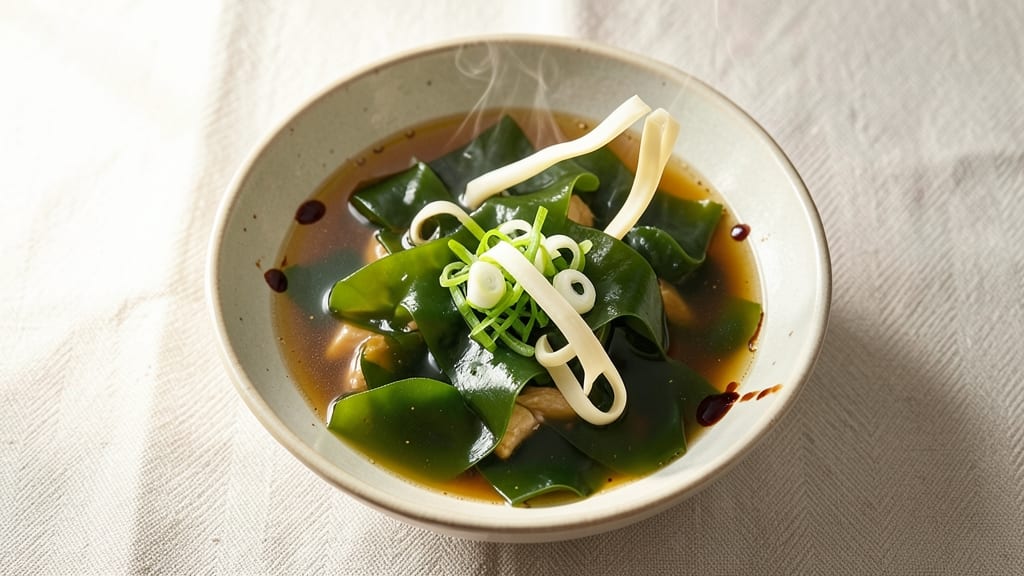
This seaweed egg drop soup transforms a simple broth into a restaurant-worthy dish with just 20 minutes of hands-on time. The secret lies in silken egg ribbons and delicate seaweed—wakame or nori—that infuse the broth with oceanic depth and umami richness.
I developed this recipe after discovering how a single strip of rehydrated seaweed could elevate an ordinary egg drop soup into something truly special, with layers of flavor that linger long after the last sip.
The beauty of this recipe is its simplicity: a light chicken or vegetable broth serves as the foundation, while beaten eggs create elegant swirls that melt into the warm liquid. The seaweed adds a subtle brininess that balances the soup's delicate flavors, making it both comforting and sophisticated.
Perfect for pescatarian diets, this soup delivers restaurant-quality results without requiring any special equipment—just a saucepan and a steady hand for those signature egg ribbons.
What you'll end up with is a bowl of velvety soup where each spoonful reveals tender egg strands intertwined with delicate seaweed pieces, all floating in a fragrant, umami-rich broth.
The contrast between the smooth broth and the textured egg ribbons makes every bite satisfying, while the seaweed adds a subtle complexity that transforms this into a standout dish. Garnish with green onions and sesame oil for an extra touch of freshness and aroma.
This soup is equally at home as a light lunch or a comforting dinner, especially when paired with steamed rice or a side of miso soup. The recipe scales effortlessly, making it ideal for feeding a crowd or meal prepping for the week.
Whether you're serving it to guests or treating yourself, this seaweed egg drop soup is a game-changer that proves how a few simple ingredients can create something extraordinary.
Ingredients for seaweed egg drop soup
Simple ingredients that transform into a restaurant-worthy seaweed egg drop soup.
| Ingredient | Amount | Notes |
|---|---|---|
| Chicken Broth 🍲 | 4 cups | Low-sodium preferred, homemade or high-quality |
| Large Eggs 🥚 | 4 whole | Room temperature for silken ribbons |
| Wakame Seaweed 🍃 | 1 package | Dried, 1/4 oz per package (check label) |
| Green Onions 🧅 | 3 whole | Thinly sliced, white and green parts |
| Sesame Oil 🫒 | 1 tsp | Toasted, for aroma |
| Soy Sauce 🍶 | 1 tbsp | Light or dark, to taste |
| Cornstarch 🌾 | 1 tsp | For broth thickening (optional) |
| Vegetable Oil 🫒 | 1 tbsp | For egg ribbon swirls |
| Sesame Seeds 🌰 | 1 tsp | Toasted, for garnish |
| White Pepper 🌶️ | ¼ tsp | Freshly ground preferred |
| Salt 🧂 | ½ tsp | Adjust to taste |
| Garlic Cloves 🧄 | 2 cloves | Minced, for aroma (optional) |
The broth is the foundation, so don't cut corners here. Homemade chicken broth delivers the deepest flavor, but quality store-bought brands like Kitchen Basics or Pacific Foods work beautifully. For a vegetarian option, use a rich vegetable broth with added mushrooms or kombu for umami. The wakame seaweed should be dried and labeled as wakame—avoid nori sheets, which are too large and tough. You'll find it in the Asian foods aisle at Whole Foods or Trader Joe's, often near the miso paste. If you can't find it, dried kombu works as a substitute, but the flavor will be more pronounced.
Eggs need to be at room temperature for those signature silken ribbons—pop them out of the fridge 30 minutes before cooking. No soy sauce? Coconut aminos or a splash of mirin adds sweetness without the saltiness. The cornstarch is optional but recommended for a slightly thicker broth that holds the seaweed and egg strands better. For extra depth, add a pinch of fish sauce (pescatarian-friendly) or a dash of vegetable bouillon powder if you're vegetarian. The green onions should be fresh—no wilting allowed, or they'll turn bitter in the hot broth.
Prep ahead by making extra broth and storing it in glass jars for up to 5 days in the fridge or 3 months frozen. The seaweed can be rehydrated in advance (soak in warm water for 5 minutes, then drain), but add it fresh to the soup for maximum texture. This soup reheats beautifully—just warm gently on the stove, stirring occasionally. For meal prep, portion into thermos containers and keep the egg ribbons separate until reheating, then swirl them in at the end to maintain that restaurant-quality appearance.
Why You'll Love This Recipe
- Minimal Chopping Required: I swear by this—just slice those green onions and you’re done. No dicing, no mincing, no stress. The wakame soaks right in the broth while you heat it, and the eggs? One whisk, one stream. Honestly, it’s the kind of soup that lets you zone out while it simmers.
- Umami Bomb in a Bowl: That wakame? It’s the secret weapon—salty, briny, and packed with ocean flavor that turns simple broth into something ridiculously good. Add a drizzle of sesame oil at the end, and suddenly you’ve got depth without extra effort. The eggs ribbon through like silk, soaking up every bit.
- Leftovers That Don’t Suffer: I make a big batch on Sundays, and it’s still just as good on day three. The broth stays rich, the wakame doesn’t turn mushy, and the eggs? You can reheat them gently and drop in fresh ones for that just-made texture. No sad, watery soup here—just reliable, comforting bowls.
- Budget Meal for Any Occasion: Chicken broth is cheap, eggs are cheap, and wakame lasts forever in the pantry. Serve it as a light lunch, a quick dinner, or even a side for takeout night. Between us, it’s the kind of dish that makes you look like a pro without breaking the bank—or your time.
Step-by-step instructions for seaweed egg drop soup
Master this delicate technique for silken egg ribbons and perfectly infused seaweed broth.
Prepare the Wakame Seaweed
Place the 1 package wakame seaweed in a heatproof bowl and cover it completely with 4 cups chicken broth. Let it soak for 10 minutes until the seaweed softens and expands significantly. You'll see it transform from dry strands into tender, glossy ribbons—this is when it releases its signature oceanic umami.
After soaking, drain the wakame using a fine-mesh strainer, reserving the broth. Rinse the seaweed briefly under cold water to remove any grit, then cut it into 2-inch lengths. Set aside—the wakame should now be pliable and ready to infuse the soup with its signature briny depth.
Build the Flavor Base
In a clean 4-quart soup pot, heat 1 tablespoon vegetable oil over medium heat until shimmering. Add the 2 minced garlic cloves and cook for 30 seconds until fragrant but not browned—this prevents bitterness and enhances the garlic's sweetness.
Pour in the reserved wakame broth and bring to a gentle simmer over medium-low heat. Add 1 tablespoon soy sauce, 0.5 teaspoon salt, and 0.25 teaspoon white pepper, stirring to combine. Taste the broth—it should be seasoned but not salty, with a clean umami foundation. If using, whisk in 1 teaspoon cornstarch dissolved in 2 tablespoons cold water to slightly thicken the broth.
Create the Signature Egg Ribbons
In a separate bowl, beat the 4 whole large eggs until the yolks and whites are fully combined but still slightly ribbony. The mixture should be smooth but not frothy. Here's the key technique: slowly drizzle the beaten eggs into the simmering broth while stirring constantly with chopsticks or a fork.
Work quickly but deliberately—you want the eggs to cook into delicate ribbons rather than curdle. The broth should reach 185°F (just below a full simmer) to create those signature silken strands. If the broth boils, the eggs will scramble instead of ribbon. Remove from heat immediately after adding all the egg mixture.
Finish and Garnish
Return the soup to low heat and let it sit for 2 minutes to allow the egg ribbons to set completely. Stir gently once to redistribute any settled ingredients. The soup should now have a luxurious, cloud-like appearance with visible egg ribbons suspended throughout.
Divide the 3 thinly sliced green onions among serving bowls. Ladle the hot soup over the green onions, then drizzle with 1 teaspoon sesame oil and sprinkle with 1 teaspoon toasted sesame seeds. The contrast of fresh green onions against the umami-rich broth and nutty sesame creates the perfect balance of flavors.
Pro Tips For Making Seaweed Egg Drop Soup
- Prep the Wakame Right: Soak the dried wakame in cold water for no more than 10 minutes—any longer and it turns to mush. Drain and rinse it thoroughly afterward; the grit from the packaging is a nightmare if you skip this.
- Heat the Broth Fast: Bring the chicken broth to a full rolling boil before adding the eggs. Cold broth = broken ribbons. I used to simmer it gently, but a quick boil keeps the egg strands silky and intact—no sad, clumpy lumps.
- Whisk Eggs Like a Pro: Beat the eggs with a splash of warm broth (about 2 tablespoons) before whisking. This prevents the eggs from curdling when they hit the hot broth—your soup will look restaurant-worthy, not scrambled.
- Finish with Green Onions: Reserve 1 tablespoon of chopped green onions to add after the soup leaves the heat. The heat dulls their freshness, and you want that bright, crisp bite at the end—like a little surprise in every spoonful.
Wine and beer pairings for seaweed egg drop soup
Light White Wine
This delicate soup pairs beautifully with a crisp, dry white wine that complements the seaweed's umami without overpowering it. I recommend a Japanese sake like Dassai Junmai—its clean, slightly sweet profile enhances the broth's oceanic notes while balancing the egg's richness.
For a Western option, try a Sauvignon Blanc from New Zealand (like Kim Crawford), which offers citrusy brightness that cuts through the soup's velvety texture. 🍷
Light Beer Options
A refreshing Japanese lager such as Asahi Super Dry or Sapporo Premium works wonders here. The subtle malt sweetness and crisp finish mirror the soup's delicate flavors while providing a light, refreshing contrast.
For craft beer lovers, a wheat beer with a touch of citrus—like Blue Moon Belgian White—adds a fun, effervescent element that cleanses the palate between bites.
Sparkling Wine
For a celebratory touch, serve this soup with a dry sparkling wine like French Crémant or Prosecco. The bubbles create a playful contrast to the soup's smooth texture, while the acidity brightens the seaweed's briny depth.
I've found that a chilled German Riesling Kabinett also works beautifully—its crisp acidity and subtle sweetness elevate the dish to new heights.
Non-Alcoholic Pairings
Don't overlook non-alcoholic options! A sparkling green tea like Hojicha or a ginger-infused iced tea provides refreshing contrast. For something more substantial, try a cold brew coffee with a splash of oat milk—the bitterness balances the soup's richness perfectly.
These pairings work especially well for brunch or light lunches. ✨
Nutrition facts
Frequently asked questions
Can I use nori sheets instead of wakame for this recipe?
Nori sheets are too thick and chewy for this delicate soup. Use dried wakame instead—it rehydrates beautifully into tender strands that blend perfectly with the broth. If you can't find wakame, try dried kombu (seaweed used in dashi), but reduce the amount to 1/4 teaspoon and simmer it first to extract flavor before removing it.
Why did my egg ribbons turn into scrambled eggs?
This happens when the broth boils while adding the eggs. Keep the heat at medium-low and maintain a gentle simmer (185°F). Use chopsticks to stir constantly as you drizzle the eggs—this creates the signature ribbons. If it boils, remove from heat immediately and let it cool slightly before trying again.
How can I make this soup vegetarian?
Replace the chicken broth with a rich vegetable or mushroom broth and add 1/2 teaspoon kombu powder or 1/2 teaspoon miso paste for extra umami. The seaweed will still provide that oceanic depth while keeping the dish fully plant-based. Garnish with extra green onions and sesame seeds for freshness.
Can I prepare this soup ahead of time?
Make the broth and seaweed mixture up to 2 days ahead and store it in the fridge. Reheat gently on the stove, then add the eggs fresh to maintain that silken texture. For meal prep, portion the broth into containers and keep the eggs separate—swirl them in just before serving to keep them looking restaurant-fresh.
What's the best way to reheat leftovers?
Reheat only the broth and seaweed in a saucepan over low heat until warm. Add the eggs fresh when serving—this ensures they stay silken rather than turning rubbery. If reheating the whole soup, keep it at a gentle simmer (185°F) and stir constantly to prevent the eggs from breaking apart.