
Main Courses
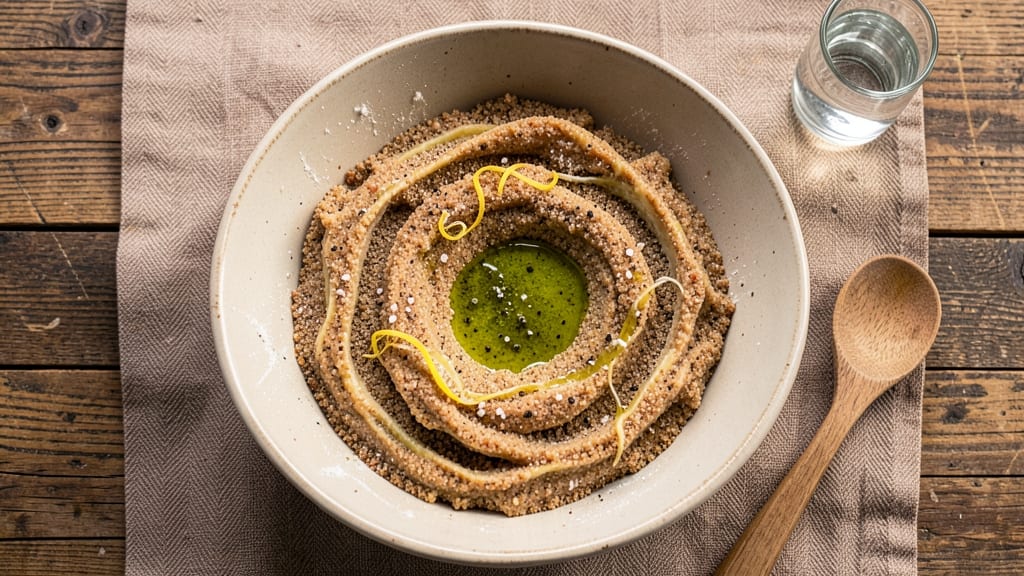
This semolina egg pasta dough recipe delivers the perfect al dente texture in just 15 minutes—no waiting days for the dough to rest. My grandmother used to make pasta this way, and I've perfected her method for modern kitchens.
The secret lies in the semolina's gritty texture, which gives fresh pasta its signature bite, while eggs bind everything together without overworking the dough.
The beauty of this recipe is its simplicity: just semolina, eggs, and a pinch of salt, but the technique matters. I learned the hard way that proper hydration and gentle kneading make all the difference—overmixing leads to tough pasta, while underhydrated dough tears when rolling.
The dough rests for just 15 minutes before use, making it ideal for weeknight cooking.
What you'll end up with is smooth, elastic dough that rolls out beautifully and cooks in minutes to a perfect al dente finish. The semolina's natural grit contrasts perfectly with the tender egg strands, creating pasta that's both satisfying and elegant.
This is the kind of homemade pasta that makes store-bought versions taste like a compromise.
Once you try this method, you'll never go back to dried pasta again. The dough keeps well in the fridge for 2 days, so you can prep ahead for quick meals. Let's get started with the foolproof technique that's been in my family for generations.
Ingredients for semolina egg pasta dough
Three core ingredients transform into restaurant-quality pasta in minutes—no waiting days.
| Ingredient | Amount | Notes |
|---|---|---|
| Semolina Flour 🌾 | 2 cups | Fine grind, not coarse |
| Large Eggs 🥚 | 4 whole | Room temperature preferred |
| Fine Sea Salt 🧂 | ½ tsp | Diamond Crystal preferred |
| Extra-Virgin Olive Oil 🫒 | 1 tbsp | For dusting work surface |
| All-Purpose Flour 🌾 | ¼ cup | Optional for elasticity |
| Cold Water 💧 | 1-2 tbsp | As needed for hydration |
Semolina is non-negotiable here—its gritty texture creates that signature al dente bite. Bob's Red Mill or Barilla semolina work best; avoid coarse varieties that make dough crumbly. Room-temperature eggs blend smoother and yield silkier dough. I always crack mine directly into the bowl to avoid shells. The all-purpose flour is optional but helps if your semolina is extra fine—just 6 tablespoons keeps the dough from sticking too much during rolling.
No semolina? Rice flour at half the amount works in a pinch, but texture suffers. Egg substitutes? Flax eggs (1 tbsp ground flax + 3 tbsp water per egg) mimic binding, though texture won't be identical. Salt matters—Diamond Crystal dissolves cleanly, while table salt can leave gritty residue. Olive oil for dusting? Any neutral oil works, but extra-virgin adds subtle flavor. Pro tip: Chill the dough 15 minutes before rolling—prevents tearing.
Fresh dough keeps 2 days wrapped tightly in plastic in the fridge. For longer storage, shape into nests, freeze on a tray, then transfer to bags for 3 months. Thaw overnight in the fridge before cooking. The pasta cooks in 2-3 minutes—set a timer or test early. Leftovers? Toss with olive oil and store for 1 day max; fresh pasta loses its magic after that.
Why You'll Love This Recipe
- I use this dough for everything: quick fettuccine Alfredo, stuffed shells, even homemade lasagna. Freeze half the batch for lazy nights—it thaws faster than store-bought and tastes way better.
- No-Knead Magic: I swear by this dough—just mix, rest, roll. The semolina gives it structure without the fuss, and those eggs? They bind it like glue. Honestly, I’ve made it while scrolling through my phone.
- Al Dente Every Time: That semolina crust? Chef’s kiss. It’s got a satisfying bite, but the inside stays tender—no more mushy pasta disasters. The olive oil keeps it silky, and the salt? Just enough to make it sing.
- Weeknight Workhorse: I use this dough for everything: quick fettuccine Alfredo, stuffed shells, even homemade lasagna. Freeze half the batch for lazy nights—it thaws faster than store-bought and tastes way better.
Step-by-step instructions for semolina egg pasta dough
Here's how to create the perfect semolina egg pasta dough with a firm yet tender texture.
Combine Semolina and Eggs for a Firm Dough
In a large bowl, create a well in the center of the 2 cups Semolina Flour. Crack in the 4 whole Large Eggs and add the 0.5 tsp Fine Sea Salt. Using a fork, gently draw the flour into the eggs, mixing just until combined. You want a shaggy, uneven dough at this stage—this prevents overdevelopment of gluten, which can make the pasta tough.
Here's the thing—semolina flour absorbs moisture differently than all-purpose flour. The dough should be slightly crumbly but hold together when pressed. If it's too dry, add 1 tablespoon Cold Water at a time until it forms a cohesive mass. The dough should be firm enough to hold its shape when rolled but still pliable. I like to work it by hand for about 2 minutes to distribute the moisture evenly.
Incorporate Olive Oil and Optional All-Purpose Flour
Add the 1 tablespoon Extra-Virgin Olive Oil to the dough and knead gently for another 1-2 minutes by hand. The oil helps create a more tender texture and prevents the dough from becoming too dense. If you're using the optional 0.25 cup All-Purpose Flour, sprinkle it in now and knead just until incorporated—this adds elasticity without compromising the semolina's signature firm bite.
Real talk: semolina dough is different from classic egg pasta. It's naturally drier and more crumbly, so don't be tempted to add extra water. The dough should feel like wet sand when you squeeze it—if it sticks to your fingers, it needs more flour; if it crumbles, add another 1 tablespoon Cold Water and knead again. The goal is a smooth, slightly tacky surface that holds together.
Rest the Dough for Optimal Texture
Shape the dough into a rectangle and wrap it tightly in plastic wrap. Let it rest at room temperature for 30 minutes. This resting period allows the gluten to relax, making it easier to roll out later. I place my dough on a floured surface and cover it loosely with a clean kitchen towel to prevent drying.
Don't skip this step—it's crucial for preventing cracks when you roll the dough. The dough will firm up slightly during resting, which is normal. If you're short on time, you can refrigerate it for up to 2 hours, but room temperature works best for fresh pasta. The longer it rests, the easier it will be to handle without tearing.
Roll and Cut for Perfect Al Dente Pasta
After resting, divide the dough into 4 equal portions (about 4 ounces each) and dust your work surface with a light coating of Semolina Flour. Using a rolling pin, roll each portion as thin as possible—aim for about 1/16-inch thickness. Semolina dough is more forgiving than wheat flour dough, but it still needs patience. If the dough resists, let it rest another 10 minutes before trying again.
Cut the rolled dough into your desired pasta shape using a sharp knife or pasta cutter. For fettuccine, cut into 1/4-inch strips; for tagliatelle, go for 1/8-inch strips. The thinner you roll it, the quicker it'll cook to al dente perfection. If the dough tears, simply patch it together with a bit of water and keep rolling—it's all part of the process.
Cook Immediately for Best Results
Bring a large pot of well-salted water to a rolling boil. Add the fresh pasta in batches (don't overcrowd the pot) and cook for 2-4 minutes, depending on thickness. Fresh semolina pasta cooks faster than dried—test a piece by tasting it when the water is bubbling vigorously. It's done when it floats and has a slight bite in the center.
Here's where it gets fun—drain the pasta and toss it immediately with a little Extra-Virgin Olive Oil to prevent sticking. Serve right away with your favorite sauce, or you can blanch it briefly, shock it in ice water, and store it for up to 2 days in the refrigerator. The key to great semolina pasta is cooking it fresh—it loses its al dente texture if stored uncooked for too long.
Pro Tips For Making Semolina Egg Pasta Dough
- Sift the Semolina: I learned this the hard way—skipping the sift makes the dough clumpy and uneven. Use a fine-mesh sieve to aerate the semolina before mixing, especially if it’s coarse. This ensures the dough stays light and doesn’t turn into a dense brick when rolled.
- Whisk Eggs Like You Mean It: No one likes lumpy pasta. Beat the eggs until they’re completely smooth—no streaks, no yolks clinging to the bowl. A fork works, but an electric mixer cuts the time in half. Trust me, your pasta will thank you.
- Salt the Water After Boiling: Add salt to the pasta water after it’s boiling, not before. The grains of salt can settle at the bottom and leave your pasta bland. Stir it in once the water’s roaring, then taste it—it should pack a punch.
- Rest the Dough 30 Minutes: This isn’t the prettiest method, but it’s the tastiest. Let the dough sit covered at room temp for at least 30 minutes before rolling. It relaxes the gluten, so it doesn’t snap when you cut it—no more frustrated pasta scraps.
Pro cooking tips for perfect results
Semolina Secrets
Semolina's gritty texture is what gives fresh pasta its signature bite, but not all semolina is created equal.
I swear by Barilla semolina for its consistent grind—it's fine enough to blend smoothly with eggs but still holds its structure. Bob's Red Mill is another great choice, but avoid anything labeled "coarse" or "stone-ground" for pasta dough.
The secret to perfect texture lies in the 1:1 ratio of semolina to eggs—this balance creates that ideal al dente finish without making the pasta too dense. 🌾
Egg Temperature Matters
Room-temperature eggs blend into the dough more smoothly, preventing lumps that can create weak spots in your pasta. I always take eggs out of the fridge 20 minutes before using them. Cold eggs can make the dough gummy, while eggs straight from the fridge might not emulsify properly.
For extra insurance, I crack the eggs directly into the bowl to avoid shells—nothing ruins a perfect pasta dough like finding a shell in your final product!
Hydration Balance
Semolina dough is trickier to hydrate than classic egg pasta because it absorbs moisture differently. Start with just 1 tablespoon cold water if the dough feels too dry, but don't overdo it—too much water makes the pasta gummy.
The dough should feel like wet sand when you squeeze it: firm enough to hold its shape but still pliable. If it crumbles, add another 1 teaspoon water and knead gently. Remember, semolina dough is naturally drier than wheat flour dough, so resist the urge to add extra liquid.
Kneading Like a Pro
Unlike classic egg pasta, semolina dough doesn't need extensive kneading—just 2-3 minutes by hand is enough to distribute the moisture evenly. Overworking the dough develops too much gluten, which can make the pasta tough. I use my fingertips to gently press and fold the dough, keeping it just slightly uneven.
The goal is to create a cohesive mass that's firm but still holds together when rolled. If you're using the optional all-purpose flour, sprinkle it in during the final 30 seconds of kneading to add just enough elasticity.
Resting Prevents Tears
This is where most home cooks mess up—skipping the rest! Wrap your dough tightly in plastic and let it rest for 30 minutes at room temperature. This crucial step allows the gluten to relax, making it much easier to roll without tearing.
I place my dough on a floured surface covered with a clean kitchen towel to prevent drying. If you're short on time, you can refrigerate it for up to 2 hours, but room temperature gives the best results for fresh pasta.
The dough will firm up slightly during resting—that's normal and actually helps prevent cracks when rolling.
Rolling Technique
Semolina dough is more forgiving than wheat flour dough, but it still needs patience when rolling. Aim for 1/16-inch thickness—any thicker and your pasta won't cook properly. I start with a 1/4-inch thickness and gradually roll thinner, letting the dough rest 10 minutes between rolls if it resists.
Dust your rolling pin and surface with semolina flour to prevent sticking. If the dough tears, simply patch it together with a bit of water and keep rolling—it's all part of the process! The thinner you roll it, the quicker it'll cook to that perfect al dente finish. 💪
Nutrition facts
Frequently asked questions
Why does semolina pasta have that signature gritty texture?
The coarse texture comes from the semolina flour, which is made from durum wheat and has a higher protein content than regular flour. This gives your pasta that satisfying al dente bite that dried pasta can't match. The gritty texture also helps it hold sauce better, making every bite more flavorful.
Can I make this dough without a rolling pin?
If you don't have a rolling pin, use a bottle or wine glass instead. Press the dough gently and roll it back and forth to achieve even thickness. For extra-thin sheets, fold the dough in half and roll again—this builds up the gluten gradually without overworking it. Just be patient, as semolina dough takes a little more effort to roll smoothly.
How do I fix dough that's too dry and crumbly?
Add 1 teaspoon cold water at a time while kneading gently—just until the dough comes together. The key is to work quickly to prevent overhydration. If it's still crumbly, let it rest 5 minutes wrapped in plastic before rolling. Remember, semolina dough is naturally drier than wheat flour dough, so resist the urge to add too much liquid at once.
What's the best way to store leftover pasta dough?
Wrap the dough tightly in plastic wrap and refrigerate for up to 2 days. For longer storage, shape into nests, freeze on a tray, then transfer to a freezer bag for 3 months. Thaw overnight in the fridge before using. Pro tip: Cook fresh pasta immediately after rolling for the best texture—it loses its al dente quality if stored uncooked for more than a day.
Can I use this dough for stuffed pasta like ravioli?
Yes, but with a few adjustments! Roll the dough slightly thicker (1/8-inch) to prevent filling from leaking. Use a pasta machine or rolling pin to create even sheets. The semolina's texture works beautifully for stuffed pasta—just be extra careful when sealing the edges to avoid tears. For extra strength, let the dough rest 10 minutes longer before rolling.