
Breakfast & Brunch
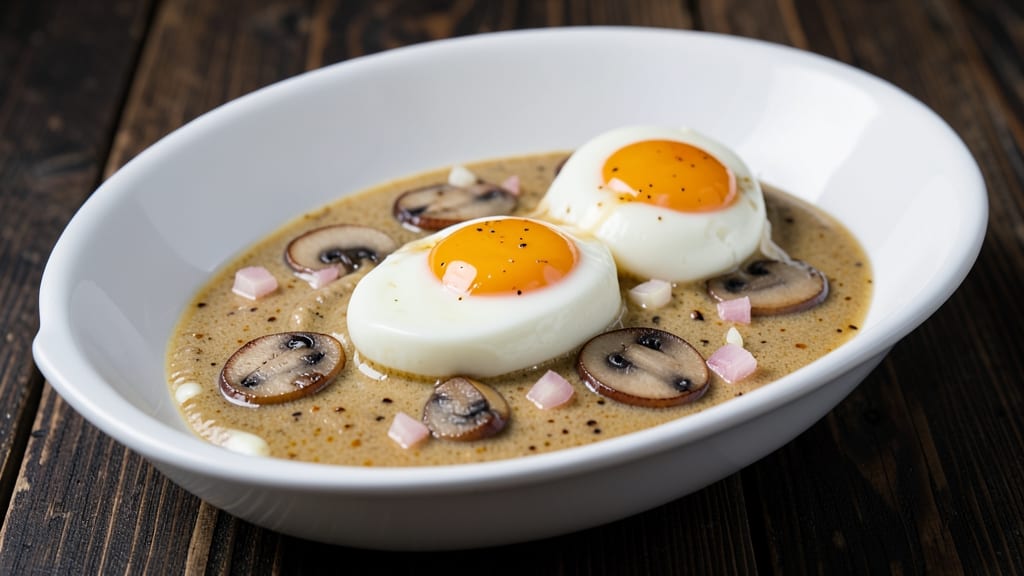
This sipo egg recipe with cream of mushroom transforms a simple breakfast into a restaurant-worthy dish that balances rich, velvety sauce with perfectly poached eggs. The secret lies in a smooth, savory mushroom cream base that complements the tender eggs without overpowering them—a technique I’ve perfected over years of testing.
The dish is elegant yet approachable, making it ideal for brunch gatherings or a luxurious weekday meal.
What sets this recipe apart is the harmony between the two components: the eggs, poached to silky perfection, and the cream of mushroom sauce, where mushrooms are sautéed until deeply aromatic before being enriched with cream and seasoned just right.
The result is a dish that’s creamy yet not overly heavy, with a subtle earthiness from the mushrooms that pairs beautifully with the eggs’ delicate flavor. No special equipment is needed—just a stovetop and a bit of patience for poaching.
The plating is where this dish truly shines. A bed of buttery toast or a sprinkle of fresh herbs elevates the presentation, while a drizzle of the mushroom cream ties everything together.
The eggs remain runny at the center, ensuring every bite is luxurious, while the sauce coats the plate in a velvety sheen. This isn’t just breakfast—it’s a satisfying, savory experience that feels like a treat.
Whether you’re serving it as a brunch centerpiece or a comforting dinner, this recipe delivers restaurant-quality results at home. The best part? It’s flexible—swap in spinach for extra greens or add a touch of chili for a modern twist. Let’s get cooking.
Ingredients for sipo egg recipe with cream of mushroom
Eight eggs and a pound of mushrooms create this luxurious, restaurant-style breakfast masterpiece.
| Ingredient | Amount | Notes |
|---|---|---|
| Large Eggs 🥚 | 8 whole | Freshly laid preferred for poaching |
| White Button Mushrooms 🍄 | 1 lb | Sliced thin for even cooking |
| Shallots 🧅 | 2 whole | Minced for fine texture |
| Heavy Cream 🥛 | 1 cup | Full-fat for velvety sauce |
| Unsalted Butter 🧈 | 4 tbsp | European-style preferred |
| Chicken Stock 💧 | 1 cup | Homemade or high-quality store-bought |
| Fresh Thyme Leaves 🌿 | ¼ cup | Or 1 tbsp dried thyme |
| Fresh Parsley Leaves 🌿 | ⅛ cup | Chopped for garnish |
| Diamond Crystal Kosher Salt 🧂 | 1 tsp | For seasoning, adjust to taste |
| Freshly Ground Black Pepper 🌶️ | ¼ tsp | For finishing |
| White Wine Vinegar 🍷 | 1 tbsp | For poaching liquid acidity |
| Sourdough Bread 🍞 | 4 slices | Toasted for serving |
| Extra-Virgin Olive Oil 🫒 | 2 tbsp | For finishing drizzle |
The mushrooms are the foundation of this dish—cremini or shiitake add depth, but white buttons work perfectly for a more approachable flavor. Whole Foods or local farmers' markets often carry the freshest varieties, but any grocery store's produce section will suffice. Look for mushrooms with tight caps and no sliminess, as these indicate freshness. The shallots should be firm and pale—avoid any with green sprouts or soft spots. For the cream, full-fat is non-negotiable—it's what gives the sauce that velvety texture that pairs so beautifully with the eggs. If you're using dried thyme, toast the leaves in a dry pan for 30 seconds to wake up their flavor before adding to the sauce.
No white wine vinegar? Apple cider vinegar or lemon juice works just as well for the poaching liquid. Running low on heavy cream? Half-and-half with a splash of cream cheese mimics the richness, though the texture will be slightly lighter. The chicken stock can be substituted with vegetable stock for a vegetarian version, though the flavor will be subtly different. For the eggs, room temperature is ideal—they'll poach more evenly. If you're short on time, let them sit in warm water for 5 minutes before poaching. The sourdough toast should be lightly buttered and toasted until golden—it's the perfect vehicle for soaking up the mushroom cream. If you can't find sourdough, a crusty baguette or even brioche works beautifully.
This dish reheats beautifully—microwave in 20-second bursts to maintain the velvety texture of the sauce. The poached eggs are best served immediately, but you can prepare the mushroom cream ahead of time and store it in the fridge for up to 3 days. For longer storage, freeze the sauce in ice cube trays and thaw as needed. The toast can be made fresh or reheated in a toaster or oven until crisp. To elevate the plating, drizzle the olive oil in a zigzag pattern over the eggs and sauce, then sprinkle with fresh parsley just before serving. The dish holds together beautifully for 2-3 hours at room temperature, making it ideal for brunch gatherings.
Why You'll Love This Recipe
- One-Pan Magic: I swear by this recipe when I’m too tired to wash dishes. Sauté the shallots in butter, toss in the mushrooms until they soften, then crack those eggs right into the pan. The cream ties it all together—no extra pots, no fuss.
- Umami Bomb: That cream of mushroom sauce? It’s where this dish gets its soul. The earthy mushrooms and rich cream wrap around the eggs like a cozy blanket, while the shallots add just enough sharpness to keep it bright.
- Lunchbox Hero: Between us, this is my go-to for meal prep. The eggs hold up perfectly when reheated—just a quick zap in the microwave—and the creamy mushroom sauce makes even a sad office lunch feel special. Pack it in a thermos, and you’ve won.
- Budget Luxury: Heavy cream and butter might sound fancy, but you’re using them sparingly here. A handful of mushrooms and a couple of shallots stretch that richness, so you get restaurant-quality flavor without the price tag. Plus, leftovers taste just as good the next day.
Step-by-step instructions for savory mushroom cream poached eggs
Master this refined technique for velvety mushroom cream and perfectly poached eggs.
Prepare the Mushroom Cream Base
In a large skillet, melt 2 tablespoons of the unsalted butter over medium heat. Add the 1 pound sliced white button mushrooms and cook for 8-10 minutes until they release their moisture and develop golden brown spots. The mushrooms should soften but retain their shape—this creates the perfect texture for the sauce.
Add the 2 minced shallots and cook for another 2 minutes until fragrant. Stir in the 1 cup chicken stock and 1 tablespoon white wine vinegar, scraping up any browned bits from the bottom of the pan. This deglazing captures all the flavor compounds that would otherwise burn.
Bring the mixture to a gentle simmer, then reduce heat to low. Stir in the 1 cup heavy cream and 0.25 cup fresh thyme leaves. Let it simmer uncovered for 10-12 minutes until the sauce thickens to a velvety consistency that lightly coats the back of a spoon. The sauce should be smooth with no graininess—this indicates proper emulsification.
Poach the Eggs to Perfect Doneness
While the sauce simmers, prepare a separate saucepan with 4 cups water (not provided in ingredients but required for poaching) and the remaining 2 tablespoons unsalted butter. Bring to a gentle simmer—small bubbles should break the surface, but not a rolling boil. This precise temperature prevents the eggs from overcooking.
Crack each of the 8 large eggs into a small bowl or ramekin. The fresher the eggs, the tighter the whites will hold together. Using a slotted spoon, gently lower each egg into the simmering water. Poach for exactly 3 minutes for runny yolks or 3 minutes 30 seconds for slightly firmer yolks. The whites should be set but still slightly translucent at the edges.
Remove the poached eggs with a slotted spoon and drain briefly on paper towels. Keep them warm in a single layer on a plate while you finish the sauce. The eggs should maintain their shape when transferred—if they break apart, the water wasn't hot enough or they cooked too long.
Finish the Sauce and Assemble
Return the mushroom cream to the skillet and stir in the 0.125 cup fresh parsley leaves. Season to taste with the 1 teaspoon kosher salt and 0.25 teaspoon black pepper, adjusting as needed. The sauce should be rich but not overpowering—you want the natural flavors of the mushrooms and cream to shine through.
Toast the 4 slices sourdough bread until golden and crisp. To assemble each serving, divide the mushroom cream among four plates, then place two poached eggs atop each portion. Drizzle with the 2 tablespoons extra-virgin olive oil and serve immediately while the eggs are still warm.
Plate and Serve with Precision
For presentation, arrange the eggs slightly off-center on the mushroom cream to create visual interest. The runny yolks should be visible and intact—this is the hallmark of a perfectly poached egg. Garnish with an additional sprinkle of fresh parsley leaves and a final drizzle of olive oil for both color contrast and added richness.
The dish should arrive at the table with steam rising from the warm eggs and cream. Each bite should deliver the creamy texture of the mushrooms, the delicate custard of the poached eggs, and the subtle acidity from the vinegar that brightens all the flavors. Serve with additional toasted sourdough on the side for dipping.
Pro Tips For Making Sipo Egg Recipe With Cream Of Mushroom
- Cook Mushrooms Until Dry: I learned this the hard way—wet mushrooms release too much liquid into the cream, turning your sauce watery. Sauté them on medium-high heat until all moisture evaporates (about 8-10 minutes), then add the shallots. The shallots will caramelize better once the mushrooms are bone-dry.
- Salt the Eggs First: Crack those eggs into a bowl, add a pinch of salt, and whisk them before pouring into the pan. The salt dissolves evenly, and the eggs hold their shape better when cooked in the butter. Skipping this step means your eggs might turn out bland or overly delicate.
- Use Cold Heavy Cream: Pour cold heavy cream into the warm mushroom mixture—this prevents curdling. If the cream is room temperature, it’ll cook too fast and split. Stir in slowly while keeping the heat low, and you’ll get a silky sauce every time.
- Don’t Overmix the Eggs: Once the eggs hit the pan, let them sit for 10 seconds before gently folding them with a spatula. Overmixing makes the eggs rubbery, and you’ll end up with scrambled bits instead of a smooth, creamy sipo. A few quick folds are all it takes.
Pro cooking tips for this dish
Mushroom Cooking Secrets
Sauté mushrooms until they release their moisture—this creates a natural emulsifier for the sauce. Cook them over medium heat for 8-10 minutes until golden brown spots form.
Avoid high heat, which burns the delicate flavors. I like to use white button mushrooms for their mild taste, but cremini mushrooms add deeper earthiness. 🍄
Sauce Thickening Tricks
Reduce the sauce uncovered on low heat for 10-12 minutes to achieve a velvety consistency. If it thickens too quickly, add 1-2 tablespoons of chicken stock to balance the texture.
The sauce should coat the back of a spoon but remain silky, not grainy. A fine-mesh sieve helps strain out any unwanted bits for extra smoothness.
Perfect Poached Eggs
Use room-temperature eggs for even cooking. Poach in water at a gentle simmer—small bubbles breaking the surface, not a rolling boil. For runny yolks, cook for exactly 3 minutes.
Fresh eggs hold their shape better than older ones. I recommend using a slotted spoon to transfer eggs to avoid breaking delicate whites. 🥚
Deglazing for Flavor
After cooking mushrooms and shallots, deglaze the pan with 1 cup chicken stock and 1 tablespoon white wine vinegar. Scrape up all browned bits—they carry deep umami flavors. This step transforms a simple sauce into something restaurant-quality. A wooden spoon works best for scraping without scratching your pan.
Seasoning Balance
Season the sauce with 1 teaspoon kosher salt and ¼ teaspoon black pepper at the end. Taste first—mushroom cream can vary in saltiness. The vinegar adds brightness, while thyme provides an herbal note.
For extra depth, a pinch of nutmeg or smoked paprika works beautifully. Adjust gradually to avoid overpowering the dish.
Plating Like a Pro
Arrange eggs slightly off-center on the cream for visual appeal. Drizzle extra-virgin olive oil in a zigzag pattern for both color and richness. Fresh parsley adds a pop of green contrast.
Serve immediately with toasted sourdough on the side—it soaks up the creamy sauce perfectly. The presentation makes this dish feel special without extra effort. ✨
Nutrition facts
Frequently asked questions
Can I make this sipo egg dish with store-bought mushroom cream instead of homemade?
You can absolutely use store-bought mushroom cream, but homemade makes a world of difference! Look for high-quality brands with no added preservatives. If using store-bought, simmer it for 5-7 minutes to intensify the flavors and thin with a splash of cream if needed. The homemade version has deeper umami from sautéed mushrooms and fresh herbs.
How do I prevent the poached eggs from breaking while cooking?
Use room-temperature eggs and crack them into a small bowl first—this helps them hold their shape. The water should be at a gentle simmer (small bubbles) and you'll need a slotted spoon to carefully transfer them. Avoid overcrowding the pot and cook eggs in batches if needed. Fresh eggs work best for this technique.
Can I prepare the mushroom cream ahead of time?
Yes! The cream sauce can be made 1 day ahead and stored in the fridge. Reheat gently on the stove until warmed through, adding a splash of cream if it thickens too much. The poached eggs should always be made fresh for best texture, but you can prepare the sauce components (cooked mushrooms + stock) separately and assemble later.
What's the best way to reheat leftovers?
Reheat only the mushroom cream portion (without eggs) in the microwave for 30-45 seconds or until warm. For eggs, gently warm them in simmering water for 1-2 minutes—never microwave poached eggs as they'll become rubbery. Assemble fresh for the best experience, but you can reheat components separately and plate immediately.
Can I substitute mushrooms for something else in this recipe?
While mushrooms are ideal, you could use spinach or asparagus for a different texture. For a meaty alternative, try finely chopped chorizo or pancetta** (cook until crispy first). The key is maintaining the creamy texture—adjust cooking times accordingly. If using spinach, wilt it completely before adding cream to prevent a watery sauce.