
Breakfast & Brunch
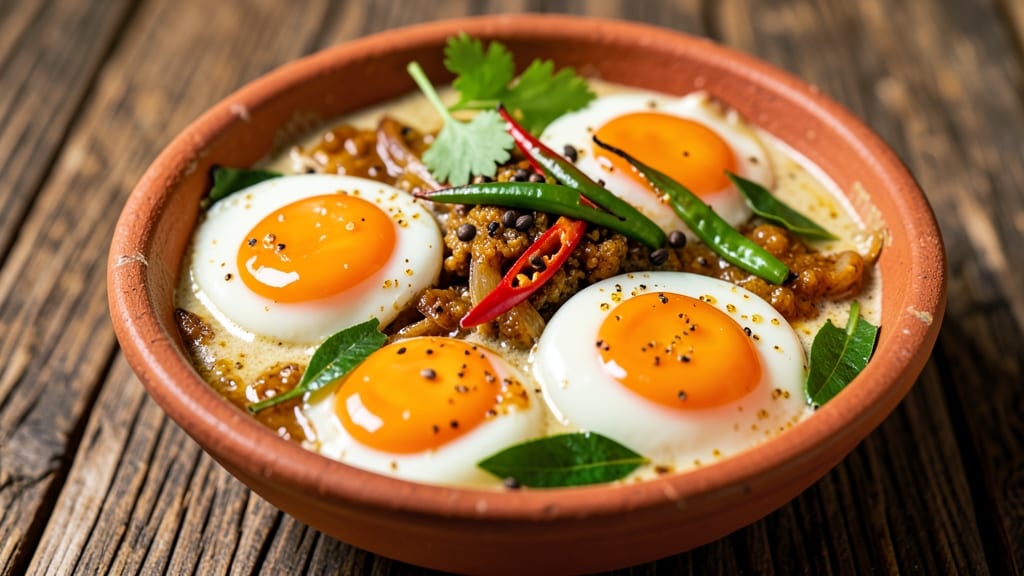
This South Indian Egg Masala transforms simple eggs into a fragrant, spiced coconut curry that's tender, aromatic, and packed with regional flavors.
The secret lies in the tadka—slow-toasting whole spices in hot oil until they release their deep, nutty aroma before gently simmering the eggs in coconut milk and tamarind.
I first made this version after traveling through Tamil Nadu, where every home cook had their own twist on the dish, and it quickly became my go-to breakfast when I crave something both comforting and vibrant.
The recipe balances heat and creaminess perfectly, with mustard seeds, curry leaves, and green chilies forming the flavor foundation. Unlike many egg curries, this version relies on coconut milk for richness rather than heavy cream, keeping it light yet deeply satisfying.
The eggs cook just until tender—never rubbery—soaking up the spiced coconut sauce while maintaining their shape. This method ensures every bite delivers that perfect contrast of creamy sauce and firm egg, a hallmark of authentic South Indian cooking.
What makes this dish truly special is how versatile it is—serve it with steamed basmati rice for a hearty meal, pair it with fluffy appalam (rice pancakes) for a breakfast feast, or enjoy it with warm roti for a satisfying lunch.
The aromatic spices and coconut milk create a curry that tastes even better the next day, making it ideal for meal prep. Whether you're recreating a family recipe or exploring South Indian cuisine for the first time, this egg masala delivers restaurant-quality results with minimal effort.
The key to success lies in patience—letting the spices bloom fully before adding the eggs ensures maximum flavor infusion. For an extra layer of depth, I recommend toasting the coconut milk lightly before adding it to the pot, which intensifies its natural sweetness.
This recipe is a testament to how simple ingredients, when handled with care, can create something extraordinary. Let's get cooking!
Ingredients for south indian egg masala
Simple eggs and spices transform into a fragrant, creamy South Indian masterpiece.
| Ingredient | Amount | Notes |
|---|---|---|
| Large Eggs 🥚 | 8 whole | Freshly laid preferred |
| Coconut Milk 🥥 | 1 can | Full-fat, 13.5 oz can |
| Mustard Seeds 🌶️ | 1 tbsp | Whole, yellow variety |
| Curry Leaves 🌿 | ¼ cup | Fresh, lightly crushed |
| Green Chilies 🌶️ | 2 whole | Slit lengthwise for heat |
| Ginger 🧄 | 1 tbsp | Fresh, finely grated |
| Garlic Cloves 🧄 | 4 cloves | Peeled, minced fine |
| Tamarind Paste 🍈 | 1 tbsp | Unsweetened, dissolved |
| Turmeric Powder 🌶️ | ½ tsp | Bright yellow color |
| Cumin Seeds 🌿 | ½ tsp | Toasted lightly |
| Coriander Powder 🌿 | ½ tsp | Freshly ground preferred |
| Salt 🧂 | 1 tsp | Adjust to taste |
| Vegetable Oil 🫒 | ½ cup | High smoke point |
| Fresh Cilantro 🌿 | ¼ cup | Chopped, for garnish |
The mustard seeds and curry leaves are non-negotiable—they carry that signature South Indian aroma. Whole mustard seeds from the bulk bin at Indian grocery stores (like Patel Brothers or Patel Brothers online) are best—they pop and sizzle dramatically when toasted. Fresh curry leaves? Look for bright green, plump leaves at the same stores or in the frozen section of well-stocked markets. If you can't find them, dried curry leaves work at half the amount—just crush them lightly between your palms first. The green chilies should be fresh, not powdered—serrano or Thai bird's eye work perfectly, but adjust the number based on your heat tolerance.
No tamarind paste? Lemon juice plus a pinch of sugar gets you close, though it won't have the same tangy depth. The coconut milk can be swapped for light coconut cream if you want it richer, but the full-fat version gives that authentic texture. For the ginger and garlic, fresh is always better, but if you're in a pinch, paste works at double the amount. The spices? Penzeys or Spicewalla for the best quality, but the regular grocery store stuff is fine if it's labeled '100% pure' and smells vibrant. Toast your cumin seeds until fragrant—that nutty aroma is what makes this dish sing.
Store the spice mix (cumin, coriander, turmeric) in a dark glass jar for up to 6 months. The curry reheats beautifully—just add a splash of water if it thickens. For meal prep, make a double batch and freeze portions in airtight containers for up to 3 months. The eggs should be used within 2 days if prepped ahead, but the sauce keeps for 5 days in the fridge. Garnish with fresh cilantro right before serving—it brightens everything up.
Why You'll Love This Recipe
- No-Chop Nightmare: I swear, this recipe only needs two things chopped—green chilies and maybe onions if you’re feeling fancy. The rest? Just crack eggs, toast spices, and let the coconut milk do its magic. Between us, I’ve made this after a 10-hour shift with zero prep—it still tasted like I cared.
- Spice Bomb Balance: That first sizzle of mustard seeds and curry leaves in hot oil? Chef’s kiss. The coconut milk softens the heat from the green chilies just enough to make it addictive, not painful. My husband calls it “the only egg dish that doesn’t taste like a sad Tuesday.”
- Lunchbox Hero: Pack this cold or reheated—it’s that good. The eggs hold up perfectly, and the masala clings to them like a hug. I’ve sent it in my kids’ lunches, brought it to potlucks (yes, even the “I don’t eat spicy” coworker ate seconds), and it’s still my go-to when I need a meal that doesn’t require a thermos.
- Pantry Magic: Three eggs, a can of coconut milk, and a handful of spices? That’s it. No fancy ingredients, no last-minute grocery runs. Honestly, I’ve made this with whatever was in my cupboard—even when I forgot curry leaves, it still worked. And because it reheats like a dream, I’ve fed a family of five for under $5. Budget win.
Step-by-step instructions for South Indian egg masala
Here's how to make this creamy, spiced coconut egg curry with perfectly tender eggs every time.
Prepare the Spiced Base
Heat the 0.5 cup vegetable oil in a heavy-bottomed pan over medium heat. Add the 0.5 tsp toasted cumin seeds and let them sizzle for 30 seconds until they release their aroma—this is when you'll smell that warm, nutty fragrance. Immediately add the 1 tbsp mustard seeds and let them pop and crackle for about 1 minute. You'll hear them popping like tiny fireworks.
Next, add the 1 tbsp finely grated ginger and 4 cloves minced garlic cloves. Sauté for 2-3 minutes until the raw garlic smell disappears and they turn golden. This ensures you get all the flavor without any bitterness. Then add the 2 whole slit green chilies and 0.25 cup lightly crushed curry leaves, cooking for another 1 minute until the leaves darken slightly and release their citrusy aroma. The base should now smell like a bustling South Indian kitchen.
Build the Flavor Foundation
Lower the heat to medium-low and add the 0.5 tsp turmeric powder and 0.5 tsp coriander powder, stirring for 30 seconds to toast the spices gently. This step deepens their flavors. Then pour in the 1 tbsp tamarind paste dissolved in ½ cup warm water (stir until smooth first). The mixture will bubble gently—let it simmer for 2-3 minutes until it thickens slightly and the raw tamarind tang mellows into a sweet-sour balance.
Add the 1 can coconut milk and 1 tsp salt, stirring well to combine. Bring the mixture to a gentle simmer and let it cook uncovered for 5 minutes, stirring occasionally. You're looking for the coconut to infuse with the spices and the mixture to thicken just slightly. The sauce should coat the back of a spoon but still be pourable. If it's too thick, add 1-2 tablespoons water to reach your desired consistency.
Cook the Eggs to Perfection
While the coconut mixture simmers, gently crack the 8 whole large eggs into a bowl. Add 1 tablespoon water to each egg and whisk lightly—this helps prevent the eggs from curdling when they hit the hot sauce. The eggs should be at room temperature for even cooking.
Carefully pour the eggs into the simmering coconut mixture, stirring gently but constantly for 3-4 minutes over low heat. The eggs will start to thicken and form soft curds. Keep stirring to ensure they cook evenly without breaking. You want the eggs to be just set but still tender—like soft scrambled eggs—so they absorb the coconut flavor beautifully. The curry should have a thick, creamy consistency with no visible liquid.
Finish and Garnish
Once the eggs are just set, remove the pan from heat and let it sit for 1-2 minutes. This resting time allows the flavors to meld together. Taste and adjust the seasoning with more salt if needed—South Indian flavors often need a little extra salt to balance the spices.
Garnish with the 0.25 cup chopped fresh cilantro, stirring gently to distribute it evenly. The bright green color will contrast beautifully with the creamy yellow curry. Serve immediately with steamed rice or warm appam for the perfect South Indian meal. The eggs should be tender with just a slight set, and the coconut sauce should coat every bite with its rich, spiced flavor.
Pro Tips For Making South Indian Egg Masala
- CRACK EGGS COLD: Skip the room-temperature wait—crack eggs straight from the fridge into a bowl with a splash of coconut milk first. The cold yolks won’t scramble prematurely when they hit the hot oil, and the coconut milk tempers them just enough for a smoother curd.
- TOAST CURRY LEAVES: Dry-toast curry leaves in oil for 10 seconds before adding mustard seeds. They’ll release their aroma instantly, and the mustard won’t splatter all over your kitchen. (Yes, even if you’re impatient like me.)
- DON’T BOIL THE CHILIES: Add slit green chilies after the mustard seeds pop—when the oil is shimmering but not smoking. Boiling them turns them bitter, and you’ll end up with a dish that tastes like medicine instead of masala.
- STIR THE COCONUT MILK: Give the coconut milk a quick whisk before pouring it in—especially if it’s thick or separated. A smooth, even consistency means your eggs will cook gently in a velvety base, not in a lumpy, uneven sauce. (Your future self will notice.)
Dietary considerations for these flavors
Vegetarian-Friendly
This South Indian Egg Masala is naturally vegetarian-friendly, relying on eggs as its protein source rather than meat. The dish avoids dairy beyond the coconut milk, making it suitable for lactose-intolerant individuals when using dairy-free coconut milk brands like So Delicious or Goya.
The tamarind and coconut base provide natural acidity and richness without animal products. 🌱
Gluten-Free Adaptation
As written, this recipe is gluten-free since it contains no wheat, barley, or rye. However, always double-check your tamarind paste and spice blends for hidden gluten—some commercial brands may contain fillers.
I recommend Annie's Organic tamarind paste, which is certified gluten-free. The coconut milk and curry leaves are also naturally gluten-free ingredients.
Egg Allergy Options
For those with egg allergies, you can substitute the eggs with chickpeas (½ cup, drained) or tofu (½ cup, cubed) for a protein-rich alternative. Chickpeas work particularly well as they absorb flavors similarly to eggs.
Reduce the cooking time by 2 minutes when using tofu to prevent overcooking. The coconut-tamarind sauce remains the same, ensuring the dish maintains its signature South Indian flavors.
Spice Sensitivity
Adjust the heat level by reducing the green chilies to just 1 whole chili or removing them entirely. For milder flavor, replace the fresh chilies with ½ tsp mild chili powder instead.
The mustard seeds and curry leaves can also be omitted if their strong aromas trigger sensitivities, though they carry much of the dish's authentic character. Always toast spices gently to reduce their sharpness.
Meal Prep Considerations
This curry reheats beautifully for up to 3 days in the refrigerator, making it ideal for meal prep. Store in airtight containers with the sauce and eggs separated to prevent overcooking during reheating.
When ready to serve, gently reheat the sauce on low heat for 3 minutes, then add the eggs and warm through for just 1 minute. Avoid microwaving to preserve the eggs' tender texture.
Nutrition facts
Frequently asked questions
Why does my South Indian egg masala turn out too watery?
The coconut milk should thicken naturally as it simmers with spices. If it's too thin, reduce the heat to low and cook uncovered for an extra 3-5 minutes, stirring occasionally. For a quicker fix, mix 1 teaspoon cornstarch with 2 tablespoons water, stir into the curry, and simmer for 1 minute. The key is patience—rushing the simmering causes thin sauce.
Can I use powdered spices instead of whole spices for the tadka?
Yes, but the flavor won't be as deep. For the tadka, use ½ teaspoon ground cumin and ½ teaspoon ground coriander instead of whole seeds. Toast the powders in the oil for 30 seconds to release their aroma, then proceed with the recipe. Whole spices like mustard seeds and curry leaves are irreplaceable for that authentic South Indian pop and aroma.
How do I prevent the eggs from breaking while cooking?
Whisk the eggs gently with 1 tablespoon water per egg before adding them to the sauce. This creates a protective layer around each egg. Cook on low heat and stir constantly for 3-4 minutes—never let the sauce boil. The eggs should be just set when done, not fully scrambled. For extra protection, add the eggs in batches if needed.
What's the best way to store leftovers?
Store the curry in airtight containers in the fridge for up to 3 days. For best texture, separate the sauce and eggs (if fully cooked) and reheat the sauce alone on low heat for 3 minutes. Add the eggs back in just to warm through—microwaving makes the eggs rubbery. The flavors actually improve after a day, making this perfect for meal prep!
Can I make this dish without coconut milk?
Yes! Replace the coconut milk with 1 cup Greek yogurt (whisked smooth) or 1 cup heavy cream for richness. For a lighter version, use 1 cup vegetable broth and add 1 tablespoon cornstarch to thicken. The tamarind and spice blend will still shine, though the texture will differ. The coconut adds that signature South Indian creaminess, but these alternatives work in a pinch.