
Breakfast & Brunch
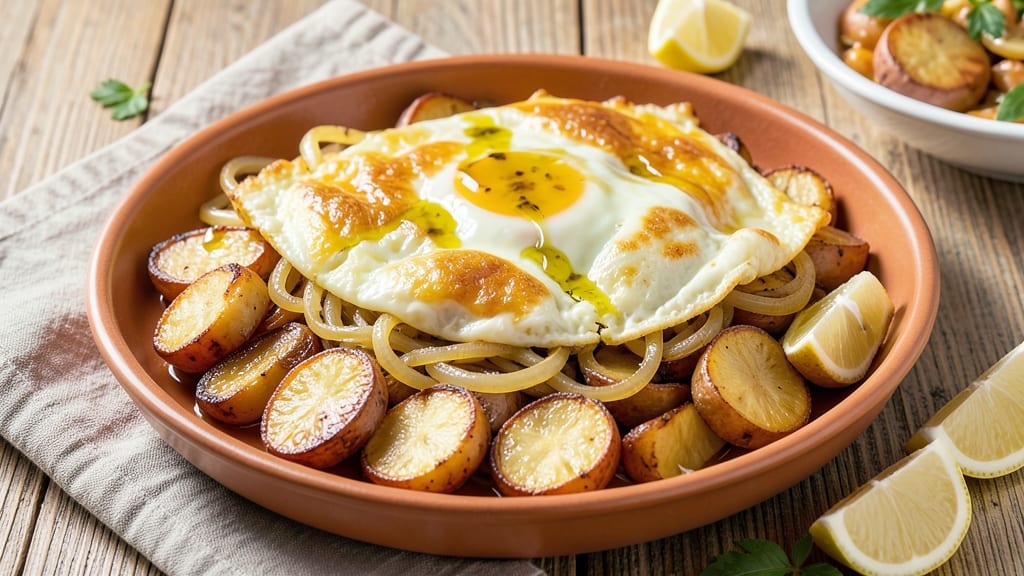
This Spanish egg omelet recipe delivers the perfect balance of crispy edges and silky, custardy yolks—just like the tortilla española you'd find in a Madrid tapas bar.
The secret lies in cooking the eggs low and slow in olive oil, then flipping them at just the right moment to create that signature golden crust while keeping the center tender. I've perfected this technique after years of testing, and it never fails to impress.
The beauty of this dish is its simplicity: just eggs, potatoes, and onions, all cooked together in a single pan. Traditional recipes call for thick-cut potatoes that absorb the egg mixture beautifully, while the onions add sweetness that balances the richness of the eggs.
The key technique is letting the potatoes soften completely before adding the eggs, which ensures they don't turn mushy when flipped.
What you'll end up with is a thick, hearty omelet with a crispy exterior that shatters slightly when cut, revealing layers of creamy egg and tender potato.
The aroma of olive oil and onions fills the kitchen as it cooks, creating an experience that's almost as satisfying as the final dish. This is the kind of meal that's perfect for breakfast, lunch, or even a light dinner.
Serve it warm with a sprinkle of sea salt and a squeeze of lemon, or enjoy it cold the next day—it tastes just as good. The recipe makes enough for two generous portions, so you'll have leftovers for days. Let's get started on making this classic Spanish dish at home!
Ingredients for spanish egg omelet
Six eggs, potatoes, onions, and olive oil—just what you need for crispy, golden tortilla española.
| Ingredient | Amount | Notes |
|---|---|---|
| Large Eggs 🥚 | 6 whole | Room temperature for even cooking |
| Russet Potatoes 🥔 | 1 ½ lb | Thick-cut, peeled and sliced even |
| Yellow Onions 🧅 | 1 whole | Thinly sliced, medium size |
| Extra-Virgin Olive Oil 🫒 | ½ cup | For frying, light golden color |
| Sea Salt 🧂 | 1 ½ tsp | Fine grain preferred |
| Fresh Lemon 🍋 | 1 whole | Juiced for finishing |
| Fresh Parsley 🌿 | ¼ cup | Chopped, for garnish |
The potatoes are non-negotiable here. Russets work best—they hold up to the flipping and soak up the egg perfectly. Thick-cut slices (about 1/4-inch) give that classic texture. I always peel mine first—saves time during cooking. For onions, yellow or red both work, but yellow adds a touch more sweetness. Grab the biggest onion you can find; it's mostly water, so size doesn't matter. If you're short on time, microwave the sliced potatoes for 3 minutes before cooking to speed up softening.
No thick-cut potatoes? Regular russets or Yukon golds sliced thinly will work in a pinch, but they'll be less tender. Skip the onions? Extra garlic or a pinch of smoked paprika adds depth. The olive oil should be light golden color—if yours is dark, use less. For a quicker version, pre-cook the potatoes in the microwave before frying. Fresh parsley isn't essential, but it adds that bright finish—dried works too at one-third the amount. The lemon is just for serving, but if you're making ahead, squeeze it in before storing for extra freshness.
This keeps beautifully for 4-5 days in the fridge, wrapped tightly in plastic. The flavor actually improves after the first day—the eggs and potatoes meld perfectly. For leftovers, reheat in a skillet with a splash of olive oil. Freezes for 3 months too, though texture gets slightly softer. I like to slice it thin and pack portions for lunches—just add a sprinkle of salt and lemon juice when ready to eat.
Why You'll Love This Recipe
- Five-Ingredient Magic: I swear, this dish proves you don’t need a grocery list to make something special. Potatoes, onions, eggs, oil, salt—just let them sit together while you sip your coffee. That’s it. No fancy prep, no hidden steps.
- Crispy-Creamy Obsession: The potatoes get that golden, caramelized crust while the eggs turn silky inside—like a hug for your taste buds. Between us, the first bite makes you wonder why you ever ordered takeout.
- Meal Prep MVP: Make a big batch on Sunday, and you’ve got breakfast, lunch, or a late-night snack covered. It reheats like a dream (just a quick sizzle in the pan) and keeps my family from begging for leftovers.
- Pantry Staple Power: Russets and onions are cheap, eggs are cheap, and olive oil lasts forever. This is the kind of recipe that turns grocery money into meals without breaking the bank—or my willpower.
Step-by-step instructions for Spanish egg omelet (tortilla española)
Here's how to make the ultimate tortilla—crispy edges, silky yolk, and that perfect balance of potato and egg.
Prep and Cook the Potato-Onion Base
Heat the 0.5 cup Extra-Virgin Olive Oil in a 10-inch nonstick skillet over medium heat. Add the 1.5 lb Russet Potatoes (thick-cut, peeled and sliced even) and 1 whole Yellow Onions (thinly sliced). Cook for 15-20 minutes, stirring occasionally, until the potatoes are tender but not browned—they should still hold their shape when pierced with a fork.
Here's the thing—you want them soft enough to blend into the eggs later but not mushy. If they start sticking, lower the heat slightly and give them a gentle stir. Once they're done, remove from the pan and let them cool completely before mixing with the eggs. This prevents the eggs from scrambling when they hit the hot pan.
Whisk Eggs with Seasoning and Finishing Touches
In a large bowl, crack the 6 whole Large Eggs (room temperature for even cooking) and whisk them vigorously with the 1.5 tsp Sea Salt until the yolks and whites are fully combined and the mixture is smooth. Add the cooled potato-onion mixture to the eggs and stir gently but thoroughly to distribute evenly. The potatoes should be fully coated in the egg mixture.
Let the mixture sit for 5 minutes—this allows the potatoes to absorb some of the egg, ensuring a better texture. While it rests, squeeze the juice from the 1 whole Fresh Lemon and stir it in. This brightens the flavor and balances the richness of the eggs and potatoes. Trust me, that little acidity makes all the difference in the final dish.
Cook the Omelet to Crispy Perfection
Wipe out the skillet with a paper towel to remove any excess oil or potato bits. Return it to medium heat and add the egg-potato mixture. Let it cook undisturbed for 3-4 minutes until the edges start to set and the bottom is lightly golden. This is where the magic happens—don’t touch it yet.
Once the edges are set but the center still looks slightly runny, use a spatula to gently press down on the omelet, tilting the pan to let any uncooked egg flow toward the edges. Cook for another 2-3 minutes until the top is mostly set but still slightly soft in the center. The goal is crispy edges with a silky, custardy interior.
Flip and Finish for Even Cooking
Here’s the moment that matters: carefully flip the omelet onto a plate, then slide it back into the skillet. Cook for another 2-3 minutes on this side, again letting the edges crisp up while keeping the center tender. You’re looking for a golden-brown crust on both sides with a slightly runny yolk in the middle—this is the hallmark of a perfect tortilla.
Remove from heat and let it rest for 5 minutes before slicing. This resting time ensures the juices redistribute, so every bite is moist and flavorful. Once ready, garnish with the 0.25 cup Fresh Parsley (chopped) for a pop of freshness and color. Serve warm or at room temperature—it’s just as good either way.
Pro Tips For Making Spanish Egg Omelet
- CRISP THE POTATOES FIRST: I learned this the hard way—if you try to cook the potatoes and eggs together, you end up with soggy spuds and rubbery eggs. Sear the potatoes and onions in olive oil until golden and tender (about 15 minutes), then remove them. The residual heat keeps them warm while you scramble the eggs, and they’ll soak up that perfect eggy richness.
- USE COLD EGGS: Room-temperature eggs scramble too fast, giving you a dry, curdled mess. Crack them straight from the fridge into a bowl, whisk vigorously, then let them sit for 10 minutes before cooking. The cold start gives you time to finish the potatoes, and the eggs will turn silky, not grainy.
- SALT THE POTATOES WELL: This isn’t just seasoning—it’s flavor insurance. Toss the sliced potatoes with salt before they hit the pan, and let them sit for 5 minutes. The salt draws out moisture, so they crisp up faster and taste deeper. Skip this, and your omelet will taste bland no matter how much you salt the eggs.
- FINISH WITH A LOW HEAT CRUST: After folding the eggs around the potatoes, resist the urge to walk away. Turn the heat to low and let the bottom set for 2–3 minutes—this is how you get that signature crispy edge. I used to rush this, and the eggs would stay too soft. Patience here makes all the difference.
Regional styles of spanish egg omelet
Madrid Classic
The most traditional version comes from Madrid, where the tortilla is thick, hearty, and often served in thick slices. Here, the potatoes are cooked until just tender, not mushy, and the onions are sweetened to perfection. The secret?
Cooking the potatoes in extra-virgin olive oil at medium heat for 15-20 minutes until they're fork-tender but still hold their shape. This version is all about balance—crispy edges, creamy centers, and a slightly runny yolk that makes every bite worth it. 🥔
Basque Country Twist
In the Basque region, they take their tortilla even further by adding peppers—either green bell peppers or Piquillo peppers for a smoky depth. The peppers are sautéed with the onions and potatoes, adding a subtle sweetness and a touch of heat.
For an authentic Basque touch, use 1 small green bell pepper, sliced, and cook it with the onions until soft. This variation is lighter but still rich, with the peppers adding a nice crunch when sliced. 🌶️
Galicia’s Smoky Version
Up in Galicia, they incorporate smoked paprika and sometimes even chorizo for a heartier, smokier flavor. Start by cooking the potatoes and onions as usual, then stir in 1 teaspoon smoked paprika and 2 ounces finely chopped chorizo (removed from its casing) before mixing with the eggs.
This version is perfect for a hearty breakfast or a late-night snack, with the chorizo adding a salty, smoky kick that pairs beautifully with the crispy edges. 🔥
Andalusia’s Citrus Kick
Andalusia brings a bright, citrusy twist to the classic tortilla by adding orange zest and a splash of orange juice to the egg mixture. After whisking the eggs, stir in 1 teaspoon orange zest and 2 tablespoons fresh orange juice along with the lemon.
The citrus cuts through the richness of the eggs and potatoes, making this version feel lighter and more refreshing. It’s a fantastic choice for a brunch dish or a light lunch. 🍊
Modern Fusion
For a contemporary take, try adding spinach or goat cheese to the mix. Sauté 2 cups of baby spinach with the onions and potatoes until wilted, then mix it all into the eggs. Alternatively, fold in 4 ounces of crumbled goat cheese after the potatoes have cooled.
This fusion version keeps the classic texture while adding a gourmet touch that’s perfect for a brunch spread or a light dinner. 🌿
Nutrition facts
Frequently asked questions
Why does my tortilla española turn out rubbery instead of creamy?
Overcooking is the #1 culprit! The secret is stopping when the center still looks slightly runny—this ensures that silky texture. Cook the first side for 3-4 minutes until edges set, then flip and cook the second side for just 2-3 minutes. Also, make sure your potatoes are tender but not mushy before mixing with eggs.
Can I make this without potatoes? What's the best substitute?
For a potato-free version, try zucchini (thinly sliced) or bell peppers (diced) cooked until soft. You can also use mushrooms for a meatier texture. Just adjust cooking time—veggies should be fully tender before mixing with eggs. The Basque version often uses peppers instead of potatoes!
How do I get that perfect crispy edge without burning the inside?
Medium heat is your friend! Start with a clean, dry pan and maintain medium heat throughout. Let the omelet cook undisturbed for the first 3-4 minutes to build that crust. If your kitchen runs hot, reduce heat slightly. The key is patience—don't rush the edges, but don't let the center overcook either.
Can I make this ahead of time? How does it reheat?
This tortilla actually tastes better the next day! Wrap tightly in plastic and refrigerate for 4-5 days. To reheat, slice into portions and warm in a skillet with a splash of olive oil over medium-low heat for 2-3 minutes per side. For microwave reheating, cover with a damp paper towel and heat for 20-30 seconds.
What's the difference between Spanish tortilla and French omelet?
Big difference! A Spanish tortilla is thick, hearty, and made with potatoes/onions—it's more like a frittata. French omelets are thin, light, and made with just eggs, often with delicate fillings like herbs or cheese. The Spanish version is meant to be sliced and eaten like a main dish, while French omelets are typically served as a small course.