
Breakfast & Brunch
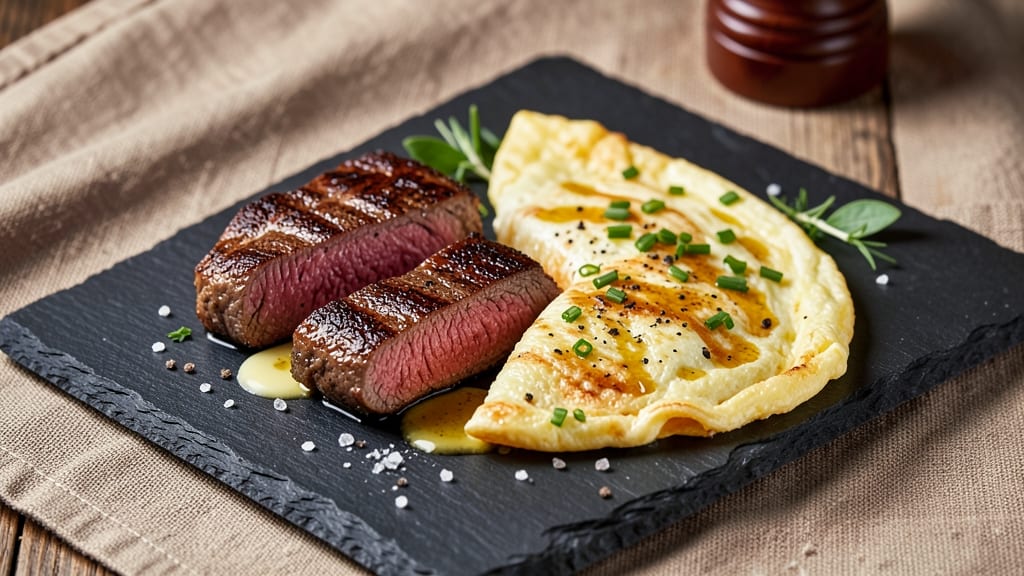
This steak and egg omelette recipe delivers restaurant-quality breakfast in just 15 minutes, combining perfectly seared steak with a rich, caramelized omelette crust. The secret lies in high-heat searing for the steak—achieving that ideal medium-rare finish—and whisking the eggs just until they're silky, not frothy.
I developed this after years of testing breakfast combinations, and it's become my go-to for weekend mornings when I want something hearty yet quick.
The magic happens in two stages: first, the steak. A quick sear in a screaming-hot pan creates that coveted crust while keeping the inside tender. Then, the eggs transform into a golden, slightly crispy omelette with a custardy center, all thanks to a low-and-slow finish on the stovetop.
What makes this dish special is how the steak's savory depth complements the eggs' creamy texture, creating a balance that's both satisfying and elegant.
By the time you plate this dish, you'll have perfectly cooked steak with a caramelized crust, wrapped in an omelette that's golden on the outside and tender within. The presentation is simple but impressive—steak slices fanned over the omelette, garnished with fresh herbs or a sprinkle of flaky salt.
It's the kind of breakfast that feels like a treat, not a chore.
This recipe works equally well for weeknight breakfasts or lazy weekend mornings. The key is keeping everything hot while you work, so the omelette stays creamy and the steak retains its juices. Let's get cooking—your taste buds will thank you for this hearty, fast, and foolproof meal.
Ingredients for steak and egg omelette
Just nine ingredients transform into a restaurant-worthy breakfast with golden crust and tender steak.
| Ingredient | Amount | Notes |
|---|---|---|
| Ribeye Steak 🥩 | 1 lb | 1-inch thick, trimmed of fat |
| Large Eggs 🥚 | 6 whole | Room temperature for best whisking |
| Unsalted Butter 🧈 | 3 tbsp | European-style preferred for flavor |
| Extra-Virgin Olive Oil 🫒 | 1 tbsp | For high-heat searing |
| Diamond Crystal Kosher Salt 🧂 | 1 ½ tsp | For seasoning steak and eggs |
| Freshly Ground Black Pepper 🌶️ | ½ tsp | Coarsely cracked for texture |
| Fresh Chives 🌿 | 2 tbsp | Finely chopped for garnish |
| Flaky Sea Salt 🧂 | 1 tsp | For finishing omelette |
| Heavy Cream 🥛 | 1 tbsp | Optional for extra richness |
The ribeye is non-negotiable here—look for USDA Choice or Prime with good marbling at Whole Foods or your local butcher. A 1-inch thickness ensures perfect medium-rare without overcooking. I always ask for it to be trimmed of excess fat; Costco sells pre-trimmed steaks that save time. Fresh eggs are a must (the yolks should be bright orange), and I prefer pasture-raised when possible. The butter? Plugrá or Kerrygold if you're splurging—regular unsalted works too, but European-style has more flavor. Keep everything at room temperature for 30 minutes before cooking.
No ribeye? New York strip or filet mignon works, but ribeye's fat content adds incredible flavor. Short on eggs? Use duck eggs for richer yolks—they're worth hunting down at specialty stores. The heavy cream is optional but adds a luxurious touch; half-and-half works in a pinch. For the chives, frozen works if you're in a bind (just thaw and pat dry), but fresh is brighter. The flaky sea salt? Maldon is the gold standard, but any flaky salt will do. Pro tip: Toast your spices in a dry pan for 30 seconds before using—they'll sing in this dish.
Steak stays best at room temp for 30 minutes max before cooking, so plan ahead. Eggs keep 3-4 days in the fridge—use the oldest first. Butter and olive oil can be stored at room temperature, but cover tightly to prevent absorption of fridge odors. The finished omelette reheats beautifully—20 seconds in the microwave with a damp paper towel over it revives the crispy crust. Garnishes like chives and flaky salt keep for up to a week in the fridge, so make extra for future breakfasts.
Why You'll Love This Recipe
- I’ll be real: ribeye isn’t cheap, but this recipe stretches it. A single steak feeds two for dinner, and the leftovers? Perfect for breakfast the next morning. The eggs soak up all the steak’s juices, so you’re basically getting two meals out of one protein—smart, satisfying, and no waste.
- One-Pan Magic: I swear by this—just one skillet, no extra dishes. Sear that ribeye in olive oil until it’s got a perfect crust, then flip it aside while you scramble the eggs right in the same pan. The residual fat makes those eggs unreal, and cleanup? Ten minutes max.
- Rich, Salty Crunch: Between us, the ribeye’s buttery richness and the eggs’ creamy texture? It’s like a hug for my taste buds. I use Diamond Crystal kosher salt generously on the steak—it keeps it juicy while adding this addictive, savory edge that makes every bite feel like a reward.
- Weeknight Hero: Honestly, this is my go-to when I’m too tired to think. Throw together a steak and eggs for dinner, then pack the leftovers for lunch—same flavors, zero effort. (Yes, even on a Tuesday night.) The eggs stay tender, the steak stays moist, and it’s ready in 20 minutes flat.
Step-by-step instructions for steak and egg omelette
Here's how to create a restaurant-worthy steak omelette with a caramelized crust and tender ribeye.
Sear the Ribeye to Medium-Rare Perfection
Pat the 1 lb ribeye steak completely dry with paper towels—this ensures maximum crust development. Heat a cast-iron skillet over high heat until smoking, then add 1 tablespoon extra-virgin olive oil. Once shimmering, add the steak and let it sear undisturbed for 3-4 minutes until a deep brown crust forms.
Flip carefully and sear the other side for 2-3 minutes for medium-rare (internal temp 130-135°F). Remove from heat, let rest for 5 minutes, then slice into ¼-inch thick strips against the grain. Keep warm while you prepare the omelette—this resting step prevents juices from escaping when sliced.
Whisk Eggs with Seasoning for Silky Texture
Crack all 6 large eggs into a bowl and whisk vigorously for 30 seconds until frothy. Add 1.5 teaspoons diamond crystal kosher salt, 0.5 teaspoon freshly ground black pepper, and the 1 tablespoon heavy cream (if using). Whisk another 10 seconds until fully combined—this creates a velvety consistency that envelops the steak perfectly.
I like to add the cream at this stage because it adds richness without making the eggs too watery. The salt and pepper should be evenly distributed throughout the mixture. If you're using room temperature eggs, they'll whisk more smoothly and create a lighter omelette.
Create the Caramelized Crust
Wipe out the same skillet (no need to wash—those browned bits add flavor) and melt 2 tablespoons unsalted butter over medium heat until foaming subsides. Pour in the egg mixture immediately, tilting the pan to spread evenly. Let cook undisturbed for 2 minutes until edges set and bottom begins to caramelize.
Here's the trick: don't touch it. The crust forms when the eggs cook against the hot pan. If you see the top starting to set before the bottom is fully caramelized, you can gently shake the pan to redistribute the liquid. The goal is that golden, crispy bottom that shatters when you cut into it.
Fold in Steak and Chives
When the edges lift easily and the top is still slightly runny (about 3 minutes total), sprinkle the sliced steak strips evenly across one half of the omelette. Fold the opposite edge over the filling, then tilt the pan slightly to help the runny egg flow to the folded side. Continue folding until all filling is enclosed.
Sprinkle the 2 tablespoons finely chopped fresh chives over the top half, then fold again to distribute. The steak should be warm but still slightly pink inside. Cook for another 30 seconds to set the final fold. This folding technique ensures every bite has both steak and egg in perfect proportion.
Finish with Flaky Sea Salt and Serve Immediately
Transfer the omelette to a warm plate, sprinkle generously with 1 teaspoon flaky sea salt, and cut into wedges. The salt enhances all the flavors and adds a beautiful contrast to the caramelized crust. Serve immediately while the center is still slightly custardy—this is when it's at its peak texture and temperature.
Each bite should deliver the perfect balance: tender ribeye, creamy eggs, and that irresistible crispy crust. The flaky salt melts slightly from the residual heat, creating little bursts of flavor with every bite. This dish comes together in 15 minutes and makes for an impressive weekend breakfast or brunch centerpiece.
Pro Tips For Making Steak And Egg Omelette
- CRUST THE STEAK FIRST: Hit that ribeye with a dry rub of salt and pepper before searing—let it sit 10 minutes while you prep the eggs. The salt draws out moisture, so when you hit it with high heat, you get that perfect crust and juicy interior. (Yes, even if you're impatient like me, resist flipping too soon.)
- USE COLD EGGS: Pull those eggs straight from the fridge and crack them into a cold bowl—room temp eggs cook unevenly and make fluffy omelettes turn rubbery. Cold eggs also whip up faster, so you’re not scrambling (pun intended) while the steak waits.
- SKIP THE OVERCROWDING: The omelette pan isn’t a steak smothering ground—give that ribeye space to sear without steam. If you’re cooking both at once, start the steak first, then slide it aside while you cook the eggs. Crowd it, and you’ll end up with sad, soggy butter and a steak that’s more steamed than seared.
- SALTY BUTTER TRICK: Toss a pinch of kosher salt into the melted butter after it’s hot—this guarantees your eggs get that bright, salty flavor without overpowering the steak. (I used to just salt the eggs directly, but this makes a real difference in texture and taste.)
Common mistakes when making your steak and egg omelette
Overcooking the Steak
I can't tell you how many times I've seen this happen—steak that's dry as a bone because someone took their eyes off the pan. The key is timing: 3-4 minutes per side for medium-rare with a 1-inch thick ribeye.
Use a meat thermometer to check the internal temp—130-135°F is perfect. If you're not using one, cut into the thickest part and check the color: it should look pink in the center with a slightly darker ring around the edge.
Let it rest for 5 minutes before slicing—this prevents juices from escaping. 🔥
Skipping the Resting Step
This is a rookie mistake that ruins all the hard work you put into the sear. When you slice steak immediately after cooking, all those precious juices rush out, leaving you with a dry, flavorless piece. Always let it rest for 5 minutes on a cutting board or warm plate.
I like to tent it loosely with foil to keep it warm while it rests. This simple step makes a world of difference in the final texture and flavor.
Overwhisking the Eggs
Whisking eggs too vigorously incorporates too much air, which can cause the omelette to puff up and then collapse. Aim for 30-40 seconds of whisking until the eggs are just frothy—not stiff peaks. The goal is a silky, uniform texture that flows smoothly in the pan.
I've found that room temperature eggs whisk more easily and create a lighter omelette. If you're in a hurry, just crack them directly into the bowl without separating—this saves time and still gives great results.
Disturbing the Eggs Too Early
The most critical part of making a perfect omelette crust is leaving it alone for those first 2 minutes. Every time you peek or try to flip it too soon, you risk breaking the delicate crust that forms on the bottom.
The eggs need time to set against the hot pan and develop that beautiful caramelization. If you see the edges lifting but the center is still runny, that's normal—just wait another 30 seconds before attempting to fold. Patience here is key to that restaurant-quality crust. ✨
Uneven Steak Distribution
When folding the omelette, it's tempting to just pile all the steak in one spot, but that leads to uneven bites. Instead, spread the sliced steak strips evenly across one half of the omelette before folding. This ensures every bite has that perfect balance of tender steak and creamy egg.
I like to make two or three folds to fully enclose the filling—this creates neat, bite-sized portions that look as good as they taste. The chives should be sprinkled over the top half before the final fold to distribute evenly.
Using Cold Ingredients
Cold steak and eggs can lead to uneven cooking and a less flavorful result. Always let your steak sit at room temperature for 30 minutes before cooking, and use room temperature eggs for whisking. Cold ingredients draw heat away from the pan, making it harder to develop that perfect crust.
I keep my eggs in the fridge until just before cooking, then let them sit in a bowl at room temperature while I prep everything else. This small step makes a noticeable difference in the final texture and flavor of your omelette. 💡
Nutrition facts
Frequently asked questions
Can I make this recipe with leftover steak?
Cold leftover steak works perfectly for this dish. Slice it into ¼-inch thick strips and warm it gently in a skillet with a little butter until just heated through. The key is to keep it warm but not overcook it—this preserves the texture. For best results, reheat the steak right before folding it into the omelette so it stays tender and flavorful.
How do I adjust this for a larger group?
Double the recipe but use two 12-inch nonstick skillets for even cooking. Work in batches: sear half the steak first, then make half the omelette while the steak rests. Keep everything warm in a 200°F oven while you finish. For 6 servings, use 2 lbs ribeye and 12 eggs. The folding technique remains the same—just scale up the butter and chives proportionally.
Can I make this ahead of time?
While the omelette is best served immediately, you can prep components ahead: marinate the steak overnight (in olive oil, salt, and pepper), whisk the eggs with seasoning, and chop the chives. Store separately in the fridge. Assemble and cook fresh—this ensures the perfect crispy crust. For a quick version, cook the steak first, then reheat it gently before folding into the omelette.
What's the best way to reheat leftovers?
For best texture, reheat omelette wedges in a 350°F oven for 5-7 minutes until warm through. To revive the crust, place a damp paper towel over the top for 10 seconds in the microwave (only if no oven is available). Steak leftovers should be reheated gently in a skillet with butter—never in the microwave, as it dries them out. Always reheat to an internal temp of 165°F for food safety.
Can I substitute the ribeye with another cut?
Yes! Use New York strip (leaner but still flavorful) or filet mignon (more tender). For flavorful alternatives, try skirt steak or sirloin, but trim excess fat. Adjust cooking time: 1-inch thick cuts need 3-4 minutes per side for medium-rare. Thin cuts (½-inch) cook faster—watch closely to avoid overcooking. The omelette technique remains identical.