
Beverages
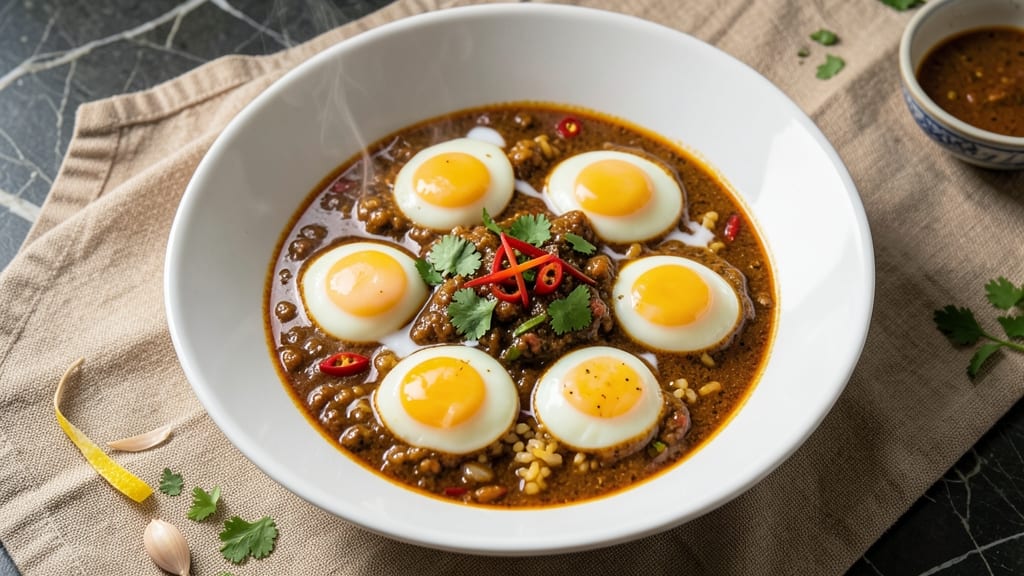
This steamed egg curry recipe delivers creamy, spiced comfort that feels like a warm hug in a bowl. The secret lies in gently poaching eggs in a fragrant coconut-turmeric sauce until they reach perfect doneness—silky yolks and tender whites that absorb the rich, aromatic flavors.
What makes this dish special is how the eggs transform from simple protein into the star of a velvety, spiced curry, all while keeping prep under 20 minutes.
The foundation of this recipe is a balanced blend of spices—turmeric for golden color, cumin for warmth, and a touch of chili to add depth without overpowering. Coconut milk creates that signature creaminess, while fresh herbs like cilantro and lemongrass brighten the dish.
The eggs cook gently in the simmering sauce, soaking up every layer of flavor while staying tender and intact.
By the time you serve this dish, you’ll have a bowl of restaurant-quality comfort food—creamy, fragrant, and perfectly balanced. The eggs sit nestled in a sauce that’s rich yet light, with just the right amount of spice and tang.
Garnish with fresh cilantro and a squeeze of lemon for a final burst of brightness that makes every bite feel special.
Pair it with steamed rice or crusty naan to soak up all that delicious sauce. This recipe is perfect for a cozy weeknight dinner or when you want to impress guests with a dish that’s both elegant and effortless. Let’s get cooking!
Ingredients for steamed egg curry
Simple ingredients that transform into restaurant-quality comfort in under 20 minutes.
| Ingredient | Amount | Notes |
|---|---|---|
| Large Eggs 🥚 | 4 whole | Freshly cracked, room temperature |
| Coconut Milk 🥥 | 1 can (13.5 oz) | Full-fat for creaminess |
| Fresh Turmeric 🌿 | 1 tbsp | Freshly grated or 1 tsp ground |
| Ground Cumin 🌿 | ½ tsp | Toasted for deeper flavor |
| Red Chili Powder 🌶️ | ½ tsp | Adjust for heat preference |
| Garlic Cloves 🧄 | 3 cloves | Minced for sauce |
| Fresh Ginger 🌿 | 1 tbsp | Finely grated |
| Fresh Cilantro 🌿 | ¼ cup | Chopped for garnish |
| Lemongrass 🌿 | 2 tbsp | Finely chopped |
| Lemon Juice 🍋 | 1 tbsp | Freshly squeezed |
| Vegetable Oil 🫒 | 1 tbsp | For simmering |
| Salt 🧂 | ½ tsp | Kosher or sea salt |
| Black Pepper 🌶️ | ¼ tsp | Freshly ground preferred |
| Steamed White Rice 🍚 | 2 cups | Cooked, for serving |
The coconut milk is non-negotiable here—full-fat canned coconut milk gives that signature velvety texture. Thai Kitchen or Goya brands are my go-to for consistency, but any full-fat can works. For the fresh ginger and turmeric, Asian markets have the best selection—look for bright, firm roots. The lemongrass? Costco sells bundles if you want to stock up, but even a single stalk lasts forever in the freezer. Fresh herbs make all the difference, so grab cilantro with vibrant stems and no wilt.
No fresh turmeric? Ground turmeric at half the amount works, but the color won't be as vibrant. Running out of lemongrass? Substitute 1 tsp lemongrass paste (found in Asian markets) or skip it entirely—the dish still shines. The eggs are the star, so room temperature eggs (taken out 30 minutes before cooking) poach perfectly. For extra richness, stir in 1 tsp coconut cream at the end. The chili powder can be swapped for cayenne at half the amount if you prefer more heat.
This curry tastes even better the next day—reheats beautifully in 2 minutes. Store leftovers in an airtight container for 3-4 days or freeze for 2 months. I always make extra sauce to drizzle over rice later. For the eggs, poach them just before serving so they stay tender. Garnish with fresh cilantro and a squeeze of lemon right before eating—that bright finish is what makes it feel special.
Why You'll Love This Recipe
- Steam Magic: I swear by this method—eggs stay perfectly tender, never rubbery, while the coconut milk soaks up every spice. No flipping, no fuss, just steam doing all the work.
- Golden-Spiced Comfort: That first bite? Creamy, slightly tangy, with a whisper of turmeric warmth and a kick from the chili. The cumin? It lingers like a hug in your mouth.
- Lunchbox Hero: Pack it cold for work—it reheats like a dream, and the eggs stay intact. My kids actually eat their veggies when I sneak them into this (shhh).
- Budget Breakthrough: Fresh turmeric and whole spices cost pennies compared to pre-made curry pastes. A dozen eggs stretch this into three meals, and the leftovers taste better the next day.
Step-by-step instructions for steamed egg curry
Here's how to make this velvety coconut curry—simple steps for rich, spiced eggs that melt in your mouth.
🍳 Step 1: Bloom the Spices in Coconut Milk
Heat the 1 tablespoon vegetable oil in a deep skillet over medium-low heat. Add the 1 tablespoon fresh turmeric, 0.5 teaspoon ground cumin, and 0.5 teaspoon red chili powder, stirring constantly for 30 seconds until fragrant—you'll smell that earthy cumin warmth and see the spices sizzle.
Pour in the 1 can (13.5 oz) coconut milk and stir to combine. Bring to a gentle simmer, then add the 3 cloves minced garlic and 1 tablespoon finely grated ginger. Let this cook for 3-4 minutes until the garlic turns golden and the mixture smells vibrant—this builds the aromatic base. Keep the heat low to prevent curdling.
🍳 Step 2: Prepare the Egg Mixture
In a separate bowl, whisk together the 4 whole large eggs with 1 tablespoon lemon juice, 0.5 teaspoon salt, and 0.25 teaspoon black pepper until just combined—no need to overbeat, just enough to blend. This acidity helps keep the eggs tender when steamed.
Strain the spiced coconut milk mixture through a fine-mesh sieve directly into the egg mixture, discarding any solids. The result should be a smooth, pale yellow curry base. Here's the thing—don't worry if it looks thin now. The eggs will thicken beautifully during steaming.
🥘 Step 3: Steam the Curry to Perfection
Pour the egg-coconut mixture into a heatproof bowl that fits snugly in your steamer. Place the bowl in the steamer over medium-high heat and cover with a tight lid. Steam for 12-15 minutes until the curry reaches 160°F internally and has a custard-like consistency that jiggles slightly when the bowl moves.
I check doneness by inserting a clean knife—it should come out clean with no raw egg. The curry should look glossy and set like a thick pudding. If it's still too loose, steam for another 2-3 minutes. This gentle steaming preserves the eggs' silky texture without scrambling them.
👨🍳 Step 4: Finish with Aromatics and Garnish
Remove the steamed curry from the heat and stir in the 2 tablespoons finely chopped lemongrass and 0.25 cup chopped fresh cilantro. The lemongrass adds that bright citrusy depth while the cilantro brings freshness. Let it sit for 2 minutes to meld flavors—this is where the curry transforms from good to amazing.
Taste and adjust seasoning if needed. I usually find it's perfectly balanced, but if you prefer more heat, add a pinch of chili powder. Serve immediately over 2 cups steamed white rice—the warm rice soaks up the rich coconut sauce beautifully.
⏰ Step 5: Rest and Serve for Maximum Comfort
Let the curry rest for 3-5 minutes before serving. This resting period allows the flavors to settle and the curry to thicken slightly—trust me, it makes a difference. The eggs will hold their shape better and the coconut sauce will coat every bite of rice.
Garnish with extra cilantro if desired, and serve with a side of pickled vegetables or a simple cucumber raita. The contrast of cool, tangy accompaniments cuts through the creamy richness of the curry, making each bite even more satisfying. Enjoy this comforting dish straight from the steamer—it's pure home-cooked bliss.
Pro Tips For Making Steamed Egg Curry
- CRACK EGGS GENTLY: I learned this the hard way—when you crack eggs directly into the coconut milk, the whites break into strands instead of staying intact. Instead, whisk them in a separate bowl first, then pour them in slowly while stirring the hot milk. This keeps those silky, cloud-like egg ribbons that make the dish look (and taste) restaurant-worthy.
- GRATE TURMERIC FINE: Fresh turmeric is non-negotiable here, but if you grate it too coarsely, you’ll end up with bitter chunks in your curry. Use the smallest holes on your grater or a microplane—just a teaspoon is enough, and it’ll dissolve smoothly into the coconut milk without leaving texture. (Yes, even if you’re impatient like me.)
- STEAM DON’T BOIL: This isn’t a poached egg situation—steaming the eggs in the coconut milk over low heat is what gives them that delicate, custardy center. If you bring it to a full boil, the whites will turn rubbery and the yolks will split. Keep the heat at a gentle simmer, and if your pot isn’t deep enough, add a splash of water to create steam.
- TOAST CUMIN FIRST: Sounds weird, but it works: dry-toast the ground cumin in a separate pan for 30 seconds before adding it to the coconut milk. This deepens its earthy flavor and cuts through the richness of the coconut. Skip this, and your curry will taste flat—trust the process. (Your future self will thank you.)
Common mistakes when making this recipe
Over-Steaming the Eggs
The biggest mistake I see is over-steaming the eggs, which turns them rubbery instead of silky. Once the curry reaches 160°F and has a custard-like texture, remove it immediately—even 1 extra minute can ruin the tender result.
I use a thermometer to check temperature, but if you don’t have one, look for a slight jiggle when you move the bowl. 🥚
Skipping the Strain
Don’t skip straining the spiced coconut milk before mixing with eggs—those little garlic and ginger bits can make the curry taste bitter. I use a fine-mesh sieve to remove any solids, ensuring a smooth, velvety texture.
If you’re short on time, blend the mixture briefly, but straining gives the best results.
Using Low-Quality Coconut Milk
Light or skim coconut milk won’t give the same creamy, rich texture. Always use full-fat canned coconut milk—brands like Thai Kitchen or Goya are my go-tos.
The fat content is key for that luscious, restaurant-quality finish. If you’re out of full-fat, mix ½ cup coconut cream with ½ cup water as a substitute.
Ignoring the Resting Time
Rushing to serve the curry right after steaming means missing out on the flavor development. Let it rest for 3-5 minutes—this lets the sauce thicken slightly and the flavors meld.
I’ve learned the hard way: skipping this step means a thinner, less cohesive dish. The eggs also hold their shape better after resting.
Overcrowding the Steamer
If your steamer is too crowded, the curry won’t cook evenly, and some parts may stay undercooked. Use a bowl that fits snugly in your steamer—just enough space for steam to circulate.
I like to use a heatproof glass bowl that’s about 8 inches wide for this recipe. Overcrowding also risks uneven cooking and a watery texture.
Forgetting the Acid Balance
The lemon juice isn’t just for flavor—it helps stabilize the eggs and prevents them from becoming overly dense. If you skip it or use too little, the curry might turn out gummy.
Start with 1 tablespoon and adjust to taste. The acidity also brightens the coconut milk’s richness, balancing the dish perfectly. 🍋
Nutrition facts
Frequently asked questions
Can I make this curry with fewer eggs?
Yes! This recipe works perfectly with 2 eggs for a single serving, just halve all other ingredients proportionally. The cooking time remains the same (12-15 minutes), but use a smaller heatproof bowl to ensure even steaming. The texture stays just as creamy, though the sauce will be slightly richer per bite.
What if I don't have a steamer?
No problem! Use a double boiler by placing the egg-coconut mixture in a heatproof bowl over a pot of simmering water. Keep the heat at medium-low and cook for 12-15 minutes, stirring gently every 3-4 minutes to prevent sticking. Alternatively, bake at 325°F (165°C) for 20-25 minutes in a water bath.
How can I make this spicier?
Double the red chili powder to 1 teaspoon and add ½ teaspoon cayenne pepper to the spice bloom. For extra heat, stir in 1 tablespoon chopped fresh Thai chilies (seeds removed for mild heat) or ½ teaspoon Sriracha at the end. Balance with more coconut milk if needed—the extra fat helps temper the spice.
Can I prepare this ahead of time?
Make the curry base (spiced coconut milk) up to 2 days ahead and store it refrigerated. When ready to cook, combine with fresh eggs and steam as directed. For the full dish, steam the eggs in the sauce 1 day ahead—reheat gently in a double boiler until warmed through (160°F). The flavors deepen overnight, making it even more delicious.
What's the best way to serve leftovers?
Reheat leftovers in a lightly oiled skillet over low heat for 2-3 minutes, stirring gently to prevent sticking. For extra richness, drizzle with 1 tablespoon coconut cream and garnish with extra cilantro. Serve over leftover rice or as a filling for wraps with toasted naan. The texture holds up well, though it's best within 3 days for optimal creaminess.