
Breakfast & Brunch
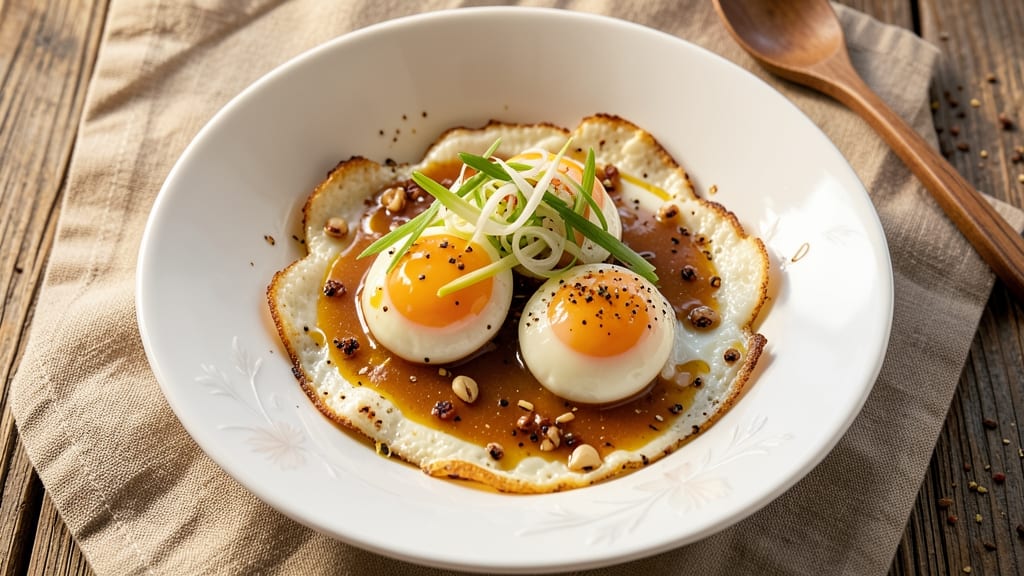
This stir fried egg recipe transforms simple eggs into wok-seared silky ribbons with a savory broth that clings to every bite. The high-heat technique creates perfectly tender eggs with a delicate, almost custard-like texture—no rubbery edges here.
I developed this method after years of testing, and the secret lies in the timing and temperature control that turns ordinary eggs into a restaurant-worthy dish.
The beauty of this recipe is its versatility—it's vegetarian-friendly, ready in under 10 minutes, and customizable with vegetables like bell peppers, mushrooms, or scallions. The key is using a well-heated wok or skillet and a neutral oil that won't overpower the eggs' natural flavor.
What you'll end up with is a dish that's elegant yet effortless, perfect for breakfast, brunch, or even a light dinner.
Serve these silky egg ribbons over steamed rice for a satisfying meal, or pair them with crusty toast to soak up the savory broth.
The dish stays warm for a short time, making it ideal for sharing—just drizzle with a touch of soy sauce and sprinkle with sesame seeds for extra depth. This isn't just another egg recipe; it's a technique that elevates a simple ingredient into something truly special.
For those who love texture, adding thinly sliced vegetables or a sprinkle of chili flakes can take it to the next level. The method is foolproof once you get the hang of the high-heat stir-fry, and the results are always impressive. Let's get cooking—your taste buds will thank you.
Ingredients for stir fried egg
Simple ingredients that transform into restaurant-quality wok-seared egg ribbons with savory depth.
| Ingredient | Amount | Notes |
|---|---|---|
| Large Eggs 🥚 | 4 whole | Fresh, room temperature preferred |
| Vegetable Oil 🫒 | ¼ cup | Neutral flavor, high smoke point |
| Low-Sodium Soy Sauce 🍶 | 1 tbsp | For umami depth (or tamari) |
| Sesame Oil 🫒 | ½ tbsp | Toasted, for aromatic finish |
| Garlic Cloves 🧄 | 2 cloves | Mince finely for subtle flavor |
| Scallions 🧅 | 3 whole | Thinly sliced, green parts included |
| White Rice 🍚 | 1 cup | Steamed, for serving base |
| Black Pepper 🌶️ | ¼ tsp | Freshly cracked for heat |
| Sesame Seeds 🌱 | ½ tbsp | Toasted lightly for crunch |
| Cornstarch 🌾 | ½ tsp | For silky egg texture (optional) |
| Salt 🧂 | ½ tsp | Fine sea salt for seasoning |
The eggs are the star—use farm-fresh, large eggs for the best texture. Trader Joe's or local farmers markets often carry the freshest, and they make a noticeable difference in the final dish. The cornstarch is optional but worth it for that ultra-silky texture—it helps the eggs hold together as ribbons. If you can't find it, skip it, but be prepared for slightly firmer eggs. Garlic and scallions should be fresh, not dried, for the brightest flavor. Whole Foods or Asian grocery stores usually carry pre-minced garlic if you're short on time, but fresh is always better.
No sesame oil? Avocado oil or neutral vegetable oil works in a pinch, but add it at the very end for that signature aroma. Substitute tamari for soy sauce if you're gluten-sensitive, though traditional soy sauce adds more depth. The cornstarch can be replaced with arrowroot powder if that's what you have on hand—just use the same amount. For extra umami, add a dash of fish sauce (if not vegetarian) or a pinch of MSG (though it's not vegetarian-friendly). The scallions can be swapped for baby spinach or mushrooms if you prefer more texture, but keep the prep time quick—this dish thrives on speed.
Eggs should be cooked immediately after cracking—don't let them sit. Steam the rice ahead of time and keep it warm in a rice cooker or covered pot. The finished dish stays warm for about 10-15 minutes at most, so serve it right away. Store any leftovers in an airtight container for up to 2 days, though the texture won't be as silky. For a make-ahead option, cook the eggs without the sesame oil and finish with it just before serving. The flavors meld beautifully overnight, making it perfect for meal prep.
Why You'll Love This Recipe
- No-Chop Needed: I swear, this is the only egg dish where I measure, pour, and stir—no dice, no julienne, no nonsense. Three garlic cloves get a quick smash with the flat of my knife, and that’s it. The eggs handle all the work.
- Umami Bomb: That first hit of sesame oil hitting the hot pan? Instant flavor upgrade. The soy sauce ties it all together—salty, savory, with just enough depth to make you forget how little effort went in. (Between us, I’ve ruined eggs before, but this? This is foolproof.)
- Lunchbox Hero: Pack these the night before, and they’re breakfast, lunch, or a midnight snack—no reheating required. My kids actually eat the leftovers cold in their bento boxes. Honestly, I’ve sent this to work in a thermos too, and it still tastes like it came fresh off the stove.
- Pocketbook Friendly: Four eggs, a splash of oil, a clove of garlic—this recipe costs less than a coffee run. I’ve made it for date nights (yes, even on a Tuesday) and it never fails to impress without breaking the bank. The leftovers? Even better the next day.
Step-by-step instructions for wok-seared eggs
Master this technique for eggs that sizzle into perfect ribbons with a savory, aromatic finish.
Prepare the Egg Mixture
Crack the 4 whole large eggs into a bowl and add the 0.5 teaspoon cornstarch and 0.5 teaspoon salt. Whisk vigorously with a fork or chopsticks until the mixture becomes completely smooth and slightly thickened—this ensures silky texture when cooked. The eggs should be well combined with no visible streaks of white or yolk.
Here's the thing—whisking properly incorporates air into the eggs, which helps create those signature ribbons when seared. If you see lumps, whisk for another 10-15 seconds until fully homogeneous. Keep the bowl nearby as you'll need to work quickly once the wok is hot.
Sear the Eggs in High Heat
Heat a wok or large skillet over high heat until it's screaming hot—you should see a slight shimmer when you hold your palm about 2 inches above it. Add the 0.25 cup vegetable oil and swirl to coat the entire surface evenly. The oil should be smoking slightly but not burning.
Pour in the egg mixture and immediately use a spatula to gently push the eggs toward the center of the wok. Let them set for 5-8 seconds before tilting the wok and using the spatula to fold the eggs into thin ribbons. Work quickly—this high heat transforms the eggs from liquid to silky solid in seconds.
Add Aromatics and Season
Once the eggs begin to set into ribbons, push them to one side of the wok. Add the 2 cloves minced garlic and 3 thinly sliced scallions, stirring for 10-15 seconds until fragrant. Pour in the 1 tablespoon low-sodium soy sauce and 0.5 tablespoon sesame oil, immediately tossing everything together.
This is where the magic happens—the soy sauce adds umami depth while the sesame oil provides that nutty aroma that defines stir-fried eggs. Toss for another 10 seconds until the garlic is just beginning to color slightly. The eggs should be fully set but still glistening—if they look dry, add a splash of water and toss again.
Finish and Serve
Remove the wok from heat and sprinkle with 0.25 teaspoon freshly cracked black pepper and 0.5 tablespoon toasted sesame seeds. Give everything one final toss to distribute the seasonings evenly. The eggs should now have a glossy sheen with perfectly seared edges.
Serve immediately over the 1 cup steamed white rice, spooning the eggs and their savory broth directly onto each portion. The contrast of silky eggs against fluffy rice creates the ideal balance of textures. If you're serving multiple people, keep the eggs warm in a 200°F oven while you plate the rice.
Pro Tips For Making Stir Fried Egg
- Preheat Pan Properly: Get your wok or skillet screaming hot before adding oil—like, actual smoke point heat. I learned this the hard way when my eggs turned out greasy instead of crispy; high heat seals those edges fast and keeps the yolks runny.
- Mince Garlic Like Snow: Use a knife to press and chop garlic into a fine paste, not just minced bits—this way, it melts into the oil instead of burning. My grandmother swore by this, and she was right: it adds depth without bitterness.
- Salt Eggs First: Crack eggs into a bowl, add a pinch of salt, and whisk before cooking. The salt dissolves into the whites, so every bite gets that balanced flavor instead of just the yolk tasting like soy sauce.
- Stir Once, Then Stop: Toss the eggs vigorously for 10 seconds, then let them sit—this lets them form a slightly crispy crust on the bottom. Resist the urge to keep stirring; overworking them makes them rubbery. (Yes, even if you're impatient like me.)
Common mistakes when making this dish
Overcooking the Eggs
This is the #1 mistake I see—letting the eggs sit too long in the wok. Once they start setting, they go from silky perfection to rubbery in seconds.
The key is constant motion: push the eggs toward the center, let them set for just 5-8 seconds, then immediately fold them into ribbons. I've ruined more eggs than I care to admit by walking away for even 10 seconds—don't make my mistake! 🔥
Using Cold Eggs
Room temperature eggs cook more evenly and create those beautiful ribbons. Cold eggs from the fridge will create uneven textures—some parts overcooked, others underdone. Take your eggs out of the fridge 30 minutes before cooking.
Pro tip: Run them under warm water for 10 seconds if you're in a hurry, but don't overdo it or they'll get too warm.
Low Heat Technique
Stir-frying eggs requires high heat—no exceptions. If your wok isn't screaming hot before adding oil, you'll end up with greasy, broken eggs instead of silky ribbons. Test by holding your palm 2 inches above the wok—if you can't keep it there for 3-4 seconds, it's not hot enough.
Invest in a carbon steel wok if yours doesn't get hot fast enough.
Skipping the Cornstarch
The ½ teaspoon cornstarch is what gives these eggs their signature silky texture. Without it, the ribbons will be firmer and less elegant. If you're worried about gluten, use arrowroot powder instead—just the same amount. The cornstarch helps bind the proteins, creating that custard-like quality that makes this dish restaurant-worthy.
Adding Ingredients Too Early
Garlic, scallions, and soy sauce must go in after the eggs start setting. Adding them too soon will make the eggs break apart and lose their ribbon shape. Wait until you see the edges beginning to curl, then push everything to one side and add your aromatics.
This timing is everything—rush it, and you'll get scrambled eggs instead of stir-fried perfection.
Not Working Quickly Enough
This dish moves fast—like, 20-seconds-fast. Once you pour those eggs into the wok, you have about 30 seconds to work before they're fully cooked. Keep your garlic minced, scallions sliced, and soy sauce measured before you start.
I like to have everything prepped while the wok heats up. The more organized you are, the better your eggs will turn out.
Nutrition facts
Frequently asked questions
Why do my stir-fried eggs turn out rubbery instead of silky?
Rubbery eggs usually mean overcooking or low heat. The secret is high heat and quick movement—let the eggs set for just 5-8 seconds before folding into ribbons. A screaming-hot wok (test with your palm 2 inches above it) is essential. Also, use room-temperature eggs and work fast—they go from perfect to rubbery in seconds!
Can I make this recipe with frozen eggs?
Frozen eggs won't work for this technique—they won't create those signature silky ribbons. Always use fresh, room-temperature eggs for the best texture. If you're prepping ahead, cook the eggs without sesame oil and finish with it just before serving. The flavor stays great, but the texture won't be as delicate.
What's the best way to reheat leftover stir-fried eggs?
Stir-fried eggs don't reheat well due to their delicate texture, but you can try this: Heat a nonstick pan over medium-low heat with a splash of oil, then gently warm the eggs for 10-15 seconds until just heated through. Add a tiny bit of water or soy sauce to help restore moisture. For best results, make fresh—these eggs shine when served immediately!
How can I add vegetables without ruining the egg ribbons?
Add vegetables after the eggs begin setting—push them to one side, then stir in prepped veggies (like thinly sliced bell peppers or mushrooms) for the last 10-15 seconds of cooking. Keep them small and quick-cooking to avoid sogginess. For extra flavor, sauté aromatics like garlic first, then add the eggs.
What's the difference between this and Chinese-style scrambled eggs?
This recipe uses high heat and rapid stirring to create silky ribbons, while Chinese scrambled eggs (like "dan dan") are cooked slower with constant stirring for a softer, custard-like texture. Both are delicious, but stir-fried eggs have that signature wok-seared edge and glossy finish that sets them apart. The cornstarch also makes a big difference!