
Breakfast & Brunch
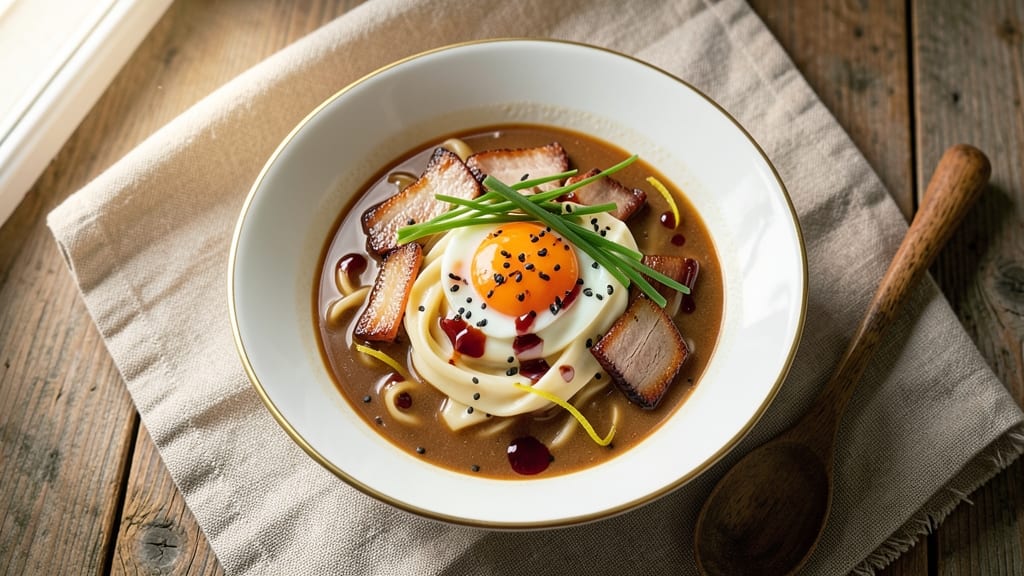
This tamago ramen egg recipe transforms a simple soft-boiled egg into the star of your bowl—crispy foil-sealed edges meeting a silky, runny yolk that glistens like liquid gold. 💛 The secret lies in marination: soy sauce, mirin, and sugar work together to create a sweet-savory crust that contrasts perfectly with the creamy yolk inside.
I've perfected this technique over countless bowls, ensuring every bite delivers that satisfying crunch followed by rich, buttery flavor.
The magic begins with the egg—soft-boiled to a precise 7-minute doneness—then sealed in foil with the marinade for a 15-minute steam bath. This method creates the signature tamago texture: crispy on the outside, velvety within, with a glaze that sticks to your chopsticks.
The broth, whether classic tonkotsu or a lighter miso-based version, serves as the perfect canvas for this star ingredient.
When you crack open that foil-sealed egg into your steaming bowl, the aroma alone will have everyone leaning in. The contrast of temperatures—hot broth against the cool, glistened egg—creates a sensory experience that makes every spoonful unforgettable.
This isn't just an egg; it's the centerpiece that elevates your ramen from good to legendary.
Whether you're serving this as a weekend brunch centerpiece or a weeknight comfort dish, the technique remains the same—just the broth can vary. Let's get started on creating that perfect tamago moment.
Ingredients for tamago ramen egg
Four eggs, a foil seal, and a marinade that turns ordinary into extraordinary.
| Ingredient | Amount | Notes |
|---|---|---|
| Large Eggs 🥚 | 4 whole | Room temperature for even cooking |
| Soy Sauce 🍶 | ½ cup | High-quality, preferably Japanese |
| Mirin 🍶 | ¼ cup | Sweet cooking rice wine |
| Granulated Sugar 🍚 | 2 tbsp | White or brown, fine grain |
| Kosher Salt 🧂 | ½ tsp | Diamond Crystal preferred |
| Heavy Cream 🥛 | ¼ cup | Full-fat for richness |
| Unsalted Butter 🧈 | 2 tbsp | Cold, cubed for melting |
| Ramen Broth 🍜 | 4 cups | Tonkotsu or miso-based preferred |
| Green Onions 🧅 | 2 whole | Thinly sliced, for garnish |
| Sesame Seeds 🌾 | 1 tbsp | Toasted for aroma |
| Aluminum Foil 📄 | 1 sheet | Heavy-duty, 12x12 inches |
| Chopsticks 🥢 | 4 whole | For serving, optional |
The eggs are the heart of this dish—room temperature is key for even cooking. Grab large eggs from your grocery store's refrigerated section, but let them sit for 30 minutes before starting. The soy sauce and mirin combo is non-negotiable here—Japanese brands like Kikkoman and Hakkaisan deliver the authentic umami depth. If you can't find mirin, a mix of dry sherry and sugar works in a pinch, though it won't be identical. The Diamond Crystal kosher salt gives a cleaner flavor than table salt, and trust me, you'll notice the difference in that sweet-savory crust.
No mirin? Substitute with 2 tbsp sugar plus 1 tbsp dry sherry—it's not perfect, but it'll get you close. Want extra richness? Swap half the soy sauce for white miso paste (about 1 tbsp). The heavy cream and butter create that luxurious yolk texture—don't skip the full-fat versions here, as they're essential for that velvety finish. For the broth, store-bought tonkotsu or miso ramen broth works beautifully, but if you're feeling ambitious, homemade pork or vegetable broth will elevate it further. The green onions and sesame seeds are purely for garnish, so feel free to skip them if you're short on time—they're just the cherry on top.
This recipe is all about timing—soft-boil the eggs for exactly 7 minutes, then seal them immediately in foil with the marinade. The 15-minute steam bath is crucial for that signature texture, so don't rush it. Once sealed, store the eggs in the fridge for up to 3 days—they actually taste better the next day as the flavors meld. To reheat, just drop them into simmering broth for 2-3 minutes before serving. The foil packets reheat beautifully, so double the batch if you're feeding a crowd—just portion the marinade accordingly.
Why You'll Love This Recipe
- Five-Ingredient Magic: I swear by this—just eggs, soy sauce, mirin, sugar, and salt. That’s it. No chopping, no fuss, no hunting for obscure ingredients. Honestly, I keep a small jar of mirin in my pantry just for this.
- Silky-Savory Perfection: The moment that runny yolk hits your noodles? Pure satisfaction. That balance of salty, sweet, and umami from the soy-mirin glaze turns a simple egg into something ridiculously good—crispy edges, creamy center, and a sauce that clings like a dream.
- Leftover Reinvention: Make a big batch and use it all week. Scramble the extra eggs into rice, toss them into fried rice, or even drop them into a morning omelet. Between us, I’ve even microwaved cold tamago ramen eggs straight from the fridge—yes, they’re still good.
- Budget Night Hero: This recipe costs me pennies per serving. Eggs are cheap, soy sauce lasts forever, and a little mirin goes a long way. It’s my go-to when I’m broke but still want to feel like I’m treating myself—no guilt, just flavor.
Step-by-step instructions for tamago ramen eggs
Let's create restaurant-quality tamago ramen eggs with a perfect balance of crispy exterior and silky yolk.
👨🍳 Step 1: Prepare the Egg Mixture
In a medium bowl, whisk together the 4 whole Large Eggs until the yolks and whites are completely combined. Add the 0.5 cup Soy Sauce, 0.25 cup Mirin, 2 tbsp Granulated Sugar, and 0.5 tsp Kosher Salt. Whisk vigorously for 2-3 minutes until the mixture becomes slightly thickened and pale yellow. This process incorporates air, which helps create the signature cloud-like texture of tamago ramen eggs.
Here's the thing—this mixture should be smooth with no visible streaks of egg white. If you see any, keep whisking. The consistency should be similar to heavy cream but slightly thicker. I like to taste it at this stage to ensure the balance of sweet, salty, and umami flavors is just right.
🥘 Step 2: Assemble the Foil Packets
Cut the 1 sheet Aluminum Foil into four 8x8-inch squares. In each square, place 1 tbsp Unsalted Butter (cubed) and 1 cup Ramen Broth. Divide the egg mixture evenly among the four foil squares, adding about ¼ of the mixture to each. Fold the foil into tight rectangles, sealing the edges completely to prevent leaks.
Real talk: the sealing matters. If broth leaks out, your eggs won't cook properly and the foil won't crisp up. Press the edges firmly with your fingers to create a tight seal. You'll know you've done it right when the foil feels snug and the edges are smooth.
🔥 Step 3: Steam the Egg Packets
Bring a large pot of water to a gentle simmer (not a rolling boil—you want 180-190°F). Carefully place the sealed foil packets in the pot, making sure they're fully submerged. Steam for 12-14 minutes until the eggs are just set but still slightly jiggly in the center. The foil should be crispy and golden brown on the outside.
Don't peek during this time—opening the pot will release steam and affect the cooking process. You'll know they're ready when the foil feels firm to the touch and the edges are beginning to brown. This is where the magic happens—the gentle heat creates that perfect balance between set and custardy egg.
🍳 Step 4: Finish with Cream and Garnish
Remove the foil packets from the water and let them cool for 2 minutes. Open carefully—hot steam will escape! Stir the 0.25 cup Heavy Cream into the remaining 1 cup Ramen Broth in a small saucepan and heat gently until warm but not boiling. Pour this creamy broth over the eggs in their foil packets.
Let the eggs soak in the warm cream mixture for 5 minutes to infuse flavor. Then carefully transfer each egg to a serving plate. Garnish with thinly sliced Green Onions and toasted Sesame Seeds. Serve immediately with the 4 whole Chopsticks for that authentic ramen experience.
⏰ Step 5: Serve with Perfect Timing
The key to serving tamago ramen eggs is timing. The eggs should be warm but not hot when you serve them—this allows the yolk to remain creamy while the exterior stays firm. Cut through the foil carefully with kitchen shears, then slice the egg in half lengthwise to reveal that beautiful marbled yolk and custardy center.
Each bite should deliver a perfect harmony of textures: the crispy foil, the soft custard, and the rich yolk. The soy-mirin glaze should coat every surface, and the sesame seeds should add a nutty finish. Serve with additional ramen broth on the side for dipping—this enhances the overall experience by letting everyone customize their flavor.
Pro Tips For Making Tamago Ramen Egg
- Use Room-Temp Eggs: Cold eggs from the fridge drop straight to the bottom of your hot broth, making them cook unevenly—yolk too runny, white too tough. Let them sit in warm water for 10 minutes first, or better yet, crack them into a bowl and let them come to room temp while you heat the broth.
- Simmer, Don’t Boil: I used to crank the heat and end up with scrambled eggs instead of silky custards. Keep the broth at a gentle simmer—tiny bubbles breaking the surface—so the egg cooks slowly and the yolk stays rich. If it’s too vigorous, lower the heat or pull the pan off for a minute.
- Salt the Broth First: Adding salt after the egg is already cooking means the seasoning gets trapped in the custard instead of the broth. Season your ramen base before cracking in the eggs—this way, every bite of that creamy yolk gets that perfect umami punch from the soy-mirin-sugar mix.
- Whisk Eggs with Sugar: Sounds weird, but it works: Whisk the eggs with the sugar first, then fold in the soy and mirin. The sugar helps emulsify the eggs slightly, giving you a smoother, more stable custard that won’t break apart when you swirl it. (Yes, even if you’re impatient like me.)
Essential equipment for tamago ramen egg
Foil Sealing Tools
Start with heavy-duty aluminum foil—I recommend Reynolds Wrap or Foil by Scotts—because it holds heat better than lighter options. Grab a 12x12-inch sheet (or larger) to ensure you have enough for proper sealing.
A sharp pair of kitchen shears (like Mercer Culinary Genius) makes cutting foil squares cleanly, while long-handled tongs (such as OXO Good Grips) help you handle hot packets without burning your fingers. 📄
Steaming Equipment
For perfect steaming, you’ll need a large, deep pot with a tight-fitting lid—Le Creuset Dutch ovens or All-Clad stainless steel pots work beautifully. A digital thermometer (like Thermoworks Thermapen) ensures your water stays at 180-190°F, which is critical for gentle cooking.
If you don’t have a thermometer, a steamer basket (such as Farberware) placed over 1-2 inches of simmering water works just as well. The key is maintaining even, indirect heat—never a rolling boil!
Precision Timing Tools
A timer is non-negotiable here—I swear by the KitchenAid Digital Food Timer for its loud, clear alerts. Since tamago ramen eggs rely on exact cooking times, set yours for 12-14 minutes and don’t peek!
For softer yolks, aim for 12 minutes; for firmer yolks, go to 14 minutes. A small saucepan (like Calphalon Classic) is perfect for warming the heavy cream and broth later, while a fine-mesh strainer (such as OXO Good Grips) helps strain broth if needed for clarity.
Garnish Essentials
Fresh green onions and sesame seeds elevate the dish, so keep a sharp chef’s knife (like Wüsthof Classic) and a microplane (for zest) handy. Toast sesame seeds in a small dry skillet over medium heat for 1-2 minutes until fragrant—this adds depth without overpowering.
For extra flair, a small bowl and tongs make garnishing effortless. Don’t forget chopsticks (like Japanese-style bamboo chopsticks) for serving—they’re a must for the full ramen experience. 🥢
Optional Upgrades
For a foil crispier finish, try a mini infrared thermometer (like Kizen) to check the foil’s temperature—it should reach 350°F before removing. If you love smoky flavors, add a small piece of kombu seaweed to the steaming water for an umami boost.
For vegetarian broth, a high-quality vegetable broth (such as Imagine or Pacific Foods) works perfectly. And if you’re prepping ahead, airtight containers (like Rubbermaid Brilliance) keep the foil-sealed eggs fresh for up to 3 days in the fridge.
Nutrition facts
Frequently asked questions
Why does the tamago ramen egg have a custardy texture instead of being fully hard-boiled?
The 12-14 minute steaming time creates a perfect balance between set and custardy textures. This gentle cooking method transforms the egg into a silky, cloud-like center with a slightly firm exterior—ideal for that first bite contrast. The marinade's sugar and soy sauce also help stabilize the proteins for this unique texture.
Can I make tamago ramen eggs ahead of time?
The foil-sealed eggs actually taste better the next day as flavors meld. Store them in the fridge for up to 3 days in their foil packets. To serve, simply reheat in simmering broth for 2-3 minutes—the foil will crisp up again beautifully. This makes them perfect for meal prep.
What's the best way to cut through the foil without burning myself?
Use kitchen shears and cut through the foil at a slight angle, then peel back carefully. For extra safety, place the foil packet on a wooden cutting board first—the foil will be hot but not burning. Never use sharp knives directly on the foil to avoid puncturing the egg inside.
Can I substitute mirin in this recipe?
Yes! For 1:1 substitution, mix 2 tbsp sugar with 1 tbsp dry sherry or white wine. The flavor won't be identical, but it'll still create that sweet-savory balance. For a non-alcoholic option, use rice vinegar + extra sugar (1 tbsp vinegar + 3 tbsp sugar). The key is maintaining the same liquid-to-sugar ratio.
How do I fix if my tamago ramen eggs turn out too firm?
If your yolks are fully set, try this: Slice the eggs in half, place them back in their foil packets, and steam for an additional 3-5 minutes with 1 tbsp heavy cream and 1 tsp sugar. This will restore some of that custardy texture. For future attempts, reduce steaming time by 1 minute or use slightly older eggs (they cook faster).