
Breakfast & Brunch
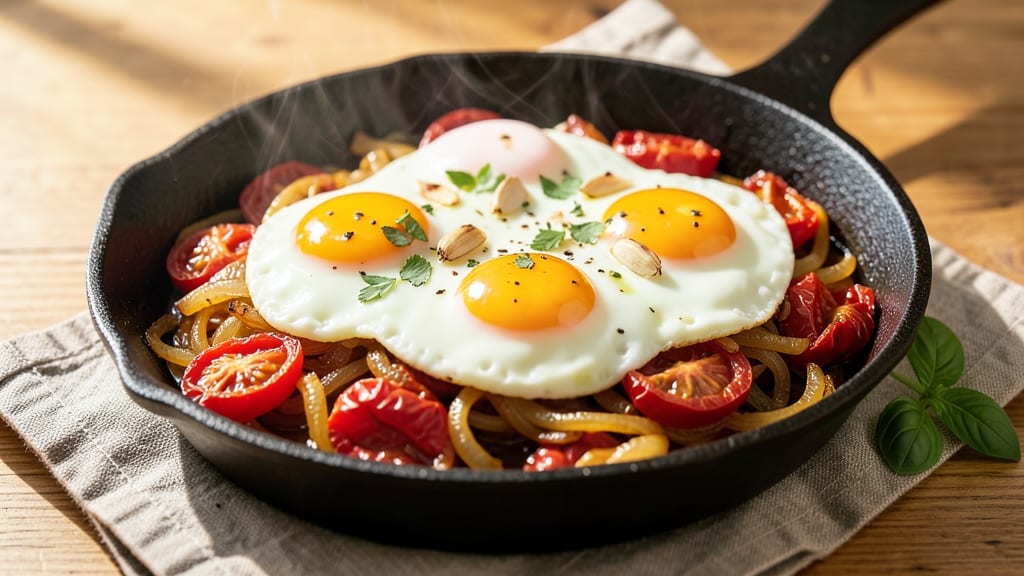
This tomato egg skillet recipe delivers restaurant-quality breakfast in just 15 minutes—crispy edges, sun-dried tomato depth, and perfectly cooked eggs that hold their shape. The secret lies in sautéing tomatoes until caramelized before adding eggs, creating a rich, savory base that transforms a simple skillet into something special.
I developed this after years of testing breakfast dishes, and it never fails to impress.
The beauty of this recipe is its versatility—serve it as a hearty breakfast, brunch centerpiece, or even a light dinner topped with fresh herbs and crusty bread. The tomatoes develop a crispy texture while releasing their natural sweetness, which pairs perfectly with the creamy eggs.
This isn’t your average scrambled eggs; it’s a flavor-packed dish that feels gourmet without requiring fancy ingredients.
What makes this skillet stand out is how the ingredients work together: sun-dried tomatoes add concentrated umami, garlic infuses warmth, and a touch of creaminess from cheese or cream balances the acidity.
The result is a dish that’s both comforting and sophisticated, with every bite offering a perfect harmony of textures and flavors. Ready to elevate your breakfast game?
This recipe works equally well with fresh tomatoes (for a brighter twist) or sun-dried (for deeper flavor), and optional add-ins like feta or fresh basil can customize it to your taste.
The method is simple but precise—no flipping, no fuss, just a foolproof way to turn basic ingredients into something extraordinary. Let’s get cooking!
Ingredients for tomato egg skillet
Twelve ingredients transform into a restaurant-worthy skillet with caramelized tomatoes and silky eggs.
| Ingredient | Amount | Notes |
|---|---|---|
| Extra-Virgin Olive Oil 🫒 | 2 tbsp | High-quality, fruity variety for caramelization |
| Sun-Dried Tomatoes in Oil 🍅 | ½ cup | Drained, chopped (reserve oil for flavor) |
| Fresh Garlic Cloves 🧄 | 3 cloves | Minced, for aromatic base |
| Medium Yellow Onion 🧅 | 1 whole | Thinly sliced, for sweetness |
| Large Eggs 🥚 | 4 whole | Fresh, room temperature |
| Heavy Whipping Cream 🥛 | ¼ cup | Full-fat for richness |
| Salt 🧂 | ¾ tsp | Diamond Crystal kosher preferred |
| Freshly Ground Black Pepper 🌶️ | ¼ tsp | For balanced seasoning |
| Fresh Basil Leaves 🌿 | ¼ cup | Chopped, for finishing |
| Crusty Bread 🍞 | 4 slices | Optional, for serving |
| Feta Cheese 🧀 | ¼ cup | Crumbled, optional topping |
| Fresh Red Cherry Tomatoes 🍅 | ½ lb | Halved, for fresh variation |
The sun-dried tomatoes are the flavor anchors here—opt for high-quality oil-packed from Trader Joe's or Whole Foods for concentrated umami. Fresh red cherry tomatoes add brightness when halved and sautéed alongside. Garlic and onion form the aromatic base, so don't skip toasting them until golden. For the olive oil, California Avocado Ranch or Colavita brands deliver consistent quality. The key is patience: let the tomatoes caramelize for 8-10 minutes before adding eggs, which builds that crispy edge the recipe promises.
No sun-dried tomatoes? Fresh tomatoes roasted with balsamic work as a substitute—just increase to 1 cup and add 1 tbsp balsamic vinegar. Heavy cream can be swapped for Greek yogurt at half the amount for tang. The feta is optional but recommended—Olympos brand has the best crumbly texture. For a dairy-free version, use cashew cream instead of heavy cream. Fresh basil can be omitted if unavailable, but the dish loses some of its signature brightness without it. The eggs must be fresh for proper texture—room temperature eggs cook more evenly.
This skillet reheats beautifully—just 2 minutes in a hot skillet with a splash of water restores crispy edges. Store leftovers covered in the fridge for 3 days, though the texture softens after day one. For meal prep, assemble components separately and cook fresh in the morning. The tomatoes and onions can be prepped ahead and refrigerated for 2 days before cooking. Freezing isn't recommended due to texture changes in the tomatoes, but the base components keep well for 1 week in the fridge.
Why You'll Love This Recipe
- One-Pan Miracle: I swear by this for nights when I’m too tired to wash dishes—just toss everything in one skillet, walk away for 10 minutes, and boom. The sun-dried tomatoes and garlic release their oils right into the pan, so you don’t even need to stir much. Chef’s kiss for lazy evenings.
- Umami Bomb: That jar of sun-dried tomatoes in oil? It’s basically flavor gold. The salty, tangy, slightly sweet burst from them—paired with crispy fried eggs and caramelized onions—hits different. Honestly, I’ve made this for people who “don’t like tomatoes,” and they still ask for seconds.
- Breakfast or Dinner: Between us, this skillet works for any meal. Serve it with crusty bread for a fancy brunch, or pile it over toast with a sprinkle of flaky salt for a 5-minute dinner. I’ve even used leftover portions cold in salads—yes, even the eggs hold up (if you fry them just right).
- Pantry Staple Power: No last-minute grocery runs needed. Olive oil, eggs, onions, and sun-dried tomatoes? I bet you’ve got those already. And if you’re pinching pennies, this feeds four for under $8. My college-me would’ve cried happy tears over this.
Step-by-step instructions for tomato egg skillet with crispy edges
Here's how to create a skillet with perfectly crispy egg edges and deep sun-dried tomato flavor.
Sauté Aromatics Until Fragrant and Golden
Heat the 2 tablespoons extra-virgin olive oil in a large cast-iron skillet over medium heat. Add the thinly sliced medium yellow onion and cook for 5-6 minutes until softened and translucent. This foundational step develops sweetness that balances the sun-dried tomatoes' intensity.
Add the 3 minced fresh garlic cloves and the 0.5 cup chopped sun-dried tomatoes in oil (drained but reserving their oil). Cook for another 3-4 minutes until the garlic turns golden and the tomatoes release their concentrated flavor. The oil from the sun-dried tomatoes will enhance the caramelization process—don't drain it completely. Stir occasionally to prevent burning, as garlic can go from fragrant to bitter in seconds.
Incorporate Fresh Tomatoes and Season
Add the 0.5 pound halved fresh red cherry tomatoes to the skillet. Cook for 4-5 minutes until they begin to soften and release their juices. The tomatoes should collapse slightly but retain their shape—this ensures they contribute texture rather than turning to mush.
Season with the 0.75 teaspoon salt and 0.25 teaspoon freshly ground black pepper. Taste and adjust if needed, remembering that the sun-dried tomatoes already contribute significant saltiness. The goal is a balanced seasoning that doesn't overpower the fresh tomato acidity. Remove the skillet from heat briefly if the aromatics begin to darken too quickly.
Create Crispy Egg Edges with Perfect Centers
Return the skillet to medium-low heat and make four wells in the tomato mixture using the back of a spoon. Crack the 4 large eggs into these wells, ensuring they're evenly spaced. The residual heat from the skillet will gently cook the eggs while maintaining their shape.
Cover the skillet with a lid and cook for 4-5 minutes until the whites are set but the yolks remain runny. This timing is critical for achieving crispy edges—the eggs should pull away from the pan slightly when gently nudged with a spatula. If the pan isn't hot enough, the eggs will steam rather than develop that coveted crust.
Finish with Cream and Fresh Herbs
Remove the skillet from heat and stir in the 0.25 cup heavy whipping cream using a silicone spatula. The residual heat will gently warm the cream without scrambling the eggs. Add the 0.25 cup chopped fresh basil leaves and mix lightly to distribute the herbs throughout.
Return the skillet to low heat for 1-2 minutes to allow the cream to slightly thicken and meld with the tomato mixture. The basil will infuse the dish with bright, fresh notes that contrast beautifully with the sun-dried tomato depth. Taste again and adjust seasoning if needed—this is your final opportunity to balance flavors.
Serve with Crusty Bread and Optional Feta
Divide the skillet among four plates, ensuring each portion contains an egg, tomato mixture, and basil. Serve immediately with the 4 slices crusty bread on the side for dipping. The bread's texture contrasts perfectly with the creamy eggs and crispy edges.
For an optional finishing touch, sprinkle each serving with 0.25 cup crumbled feta cheese just before serving. The feta adds a briny contrast that cuts through the richness of the eggs and cream. The dish should be served while the eggs are still warm, with yolks that remain slightly runny for that perfect first bite.
Pro Tips For Making Tomato Egg Skillet
- Sweat the Onion First: Chop the onion into ¼-inch slices instead of dicing—it cooks faster and keeps the texture tender. I learned this the hard way when my first batch turned mushy because I didn’t thin the pieces enough. A quick toss with a pinch of salt while it sweats also pulls out moisture, so you won’t have a soggy base later.
- Drain and Pat Sun-Dried Tomatoes: Those sun-dried tomatoes packed in oil? Drain them well, then blot them with a paper towel to remove excess moisture. Trust me, skipping this step means your skillet will steam instead of sizzle, and your eggs won’t crisp up like they should. (Yes, even if you’re impatient like me.)
- Low and Slow for Garlic: Add the garlic after the onion has softened, and cook it on the lowest heat setting you can tolerate—just until it’s fragrant, not browned. Burnt garlic ruins the whole dish, and it happens faster than you think. If your pan’s too hot, walk it back; this isn’t a race.
- Crack Eggs Directly In: Pour the eggs straight into the skillet over the tomato mixture instead of pre-whisking in a bowl. The residual heat from the pan gently cooks the edges while the centers set, giving you that perfect runny-yolk-in-a-pool-of-tomato effect. (Your future self will thank you for the cleanup too.)
Common mistakes when making great tomato egg skillet
Overcrowding the Skillet
One of the biggest mistakes is overfilling your skillet, which causes the eggs to steam instead of developing crispy edges. I’ve learned the hard way that a 10-inch cast-iron skillet should never hold more than 4 eggs at once.
When the pan is too crowded, the eggs lose their shape and the tomatoes release too much moisture, turning the dish soggy. 🍳
Skipping the Caramelization Step
The secret to deep flavor lies in letting the tomatoes caramelize for at least 8-10 minutes before adding eggs. I’ve rushed this step before, and the result was bland, underseasoned eggs.
The tomatoes need time to break down and develop that sweet, concentrated flavor. Keep your heat at medium-low and stir occasionally to avoid burning.
Using Cold Eggs or Oil
Room-temperature eggs and oil are non-negotiable for even cooking. I once used eggs straight from the fridge, and they turned out rubbery with unevenly set whites. Let your eggs sit out for 10-15 minutes before cooking, and ensure your olive oil is at room temperature.
Cold ingredients steal heat from the pan, preventing the crispy edges we’re aiming for.
Overmixing the Eggs
Once the eggs are in the skillet, resist the urge to stir them constantly. Gentle, occasional mixing is key—overmixing turns them into scrambled eggs rather than the silky, well-set dish we want.
Let the eggs cook undisturbed for 4-5 minutes before carefully folding them into the tomato mixture. Patience here makes all the difference.
Ignoring Heat Control
Heat is your friend, but only if you respect it. Too high, and your garlic burns; too low, and the eggs steam instead of crisping. I’ve found that medium-low heat for the egg stage is ideal—just hot enough to set the whites without scrambling them.
Use a thermometer if you’re unsure: the skillet should stay between 275-300°F during this phase.
Forgetting to Taste Along the Way
Seasoning is cumulative, and the sun-dried tomatoes pack a salty punch. I’ve ruined dishes by assuming the salt would balance out later. Taste your tomato mixture before adding eggs, and adjust seasoning in ¼ teaspoon increments.
The goal is a harmonious blend of sweet, salty, and tangy flavors—don’t guess, taste!
Nutrition facts
Frequently asked questions
Can I use fresh tomatoes instead of sun-dried?
For a brighter flavor, substitute 1 cup halved fresh tomatoes (like cherry or grape) for the sun-dried variety. Add 1 tbsp balsamic vinegar to enhance sweetness and reduce acidity. Sauté them for 6-8 minutes until they soften but keep their shape. The dish will have a fresher, lighter profile while still delivering that tomato-egg harmony.
How do I make this dish vegetarian?
Swap the eggs for 4 firm tofu cubes (pressed and sliced) or 4 vegan egg substitutes like Just Egg. For extra protein, add ½ cup cooked chickpeas to the skillet with the tomatoes. The cream can be replaced with coconut cream or unsweetened almond milk for a dairy-free option. The texture will differ slightly, but the tomato base remains the star.
Why do my eggs turn out rubbery?
Rubbery eggs usually mean the heat was too low or the eggs were added too soon. Ensure your skillet is at medium-low heat (275-300°F) and let the tomatoes caramelize for 8-10 minutes first. Also, use room-temperature eggs—cold eggs steal heat and cook unevenly. If the pan isn't hot enough, the eggs will steam instead of crisping.
Can I make this ahead of time?
Prep the tomato base (onions, garlic, and tomatoes) up to 2 days ahead and store it in the fridge. Reheat gently in the skillet before adding the eggs. For leftovers, store the complete dish for 3 days, but reheat only for 2 minutes on low heat to restore crispiness. The eggs are best cooked fresh, but the tomato mixture keeps well for flavorful future meals.
What’s the best bread to serve with this?
Look for crusty, sturdy breads like a baguette, sourdough, or ciabatta that can handle the creamy egg mixture without falling apart. Toast it lightly to add crunch. For extra indulgence, try focaccia—its olive oil richness complements the dish beautifully. Avoid soft breads like brioche, as they’ll soak up too much liquid.