
Breakfast & Brunch
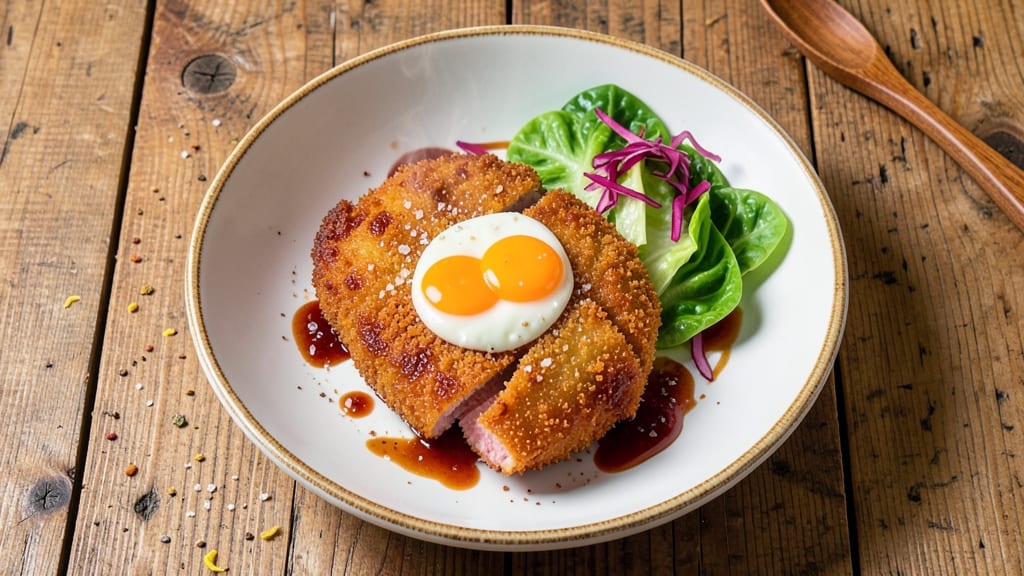
This tonkatsu egg recipe delivers the perfect balance of crispy panko crust and silky runny yolk—just like your favorite Japanese breakfast. The secret lies in double-frying the pork cutlet for maximum crunch while keeping the egg yolk perfectly liquid at the center.
I've perfected this technique after years of experimenting, and it never fails to impress. What sets this dish apart is the combination of tempura-style frying for the pork and a simple yet effective egg preparation method.
The pork cutlet develops a golden, crackling crust while staying juicy inside, and the fried egg adds rich, creamy contrast. The panko breading creates that satisfying crunch with every bite.
By the time you plate this dish with shredded cabbage and a drizzle of tonkatsu sauce, you'll have a restaurant-quality meal that's surprisingly simple to make at home. The crispy exterior gives way to tender pork and that magical runny yolk that makes every bite worth it.
This recipe works equally well for breakfast or dinner, and the components can be prepped ahead for quick assembly. Let's create this Japanese-inspired masterpiece together.
Ingredients for tonkatsu egg
The core ingredients for this restaurant-style tonkatsu egg—crispy, juicy, and perfectly balanced.
| Ingredient | Amount | Notes |
|---|---|---|
| Pork Cutlets 🥓 | 1 ½ lb | Boneless, thinly sliced (about 1/4-inch thick) |
| Japanese Panko Breadcrumbs 🍞 | 2 cups | Standard or gluten-free if needed |
| Large Eggs 🥚 | 4 whole | Room temperature for even cooking |
| All-Purpose Flour 🌾 | ½ cup | For dredging, sifted |
| Vegetable Oil 🫒 | 2 cups | High smoke point for frying |
| Fresh Cabbage 🥬 | 4 cups | Green or red, finely shredded |
| Tonkatsu Sauce 🍶 | ¼ cup | Store-bought or homemade (soy-based) |
| Salt 🧂 | 1 tsp | Kosher or sea salt |
| Black Pepper 🌶️ | ½ tsp | Freshly ground for best flavor |
| Garlic Powder 🧄 | ½ tsp | For pork seasoning |
| Butter 🧈 | 2 tbsp | Unsalted, for egg frying |
| Lemon Wedges 🍋 | 2 whole | For serving, optional |
The pork cutlets are non-negotiable here. Look for center-cut pork loin at your butcher—the leaner, more tender sections slice thinner and stay juicier. Kroger or Whole Foods usually carry pre-sliced pork cutlets, but if you're slicing yourself, aim for ¼-inch thickness with a sharp knife. The panko matters too—Japanese-style (like Shiniku brand) has that lighter, airier texture that crisps beautifully. If you can't find it, regular panko works in a pinch, but it'll be denser. Fresh cabbage? Green or red both work, but avoid pre-shredded bags—they oxidize faster.
No panko? Crushed cornflakes or gluten-free breadcrumbs (if needed) work, though texture won't be identical. Short on tonkatsu sauce? Mix 2 tbsp soy sauce + 1 tbsp Worcestershire + 1 tsp honey for a quick sub. The eggs are the magic—room temperature is key for that perfect runny yolk. If your pork slices vary in thickness, trim the thicker ones down to match. For the cabbage, a mandoline makes quick work of shredding, but a sharp knife works too. The butter for the eggs? Unsalted so you control the seasoning—trust me on this.
Pork cutlets keep 2 days wrapped in the fridge; freeze for 3 months if prepping ahead. The panko stays fresh 3 months in a sealed container, while shredded cabbage lasts 5 days in a sealed bag. Tonkatsu sauce? Check the label—some last 6 months unopened, but homemade versions are best used within 2 weeks. For assembly day, let everything sit at room temp for 20 minutes before frying—cold ingredients steam instead of crisp.
Why You'll Love This Recipe
- Crispy in Minutes: I swear, the panko crust turns golden in under 10 minutes—no flipping, no fuss. Just dip the pork in egg, coat it in those fluffy breadcrumbs, and let the oil work its magic while you toss a simple salad.
- Eggy Magic: That runny yolk pooling under the crispy cutlet? Pure satisfaction. The egg doesn’t just soak in—it transforms the whole bite into something rich and velvety, like a hug in food form.
- Leftover Gold: Cold tonkatsu egg? Still amazing. I wrap mine in lettuce the next day or slice them into a quick fried rice—no one ever complains when the leftovers taste this good.
- Budget Win: Pork cutlets stretch far, and panko costs pennies per batch. Honestly, this is my go-to for feeding a crowd without breaking the bank—crispy, filling, and always a hit.
Step-by-step instructions for tonkatsu egg recipe
Master the perfect balance of crunchy panko and silky yolk with these precise techniques.
Prepare the Pork Cutlets for Crispy Perfection
Begin by seasoning the 1.5 lb pork cutlets with 1 tsp salt, 0.5 tsp black pepper, and 0.5 tsp garlic powder on both sides. Let them sit at room temperature for 10 minutes while you set up your station. This ensures even cooking and maximum crispiness from the panko crust.
Next, dredge each cutlet lightly in the 0.5 cup all-purpose flour, shaking off any excess. This thin layer creates a barrier that prevents the panko from absorbing too much moisture and falling off during frying. Work quickly—flour absorbs moisture from the pork, so don't let the cutlets sit too long after dredging.
Create the Panko Crust and Fry to Golden Brown
Set up three shallow bowls: one with the 2 cups Japanese panko breadcrumbs, one with the 4 whole large eggs beaten lightly, and one with the flour you already used. Dip each floured cutlet into the egg, letting excess drip off, then press firmly into the panko, coating all sides completely. The panko should adhere tightly—press gently but firmly to ensure no gaps.
Heat the 2 cups vegetable oil in a deep skillet to 350°F using a thermometer for precision. Fry the cutlets in batches, 2-3 at a time, for 3-4 minutes per side until they reach a deep golden brown color. The crust should be crisp and the internal temperature should hit 145°F. Avoid overcrowding the pan—this drops the oil temperature and leads to greasy, soggy results. Drain on a wire rack to keep them crisp.
Prepare the Tonkatsu Egg and Assemble
In a non-stick skillet, melt the 2 tbsp butter over medium-low heat. Crack one of the remaining eggs into the pan, letting the whites spread slightly before tilting the pan to let the uncooked yolk flow to one side. Cook for 2-3 minutes until the whites are just set but the yolk remains runny and glossy. This is the magic moment—remove the egg immediately and place it on top of each tonkatsu cutlet.
For the cabbage, thinly shred the 4 cups fresh cabbage and sauté in a separate pan with a splash of water until just wilted but still vibrant. This adds freshness to balance the richness of the pork and egg. Arrange the cabbage on a plate, top with the tonkatsu cutlets and eggs, and drizzle with the 0.25 cup tonkatsu sauce. Garnish with the 2 whole lemon wedges for a bright finishing touch.
Serve Immediately for Maximum Crunch and Creaminess
Serve the tonkatsu egg immediately while the panko crust is at its crispest and the yolk remains perfectly runny. The contrast between the crunchy exterior, tender pork, and silky yolk is what makes this dish unforgettable. Cut into the cutlet at an angle to showcase the golden crust and juicy interior—this is the moment that matters.
Real talk: if you let it sit too long, the crust will soften and the yolk will firm up. Trust me, you want that first bite with everything at peak texture. Pair with steamed rice and extra tonkatsu sauce on the side for dipping—it's a game-changer.
Pro Tips For Making Tonkatsu Egg
- Pound Flat First: Skip the thick-cut trend—tonkatsu thrives on even, thin cutlets. Aim for ½-inch thickness max; otherwise, the egg will steam instead of set properly, and your crust will turn soggy. I used to fight this, but now I just slap the meat on a cutting board and go to town with a rolling pin—no fancy tools needed.
- Chill the Egg: Crack eggs into a bowl, cover, and refrigerate for 10 minutes before pouring. Cold eggs cling better to the panko crust and slide more smoothly, which means less mess and a cleaner, more uniform coating. Sounds weird, but it works—especially in humid kitchens where eggs get sticky fast.
- Double-Fry the Pork: First fry at 325°F (163°C) until golden and internal temp hits 140°F—this cooks it through without burning. Flip, crank heat to 375°F (190°C), and fry another 2 minutes for that crispy finish. Rushing the first fry leads to greasy, undercooked meat, and no one wants that.
- Toast the Panko: Dry-toast your panko in a pan for 2 minutes before mixing with flour. The extra crunch makes the crust shatter like it’s supposed to, and it absorbs less oil during frying. I skip this when I’m lazy, but the dish is noticeably better when I don’t—trust me, your first bite will tell you why.
Creative variations of this dish
Spicy Tonkatsu Twist
Add a kick by mixing 1 tsp gochujang (Korean chili paste) into your tonkatsu sauce or sprinkle ½ tsp chili flakes over the cabbage before serving.
I love using Penzeys brand for authentic heat—just a pinch transforms this dish into a spicy tonkatsu egg. 🌶️ For extra depth, marinate the pork in 1 tbsp soy sauce + 1 tsp grated ginger before breading.
Vegetarian Swap
Replace pork with firm tofu or extra-firm tofu pressed for 30 minutes to remove excess water. Cut into ¼-inch thick slices, then follow the same breading process. For extra flavor, add 1 tsp smoked paprika to the flour dredge. The texture stays crispy, and the tofu absorbs the panko beautifully.
Breakfast Fusion
Turn this into a hearty breakfast by adding a fried ham steak (about ½-inch thick) underneath the tonkatsu. The salty ham complements the pork perfectly.
Top with a sunny-side-up egg instead of runny yolk for a different texture contrast. Serve with a side of buttered toast for a full Japanese-American brunch.
Dinner Upgrade
Elevate this dish for dinner by adding a miso-butter sauce—mix 2 tbsp white miso paste with 2 tbsp melted butter and drizzle over the assembled tonkatsu egg.
Garnish with thinly sliced scallions and a sprinkle of toasted sesame seeds. Pair with steamed jasmine rice and quick-pickled cucumbers for a complete meal.
Kids' Version
For picky eaters, cut the pork cutlets into smaller rectangles and use baby eggs (or separate yolks from whites for easier handling). Serve with ketchup or mild tonkatsu sauce for dipping.
The cabbage can be served on the side or omitted entirely. Kids love the crispy panko and runny yolk—it’s like a fun, edible puzzle!
Global Twists
Give it a Mexican flair by swapping tonkatsu sauce for salsa verde and topping with crumbled queso fresco and cilantro. For an Italian touch, use parmesan panko (mix ½ cup panko + ¼ cup grated parmesan) and serve with a side of marinara sauce.
The global variations keep the core technique intact while adding exciting new flavors.
Nutrition facts
Frequently asked questions
Why does my tonkatsu crust keep falling off?
This usually happens when the pork isn't dry enough or the panko isn't pressed firmly. Pat the cutlets completely dry with paper towels before breading, and press the panko gently but firmly on all sides. Another tip: don't skip the flour dredge first—it acts as a glue between the pork and panko. If it still happens, try chilling the breaded cutlets for 10 minutes before frying to help the coating set.
Can I make tonkatsu egg ahead of time?
You can prep the components separately but assemble just before serving. Cook the pork cutlets and let them cool completely, then store in an airtight container for 2 days. The eggs must be fried fresh—they lose their runny yolk magic if made ahead. Shred the cabbage and store it separately for up to 5 days. Reheat the pork in a 350°F oven for 5-10 minutes to restore crispiness before adding the fresh egg.
What's the secret to a perfectly runny yolk?
The key is using room temperature eggs and cooking them over medium-low heat in butter. Start with cold butter and let it melt slowly—this creates a gentle cooking environment. Cook for exactly 2-3 minutes until the whites are just set but the yolk remains completely liquid. Remove immediately to prevent overcooking, and place on the cutlet while still hot for the best contrast.
Can I substitute regular breadcrumbs for panko?
While you can use regular breadcrumbs, you'll lose that signature crispy texture. Panko's light, airy structure creates the perfect crunch. If you must substitute, crush cornflakes or gluten-free breadcrumbs work better than regular breadcrumbs. For maximum crispiness, press the coating extra firmly and fry at 375°F instead of 350°F—just watch closely to avoid burning.
How do I make tonkatsu egg without tonkatsu sauce?
Mix 2 tbsp soy sauce, 1 tbsp Worcestershire sauce, and 1 tsp honey for a quick substitute. For extra richness, add ½ tsp grated ginger and a pinch of garlic powder. This homemade version works perfectly with the crispy pork and egg. If you want it sweeter, add ½ tsp sugar to the mix. The sauce should be slightly thicker than store-bought for best results.