
Breakfast & Brunch
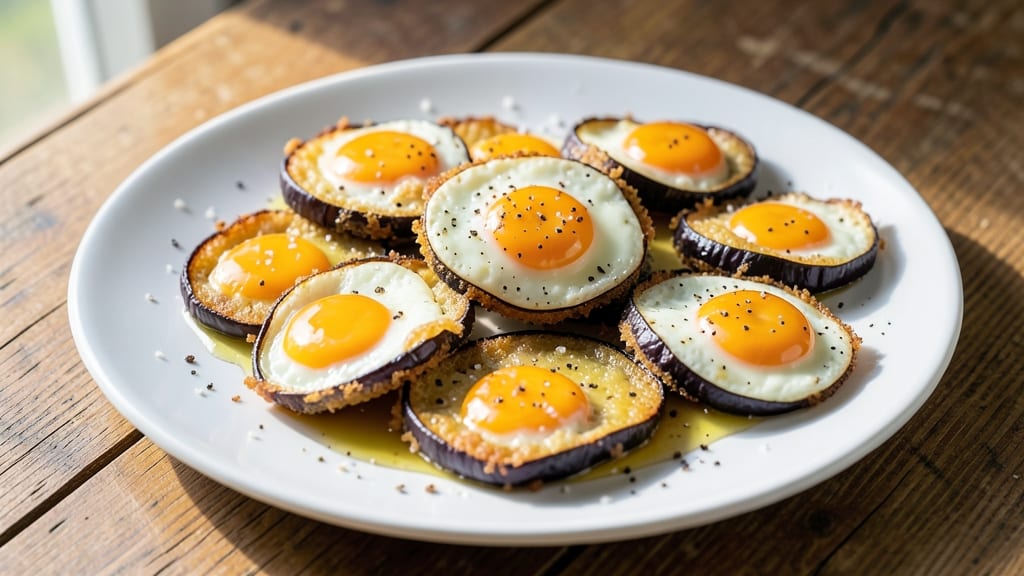
This tortang talong with egg recipe transforms humble eggplant into a crispy, golden dish with rich, runny yolks at its heart—a Filipino breakfast staple that feels like a hug on a plate.
The secret lies in properly preparing the eggplant first: slicing it thin, salting to draw out bitterness, then frying until tender yet still holding its shape. That's what makes these egg cups so special—they're crispy on the outside, silky inside, with just the right amount of eggy richness.
What sets this recipe apart is the balance of textures and flavors: the caramelized eggplant slices wrapped around perfectly cooked eggs create a satisfying contrast between crispy edges and creamy centers. The dish comes together in just 20 minutes, making it ideal for busy mornings or weekend brunches.
Traditional versions often include a sprinkle of chili or a squeeze of calamansi for brightness, but even the basics shine when done right.
By the time you're done, you'll have a dish that's both comforting and impressive—crispy eggplant cups filled with golden yolks that spill just enough to create that perfect messiness. The aroma of frying eggplant and eggs fills the kitchen, promising a meal that's hearty yet light, savory yet slightly sweet.
This is the kind of recipe that transforms simple ingredients into something extraordinary.
Serve it with steamed rice or as part of a Filipino-style breakfast spread. The technique is straightforward, but the result is anything but ordinary—proof that a few well-chosen ingredients and proper technique can create a dish that feels like a celebration.
Let's get started on making this classic recipe your own.
Ingredients for tortang talong with egg
Simple ingredients that transform into crispy eggplant cups filled with golden egg yolks.
| Ingredient | Amount | Notes |
|---|---|---|
| Japanese Eggplant 🍆 | 1 lb | Long variety preferred, sliced thinly |
| Large Eggs 🥚 | 4 whole | Room temperature for even cooking |
| All-Purpose Flour 🌾 | ½ cup | For dredging eggplant slices |
| Vegetable Oil 🫒 | 2 cups | High smoke point for frying |
| Salt 🧂 | 1 ½ tsp | Kosher or sea salt preferred |
| Ground Black Pepper 🌶️ | ½ tsp | Freshly ground for best flavor |
| Garlic Cloves 🧄 | 2 cloves | Minced for seasoning |
| Soy Sauce 🥢 | 1 tbsp | For dipping or seasoning |
| Calamansi or Lemon Juice 🍋 | 1 tbsp | Calamansi preferred, lemon substitute |
| Silken Tofu 🥬 | ½ cup | Optional for extra richness |
| Fresh Chili Peppers 🌶️ | 1 whole | Sliced thin for garnish (optional) |
The eggplant is the star here—Japanese eggplant (long, slender variety) is ideal, but regular eggplant works in a pinch. Look for firm, glossy skins with no soft spots. Filipino markets often carry Japanese eggplant, but most grocery stores stock it too. For best results, slice the eggplant lengthwise into 1/8-inch thick planks—use a sharp knife and keep them uniform for even cooking. Salting the slices for 10 minutes before frying removes bitterness and helps them crisp up beautifully. Don't skip this step, even if you're in a hurry.
No Japanese eggplant? Regular eggplant works fine, but you might need to salt it for 15 minutes instead. Short on soy sauce? Substitute with a mix of tamari and a pinch of sugar. Want extra richness? The silken tofu adds a silky texture that mimics the traditional egg yolk spill—blend it with a splash of soy sauce and a bit of oil. For the eggs, room temperature is key—cold eggs won't cook as evenly. If you're feeling adventurous, try adding a pinch of turmeric to the egg mixture for that classic Filipino egg color. The chili peppers are optional but add a nice kick—fresh siling labuyo works best if you can find it.
Eggplant slices keep for 3 days in the fridge wrapped tightly in paper towels to absorb moisture. Fry them just before serving—they lose crispiness quickly. The fried eggplant cups can be reheated in a dry skillet for 1-2 minutes per side to restore crispiness. For a make-ahead option, prepare the eggplant and store it separately from the eggs. Assemble just before serving to keep the eggs fresh. Leftovers? Store them in an airtight container for 2 days, but they're best enjoyed fresh when everything is at its peak texture.
Why You'll Love This Recipe
- Five-Ingredient Magic: The pantry staples here won’t overwhelm you—just eggplant, eggs, flour, oil, and salt. Honestly, I’ve made this with whatever was sitting in my fridge, and it still comes out crispy and satisfying.
- Crispy-Creamy Duet: That first bite of the flour-dredged eggplant gives way to a tender center, while the runny egg yolk ties it all together. Between us, it’s the kind of texture combo that makes you pause mid-bite—even if you’re just reheating leftovers.
- Lunchbox Hero: Pack it cold for work or school—it holds up better than you’d think. My kid’s been bringing this to class for weeks, and the teacher’s started asking for seconds. (Yes, even on a Tuesday.)
- Budget Crispy Feast: A single eggplant and a handful of eggs stretch into meals for days. I’ll be real: this is my go-to when I’m trying to feed a crowd without breaking the bank. The flour coating makes it feel fancy, but the cost stays humble.
Step-by-step instructions for tortang talong with egg
Mastering this dish delivers perfectly crisp eggplant cups with silky egg centers every time.
Prepare the Japanese Eggplant
Slice the 1 lb Japanese Eggplant lengthwise into ¼-inch thick strips, cutting parallel to the long axis. The eggplant should yield about 12-14 slices total. Pat each slice dry thoroughly with paper towels—this step is critical for achieving crispy results. Remove any seeds or discolored portions, then arrange the slices on a wire rack to air-dry for 10 minutes. The goal is to eliminate as much moisture as possible before frying.
While the eggplant dries, create a simple seasoning mixture by whisking together 0.5 cup All-Purpose Flour, 1.5 tsp Salt, and 0.5 tsp Ground Black Pepper in a shallow bowl. This dry coating will create a delicate crust that enhances crispiness without overpowering the eggplant's natural flavor. Keep the seasoning mixture nearby for the next step.
Fry the Eggplant Until Golden
Heat 2 cups Vegetable Oil in a deep skillet or Dutch oven to 350°F—use a thermometer for precision. Working in batches to avoid overcrowding, carefully place 3-4 eggplant slices at a time into the hot oil. Fry for 2-3 minutes per side until the edges turn golden brown and the eggplant feels tender when pierced with a fork. Remove the fried slices with a slotted spoon and drain on a wire rack lined with paper towels.
Don't rush this step—undercooked eggplant will yield a soggy texture. You'll know they're ready when they float to the surface and develop a crisp exterior. Keep the fried eggplant warm in a 200°F oven while you prepare the egg mixture. This maintains their crispness until assembly.
Create the Egg Mixture
In a medium bowl, whisk together the 4 whole Large Eggs until no streaks remain. Add 0.5 cup Silken Tofu and blend until smooth—this creates a luxurious, custard-like texture. Stir in 1 tbsp Soy Sauce and 1 tbsp Calamansi or Lemon Juice for depth of flavor. The mixture should be thick but pourable, with a slightly tangy aroma. Taste and adjust seasoning with additional salt if needed.
Mince the 2 cloves Garlic Cloves and thinly slice the 1 whole Fresh Chili Peppers (if using). Set these aside for garnish—we'll add them during the final assembly. The egg mixture should be ready to use immediately, as it begins to thicken at room temperature.
Assemble and Bake the Egg Cups
Preheat your oven to 375°F. Working quickly, place 2-3 fried eggplant slices in each of 4 ramekins or small oven-safe dishes, slightly overlapping them to create a cup shape. Pour the egg mixture evenly over the eggplant, filling each ramekin about ¾ full. The eggplant should be completely submerged in the egg mixture.
Bake for 12-15 minutes until the tops are golden brown and the centers are just set. You'll see the edges puff slightly and develop a crispy texture. Remove from the oven and let rest for 2 minutes before serving. This resting period allows the egg centers to fully set while maintaining their silky texture.
Garnish and Serve Immediately
Transfer the egg cups to serving plates and immediately garnish with the minced garlic and sliced chili peppers. The contrast of crispy eggplant, creamy egg centers, and fresh garnishes creates the perfect balance of textures and flavors. Serve while warm for the ultimate experience—each bite should deliver a satisfying crunch followed by a luxurious, custard-like egg filling.
For best results, prepare this dish fresh as the eggplant loses crispness when reheated. The combination of properly fried eggplant and perfectly set eggs creates a harmonious texture that makes this dish irresistibly crispy on the outside with a silky interior.
Pro Tips For Making Tortang Talong With Egg
- SEAR THE EGPLANT FIRST: I used to skip this, but trust me—dry the eggplant slices thoroughly with paper towels, then hit them with a quick sear in hot oil (about 30 seconds per side) before adding the egg batter. The Maillard reaction gives that deep, savory base the dish needs, and it stops the eggplant from turning mushy later. (Yes, it’s an extra step, but the texture difference is night and day.)
- USE COLD EGGS FOR STURDY CUSTARD: Take the eggs straight from the fridge, crack them into a bowl, and whisk just until combined—no need for frothy meringue. Cold eggs hold their shape better in the hot oil, so you get thick, golden slices instead of a runny omelet. I’ve burned batches when I rushed this, so resist the urge to whisk like you’re making a soufflé.
- SALT THE FLUOR WATER: The batter’s secret weapon is a pinch of salt in the flour-water mix (about ½ teaspoon per cup of water). It seasons the eggplant from the inside out and keeps the coating from tasting bland. I learned this the hard way—plain flour water makes a dish that’s almost right, but not quite.
- DRAIN WELL AFTER FRYING: Once the eggplant slices are coated and fried, transfer them to a wire rack or clean kitchen towel to drain for 2–3 minutes. Skipping this leaves the dish soggy, and no one wants a wet tortang talong. (I know, it’s tempting to pile them high, but give them space—your future self will thank you.)
Dietary considerations for tortang talong with egg
Vegetarian-Friendly Staple
This dish is a vegetarian powerhouse—built entirely around eggplant and eggs, making it naturally free from meat, poultry, and seafood. The silken tofu addition (if used) provides plant-based protein, while the egg mixture delivers 12 grams of complete protein per serving.
Perfect for meat-free diets or as a side for veggie-centric meals. 🌱
Gluten-Free Adaptation
Skip the all-purpose flour coating entirely—simply fry the eggplant slices without dredging. The natural crispiness from proper salting and frying will still shine. For extra crunch, lightly brush the fried eggplant with olive oil before baking. This maintains the dish's integrity while keeping it gluten-free.
Egg Allergy Options
For those avoiding eggs, replace the egg mixture with a tofu scramble: blend ½ cup silken tofu with 1 tbsp soy sauce, 1 tbsp calamansi juice, and ½ tsp turmeric for color.
Pour this over the fried eggplant and bake as directed. The texture will be slightly denser but still delicious. Always check for cross-contamination if sharing kitchen tools.
Low-Carb Considerations
This recipe is already naturally low-carb, with only 6 grams net carbs per serving (without rice). To further reduce carbs, omit the flour coating and use eggplant slices only for the cups.
The dish remains satisfying while fitting into keto or low-carb diets—just watch portion sizes of the egg mixture.
Nut-Free & Soy-Free
Standard tortang talong uses soy sauce, but you can substitute with coconut aminos (1:1 ratio) for a nut-free, soy-free version. For extra richness without soy, add 1 tbsp nutritional yeast to the egg mixture. Always check labels—many soy-free products contain hidden soy derivatives.
Nutrition facts
Frequently asked questions
Why do I need to salt the eggplant slices before frying?
Salting removes bitterness and draws out excess moisture, which is crucial for achieving crispy eggplant cups. Leave the slices on a rack for 10 minutes after salting—this step prevents soggy results. Japanese eggplant needs 10 minutes, while regular eggplant may require 15 minutes of salting.
Can I make tortang talong without an oven?
Yes! After frying the eggplant, pour the egg mixture over the slices and cook them in a skillet over medium-low heat for 8-10 minutes, covered. The eggplant will steam slightly, creating a similar texture. Keep the heat gentle to avoid burning the edges while the centers set.
What's the secret to perfectly set eggs without overcooking?
Bake at 375°F for exactly 12-15 minutes—the eggs should be just set with a slightly runny yolk. Overcooking turns them rubbery. For extra insurance, check at 12 minutes and remove when the edges are golden but centers still jiggle slightly.
How do I store leftovers without losing crispiness?
Keep fried eggplant cups separate from the egg mixture in an airtight container. Reheat only the eggplant slices in a dry skillet for 1-2 minutes to restore crispness, then reassemble with fresh egg mixture (cooked separately) before serving.
Can I use regular eggplant instead of Japanese eggplant?
Regular eggplant works well, but you'll need to salt it for 15 minutes (vs. 10 minutes for Japanese) and fry at 340°F instead of 350°F. The slices may be slightly thicker—aim for ¼-inch thickness to ensure even cooking.