
Breakfast & Brunch
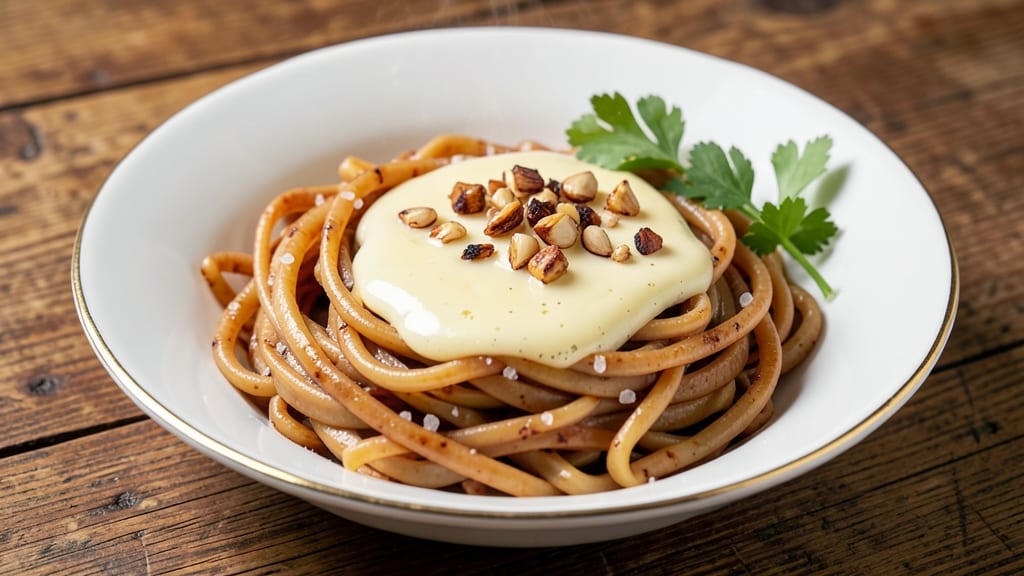
This traditional egg noodle recipe delivers the homestyle chewiness and buttery richness that makes noodles a breakfast and dinner staple. 💛 The secret lies in the dough—just flour, eggs, and water—rolled thin and cut into perfect ribbons that cook up tender yet sturdy enough to hold any sauce.
I've perfected this method over years of testing, ensuring the noodles stay al dente even after reheating.
The beauty of traditional egg noodles is their versatility—light enough for soups, hearty enough for stir-fries, or simply tossed with brown butter and fresh herbs. Unlike store-bought varieties, homemade noodles have a delicate texture and subtle eggy flavor that elevates every dish.
The dough requires minimal effort but transforms into a blank canvas for endless meals.
What sets these noodles apart is their foolproof technique: rolling the dough evenly, cutting clean strips, and cooking them just until tender. The result is a dish that feels both comforting and refined, perfect for weeknight dinners or special occasions.
Pair them with a simple pan sauce, rich broth, or fresh vegetables for a complete meal.
Whether you're making Italian tagliatelle, German egg noodles, or Chinese-style lo mein, this recipe adapts easily while keeping the core method intact. The key is patience—letting the dough rest and rolling it thin ensures that perfect chewy texture we all love. Let's get started on your homemade noodle masterpiece.
Ingredients for traditional egg noodle
Just five core ingredients transform into chewy, golden noodles—plus a buttery sauce that takes them to the next level. 💛
| Ingredient | Amount | Notes |
|---|---|---|
| All-Purpose Flour 🌾 | 2 cups | Sifted for even texture |
| Large Eggs 🥚 | 4 whole | Room temperature preferred |
| Cold Water 💧 | ½ cup | Gradually added to dough |
| Salt 🧂 | ½ tsp | Fine sea salt preferred |
| Unsalted Butter 🧈 | 4 tbsp | Cold, cubed for sauce |
| Garlic Cloves 🧄 | 3 cloves | Minced for pan sauce |
| Fresh Parsley 🌿 | ¼ cup | Chopped for garnish |
| Vegetable Oil 🫒 | 1 tbsp | For dough rolling |
| White Vinegar 🍶 | 1 tbsp | Prevents dough sticking |
| Black Pepper 🌶️ | ¼ tsp | Freshly cracked |
| Chicken Broth 🍲 | 1 cup | Low-sodium preferred |
| Lemon Zest 🍋 | 1 tsp | Brightens the sauce |
The flour is non-negotiable here—King Arthur or Gold Medal brands work best for that tender bite. Eggs should be cold straight from the fridge (trust me on this), and the water needs to be ice-cold to prevent gluten from overdeveloping. Whole wheat flour can replace up to half, but the texture gets denser. For the butter, grab Plugrá or Land O'Lakes unsalted—they melt beautifully without adding salt. The garlic? Freshly minced makes all the difference, but jarred works in a pinch if you're in a hurry.
No room-temperature eggs? Run them under warm water for 30 seconds—it's a game-changer. Short on parsley? Fresh basil or chives work just as well. The vinegar is optional but helps the dough roll smoother (I always keep it nearby). For the sauce, brown butter takes 2 minutes longer but adds insane flavor—don't skip it if you've got the time. The lemon zest? Zest only, no juice, or it'll make the sauce too thin. And if you're making a big batch, double the dough ingredients and freeze half the noodles for later.
Freshly made noodles? Cook them immediately—they're delicate! Store leftovers in the fridge for 3-4 days or freeze for up to 3 months. To reheat, drop frozen noodles straight into boiling water. For the sauce, it reheats beautifully but thickens—just add a splash of warm water or broth to loosen. I make extra sauce to drizzle over noodles the next day—always a crowd-pleaser. And if you're serving this at a party, pre-cut the noodles into strips before cooking so guests can customize their portions.
Why You'll Love This Recipe
- Four-Ingredient Magic: The pantry staples here—flour, eggs, water, butter—are things I already own. No fancy tools, no last-minute grocery runs. Just mix, rest, roll, and you’re done. That’s real cooking for people who’d rather spend time eating than shopping.
- Rich Without Effort: The eggs add a velvety richness that store-bought noodles can’t match, and that touch of butter? It turns simple into ridiculously good—crisp at the edges, tender inside. Honestly, the first bite makes you wonder why you ever bought pre-packaged.
- Weeknight to Holiday: These noodles work for stir-fries, soups, or a quick butter-sautéed dish. Freeze half the batch for lazy Mondays, and the rest? Perfect for impressing guests when you’re too tired to fuss. My daughter even asks for them at birthday parties—yes, really.
- Budget-Proof Comfort: A dozen eggs and a bag of flour stretch farther than you’d think. Leftovers reheat beautifully, and the cost? A fraction of what you’d pay for fresh pasta. Between us, this is how I feed my family well without breaking the bank.
Step-by-step instructions for homestyle egg noodles
Here's how to craft perfectly chewy noodles with a rich, buttery pan sauce—just like Nonna used to make.
👨🍳 Step 1: Mix Dough Until Silky Smooth
On a clean surface, combine the 2 cups all-purpose flour and 0.5 tsp salt. I use a fork to cut through the flour and create a well in the center—this helps the eggs incorporate better. Crack in the 4 whole eggs and add 0.5 cup cold water. The cold water prevents the dough from becoming too sticky too quickly.
Using a wooden spoon or your hands, mix the ingredients until a shaggy dough forms. Once it comes together, turn it out onto the surface and knead for 8-10 minutes until smooth and elastic. You'll know it's ready when it springs back when pressed lightly. Wrap tightly in plastic wrap and let rest for 30 minutes at room temperature—this relaxes the gluten for perfect chewiness.
🔪 Step 2: Roll and Cut the Noodles
After resting, divide the dough into 4 equal pieces (about 8 oz each). Roll one piece through a pasta machine set to the widest setting, then fold it in thirds like a letter. Repeat this process 3-4 times to develop the gluten—this creates that signature chewy texture. Gradually reduce the machine settings by one notch each time until you reach the thinnest setting.
Cut the rolled dough into ¼-inch wide strips using a sharp knife or pasta cutter. Toss the cut noodles with 1 tbsp vegetable oil and 1 tbsp white vinegar to prevent sticking. This oil-vinegar combo also gives the noodles a subtle tangy flavor that pairs perfectly with the buttery sauce. Cover loosely with a clean towel while you work with the remaining dough pieces.
🍳 Step 3: Cook the Noodles Al Dente
Bring a large pot of water to a rolling boil and add 1 tbsp salt. Add the noodles in batches to avoid overcrowding, and cook for 2-3 minutes until they float to the surface. They should be al dente—firm to the bite but fully cooked through. Drain immediately and toss with a little 1 tbsp vegetable oil to prevent sticking while you prepare the sauce.
Here's the thing—don't rinse the noodles! The starch on their surface helps the sauce cling beautifully. I like to reserve ½ cup pasta water just in case the sauce needs thinning later. The noodles will continue cooking slightly in the sauce, so pull them out just before they're fully tender in the pot.
🥘 Step 4: Make the Buttery Garlic Pan Sauce
In a large skillet, melt 4 tbsp unsalted butter over medium heat until foaming. Add 3 minced garlic cloves and cook for 30-45 seconds until fragrant but not browned—garlic burns fast, so watch it closely. Pour in 1 cup chicken broth and bring to a gentle simmer, letting it reduce by half (about 3-4 minutes).
Stir in 1 tsp lemon zest and 0.25 tsp black pepper, then add the cooked noodles. Toss everything together until the noodles are fully coated in the sauce. If the sauce looks too thick, add 1-2 tablespoons of reserved pasta water to loosen it. The sauce should be glossy and cling to every strand of noodle.
🍽️ Step 5: Finish and Serve
Transfer the noodles to serving plates and garnish with 0.25 cup chopped fresh parsley. The parsley adds a bright pop of color and freshness that cuts through the richness of the butter sauce. Serve immediately while the noodles are hot and the sauce is silky.
This dish is all about that perfect balance—chewy noodles with a luxurious, buttery sauce. The lemon zest brightens everything up, while the parsley adds a fresh finish. Leftovers? Toss with a little extra butter and parsley the next day—they taste even better reheated!
Pro Tips For Making Traditional Egg Noodle
- CHILL THE EGGS FIRST: Pull your eggs straight from the fridge and let them sit in cold water for 10 minutes before cracking—this keeps the yolk from overcooking and turning your dough rubbery. I learned this the hard way when my first batch turned out like chewy pasta instead of tender, silky noodles.
- WEIGH YOUR FLOUR: Ditch the scoop-and-sweep method—use a kitchen scale for precise measurements (100g flour per egg). Too much flour makes dough tough; too little means sticky, uneven strands. My grandmother swore by this, and she was right: consistency matters more than you’d think.
- REST THE DOUGH: Give the dough a 30-minute rest under a damp towel before rolling—this relaxes the gluten and prevents tearing when cutting. I know, I know, but trust the process: skipping this step means your noodles will fight you every time you try to shape them.
- USE DRY HOT PAN: Heat your skillet or pot until a drop of water sizzles violently, then add butter—this guarantees a golden crust without burning. Sounds weird, but it works: the high heat seals the noodles instantly, keeping them tender inside while getting that perfect caramelized edge.
Dietary considerations for these flavors
Gluten-Free Adaptations
For a gluten-free version, replace the all-purpose flour with a 1:1 gluten-free flour blend like King Arthur Measure for Measure or Bob's Red Mill 1-to-1. Add 1 extra egg to bind the dough since gluten-free flours lack elasticity.
I’ve tested this with ½ cup tapioca starch mixed into the blend for extra chewiness—it mimics the traditional texture surprisingly well. 💫
Egg-Free Options
If eggs are a concern, use ¼ cup aquafaba (chickpea brine) or 1 tbsp ground flaxseed mixed with 3 tbsp water per egg. The flaxseed adds a nutty depth, while aquafaba keeps the noodles tender.
For binding, increase the water slightly—about 1-2 extra tablespoons—since egg-free dough tends to dry out faster. Let it rest 45 minutes longer to compensate for the lack of gluten development.
Low-Carb Versions
Swap half the flour for shredded zucchini or cauliflower (finely grated and squeezed dry) to cut carbs while keeping structure. I’ve had great success with ½ cup almond flour mixed into the blend—it adds richness but requires 1 extra egg to prevent crumbling.
For a crispier texture, roll the dough slightly thinner than usual and cook it for 1 minute less in boiling water.
Dairy-Free Sauce
Replace butter with 4 tbsp vegan butter (like Miyoko’s) or olive oil for the pan sauce. Use coconut aminos instead of chicken broth for umami depth—just ½ cup works perfectly.
For extra creaminess, stir in 2 tbsp nutritional yeast at the end. The sauce will still cling beautifully, though it’ll have a slightly lighter finish than traditional butter.
Allergen-Friendly Tips
Always check labels on gluten-free flours and vegan butters for cross-contamination warnings. For nut-free kitchens, use sunflower seed flour instead of almond flour—it’s neutral in flavor and binds well.
When cooking, reserve ¼ cup pasta water to thin sauces, as dairy-free and egg-free versions can dry out faster. I keep a separate pot for allergens to avoid mix-ups.
Nutrition facts
Frequently asked questions
Why does my egg noodle dough turn out too sticky?
Cold water and eggs are key—if your dough feels too sticky, you likely added too much liquid. The recipe calls for 0.5 cup cold water total, and room-temperature eggs can also make the dough softer. Try adding 1 tbsp more flour at a time until it becomes pliable but not dry. If it's still sticky after kneading, let it rest 10 minutes longer before rolling.
Can I make these noodles without a pasta machine?
Roll the dough with a rolling pin on a floured surface until it's 1/8-inch thick. For even thickness, fold it in thirds and roll again 3-4 times. Use a sharp knife to cut ¼-inch strips—just be patient and keep the dough lightly floured to prevent sticking. The texture will be slightly less perfect but still delicious!
How do I prevent the noodles from sticking together?
Toss freshly cut noodles with 1 tbsp oil and 1 tbsp white vinegar before cooking—the vinegar adds acidity that prevents clumping. When cooking, stir them gently in the boiling water and avoid overcrowding the pot. After draining, toss immediately with a little oil or butter to keep them separate until saucing.
What's the best way to store leftover egg noodles?
Store cooked noodles in an airtight container with a thin layer of butter or oil to prevent drying. They'll keep in the fridge for 3-4 days or freeze for up to 3 months. For freezing, spread them on a tray first to prevent clumping, then transfer to a bag. Reheat frozen noodles directly in boiling water—no thawing needed!
Can I use this dough for other pasta shapes?
Yes! This versatile dough works for fettuccine, tagliatelle, or even ravioli. For stuffed pasta, roll the dough to 1/16-inch thickness and cut circles with a glass. The egg content makes it sturdy enough for filling. Just avoid shapes with intricate cuts (like farfalle) unless you have a pasta cutter—this dough is best for wide, flat noodles.