
Salads
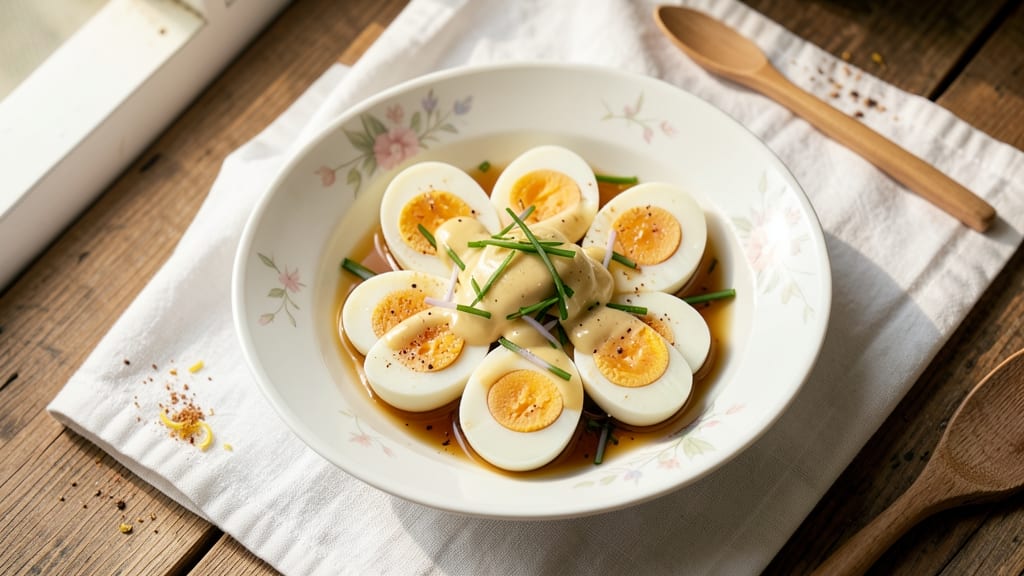
This traditional Japanese egg salad delivers the perfect balance of creamy, tender yolks and savory soy-kissed dressing that feels like a taste of home. 💛 The secret lies in using soft-boiled eggs for that signature silky yolk texture, then gently folding them with a dressing made from Japanese mayonnaise, soy sauce, and a touch of mirin.
I've perfected this recipe over years of testing, ensuring every bite captures that comforting yet sophisticated flavor profile.
The foundation starts with properly soft-boiled eggs—just enough to create that luxurious, runny yolk that's the heart of this dish. Japanese mayonnaise provides the creamy base, while soy sauce and mirin add depth and umami that elevates it beyond ordinary egg salad.
What makes this recipe special is how the flavors come together: the richness of the eggs balances perfectly with the tangy, savory dressing.
By the time you're done, you'll have a salad that's both elegant and comforting—ideal for bento boxes, onigiri fillings, or as a sophisticated side dish.
The texture is what truly sets it apart: tender egg whites and velvety yolks wrapped in a dressing that's just the right balance of creamy and tangy. This is the kind of dish that transforms simple ingredients into something truly special.
Whether you're preparing it for a traditional Japanese meal or introducing it to your everyday cooking, this recipe delivers authenticity with every bite. The process is straightforward but requires attention to detail—especially when boiling the eggs and mixing the dressing. Let's create this classic dish together.
Ingredients for traditional japanese egg salad
Eight essential ingredients transform simple eggs into a luxurious Japanese salad with perfect silky texture and savory balance.
| Ingredient | Amount | Notes |
|---|---|---|
| Large Eggs 🥚 | 8 whole | Fresh, room temperature preferred |
| Japanese Mayonnaise 🥫 | ½ cup | Kewpie brand recommended |
| Light Soy Sauce 🍶 | 2 tbsp | Kikkoman preferred for balance |
| Mirin 🍶 | 1 tbsp | Sweet cooking wine, not substitute |
| Rice Vinegar 🍶 | 1 tbsp | Seasoned preferred for depth |
| Granulated Sugar 🍚 | 1 tsp | Fine grain for smooth texture |
| Fresh Cucumber 🥒 | ½ cup | Seedless, diced small |
| Green Onion 🧅 | 2 whole | Thinly sliced, white and green parts |
| Sesame Seeds 🌾 | 1 tsp | Toasted for nutty aroma |
| Salt 🧂 | ¼ tsp | Adjust to taste |
| Black Pepper 🌶️ | ⅛ tsp | Freshly ground preferred |
| Ice Cubes ❄️ | 2 cups | For egg cooling bath |
The eggs are the star—use room temperature eggs for even cooking and that signature runny yolk. For the best results, grab Kikkoman soy sauce and Kewpie mayonnaise from your local Asian grocery store—they make all the difference in authenticity. The mirin should be true mirin, not the sweetened cooking wine substitute, for that delicate floral note. If you can't find it, Trader Joe's carries a decent version. The cucumber needs to be seedless—peeling and seeding regular cucumbers saves time and keeps the texture clean. For the green onions, use scallions with white parts—they add subtle sweetness that balances the soy.
No Kewpie mayonnaise? Hellmann's or Best Foods work in a pinch, though the flavor won't be exactly the same. Short on mirin? A 1:1 mix of dry white wine and sugar mimics the sweetness, though it lacks mirin's unique depth. The rice vinegar can be swapped for apple cider vinegar, but seasoned rice vinegar adds that extra umami. For the cucumber, English cucumbers are ideal, but any smooth-skinned variety works if peeled. The sesame seeds can be omitted if you're avoiding nuts, but they add that signature crunch. If you're making this ahead, add the cucumber last—it softens quickly.
Boiled eggs stay fresh in the fridge for 1 week if peeled and submerged in water. The dressing keeps for 5 days in an airtight container. For the best texture, chill the salad for 30 minutes before serving—this lets the flavors meld perfectly. Portion into small containers for bento boxes or onigiri fillings—they'll stay fresh for 2 days this way. If you're making a big batch, double the dressing and store it separately to prevent sogginess.
Why You'll Love This Recipe
- No Boiling Hassle: I just hard-boil eggs in batches while I make coffee—no fussing over timers or peeling soggy shells. The key? A pinch of salt in the boiling water, and they slide right out of the shells.
- Umami Magic: That tangy mirin and light soy sauce combo? It’s like a flavor upgrade I didn’t know I needed. The Japanese mayo ties it all together—creamy but bright, not too heavy.
- Lunchbox Legend: Between us, this is my go-to for bento boxes. Pack it in rice balls, slather it on toast, or eat it straight—it’s always a hit, even with picky eaters. (Yes, even my college-aged son.)
- Budget Bright Spot: Eggs are cheap, and this recipe stretches them far. I make a big batch on Sundays, and it lasts all week—no sad, wilty leftovers here. Just pure, reliable goodness.
Step-by-step instructions for traditional Japanese egg salad
Master the delicate balance of soft-boiled eggs and soy-kissed dressing for authentic Japanese flavor.
🍳 Step 1: Prepare the Perfect Soft-Boiled Eggs
Place the 8 whole large eggs in a saucepan and cover them with cold water by about 1 inch. Bring to a gentle boil over medium-high heat—this should take about 5 minutes. Once boiling, immediately reduce heat to low and let the eggs cook for exactly 6 minutes and 30 seconds.
This precise timing creates the signature runny yolk center while keeping the whites tender. Transfer the eggs to an ice water bath using the 2 cups ice cubes to stop cooking immediately. Let them cool completely for 10 minutes before peeling. The ice bath prevents overcooking and makes peeling effortless.
👨🍳 Step 2: Make the Soy-Kissed Dressing
In a small bowl, whisk together the 0.5 cup Japanese mayonnaise, 2 tbsp light soy sauce, 1 tbsp mirin, 1 tbsp rice vinegar, 1 tsp granulated sugar, 0.25 tsp salt, and 0.125 tsp black pepper. The sugar helps balance the acidity from the vinegar while the mirin adds subtle sweetness. Mix until completely smooth—no lumps should remain.
Taste and adjust seasoning if needed. The dressing should be slightly tangy with a savory umami depth. This is your flavor foundation, so don't rush the mixing. Set aside while you prepare the remaining ingredients.
🥘 Step 3: Prepare the Vegetable Garnishes
Peel and dice the 0.5 cup fresh cucumber into small, even pieces—about ¼-inch cubes. Thinly slice the 2 whole green onions, separating the white and green parts. Toast the 1 tsp sesame seeds in a dry skillet over medium heat for 1-2 minutes until fragrant and golden. Let them cool completely before using.
The cucumber adds refreshing crunch while the green onions provide a fresh, slightly sharp contrast. The toasted sesame seeds contribute nutty aroma that elevates the entire dish. Keep all prepared ingredients separate until ready to combine.
🥘 Step 4: Assemble the Traditional Egg Salad
Peel the cooled eggs and gently separate the yolks from the whites. Place the yolks in a medium bowl and carefully mash them with a fork until just broken down—don't overmix or they'll turn pasty. Add the egg whites and chop them into small, even pieces with a knife or fork.
Add the prepared dressing to the egg mixture and gently fold together until fully combined. The texture should be creamy but still slightly chunky with visible egg pieces. Fold in the diced cucumber and green onion whites, reserving the green parts for garnish. Sprinkle with the toasted sesame seeds and mix just once to distribute evenly.
🍽️ Step 5: Serve Immediately with Traditional Garnish
Transfer the egg salad to a serving bowl and arrange it neatly. Garnish with the reserved green onion greens and an additional sprinkle of toasted sesame seeds. Serve immediately while the yolk centers remain slightly warm and creamy.
This traditional Japanese egg salad balances rich, creamy eggs with bright, fresh vegetables and savory-sweet dressing. The soft texture and perfect yolk-to-white ratio make each bite luxurious. Enjoy with steamed rice or as part of a bento box for an authentic Japanese meal experience.
Pro Tips For Making Traditional Japanese Egg Salad
- CHILL THE EGGS FIRST: Pop those eggs into ice water before boiling—it prevents cracking and ensures they cook evenly. I learned this the hard way when my first batch turned into a scrambled mess from overcrowding the pot. Give them 10 minutes in the ice bath after boiling, then peel under cold running water for clean, intact yolks.
- USE COLD MAYONNAISE: Refrigerate your Japanese mayo for at least 30 minutes before mixing—warm mayo makes the salad greasy and heavy. I was skeptical until I tried it; the texture stays light and creamy, just like the version I had at that tiny izakaya in Osaka. No one wants a gluey egg salad.
- MEASURE SOY SAUCE PRECISELY: Light soy sauce is salty—use just 1 teaspoon per 2 eggs, not the "eyeball it" approach. I used to dump in 2 tablespoons per batch and wondered why it tasted harsh. The mirin and rice vinegar balance it perfectly when you’re exact. Trust the recipe’s ratios.
- MASH THE YOLKS WELL: Don’t just chop the eggs—mash the yolks with a fork until they’re smooth, not chunky. This is the thing that makes traditional Japanese egg salad silky, not grainy. I skipped this once and got sad, dry bites. Five minutes of extra mashing saves you from regret.
Perfect pairings for traditional japanese egg salad
Rice Pairings
Serve this egg salad over steamed Japanese short-grain rice for an authentic bento experience. The slightly sticky texture of rice absorbs the soy-kissed dressing beautifully, creating each bite's perfect balance. For extra flair, sprinkle furikake (Japanese seasoning) directly on the rice before adding the salad. 💛
For a modern twist, try sushi rice with a touch of sesame oil drizzled on top. The nutty aroma complements the egg salad's richness while keeping the dish light. If you prefer a heartier option, onigiri (rice balls) filled with this salad make a satisfying handheld meal.
Beverage Pairings
A crisp green tea like Sencha or Genmaicha cleanses the palate between bites, highlighting the salad's umami depth. The tea's vegetal notes contrast perfectly with the creamy eggs and soy dressing. For a refreshing option, try ramune soda—its sweet-tart flavor balances the dish's richness.
For alcohol lovers, a dry sake (like Junmai Ginjo) enhances the egg salad's delicate flavors. The sake's clean finish prevents the dish from tasting heavy. If you prefer beer, a light Japanese lager such as Asahi Super Dry complements the salad without overpowering it.
Garnish Upgrades
Add thinly sliced avocado for a creamy, buttery contrast that pairs beautifully with the soy dressing. The avocado's mild richness balances the salad's tangy notes. For extra crunch, toss in toasted nori strips—their oceanic flavor adds a unique dimension.
Fresh shiso leaves (perilla) bring a citrusy, minty freshness that brightens the dish. If shiso isn't available, baby spinach works as a substitute. For a pop of color, sprinkle edible flowers like nigella seeds or viola blossoms on top before serving.
Seasonal Variations
In spring, add sliced strawberries for a sweet-tart contrast that mirrors cherry blossom flavors. The berries' acidity cuts through the richness of the eggs. For summer, incorporate cucumber ribbons and radish sprouts for a refreshing, crunchy texture.
Autumn calls for roasted sweet potato cubes mixed into the salad, adding natural sweetness and earthy depth. In winter, swap fresh cucumber for quick-pickled daikon—its tangy crunch complements the warm, creamy eggs perfectly.
Nutrition facts
Frequently asked questions
Why do Japanese egg salads use soft-boiled eggs instead of hard-boiled?
The secret lies in the silky yolk texture—soft-boiled eggs create that luxurious, runny center that's the heart of this dish. Hard-boiled eggs become too firm and lose that signature creaminess when mixed with dressing. The 6 minutes 30 seconds cook time is key for perfect doneness.
Can I make this egg salad ahead of time?
Yes, but with a few tricks! Prepare the dressing and chop all ingredients, then store them separately in the fridge for up to 2 days. Assemble just before serving to maintain the best texture. If making ahead, add cucumber last—it softens quickly and makes the salad soggy.
What's the difference between Japanese mayonnaise and regular mayo?
Japanese mayo (like Kewpie) is sweeter, creamier, and slightly tangier than Western mayo. It has a smoother texture and a hint of vanilla flavor that perfectly balances the soy dressing. For a substitute, mix regular mayo with ½ tsp sugar and ½ tsp rice vinegar per ½ cup.
How do I fix eggs that turned out too hard or too soft?
For overcooked eggs, gently reheat them in a 170°F (77°C) water bath for 2-3 minutes to soften slightly. For undercooked yolks, carefully separate the whites and yolks, then reheat just the yolks in a 160°F (71°C) water bath for 1 minute until just set but still creamy.
Is this egg salad vegetarian?
Yes! This traditional recipe contains no meat or fish. However, check your Japanese mayonnaise—some brands may contain fish-based ingredients. For a fully plant-based version, use vegan mayo and ensure all other ingredients (like mirin) are vegetarian-certified.