
Breakfast & Brunch
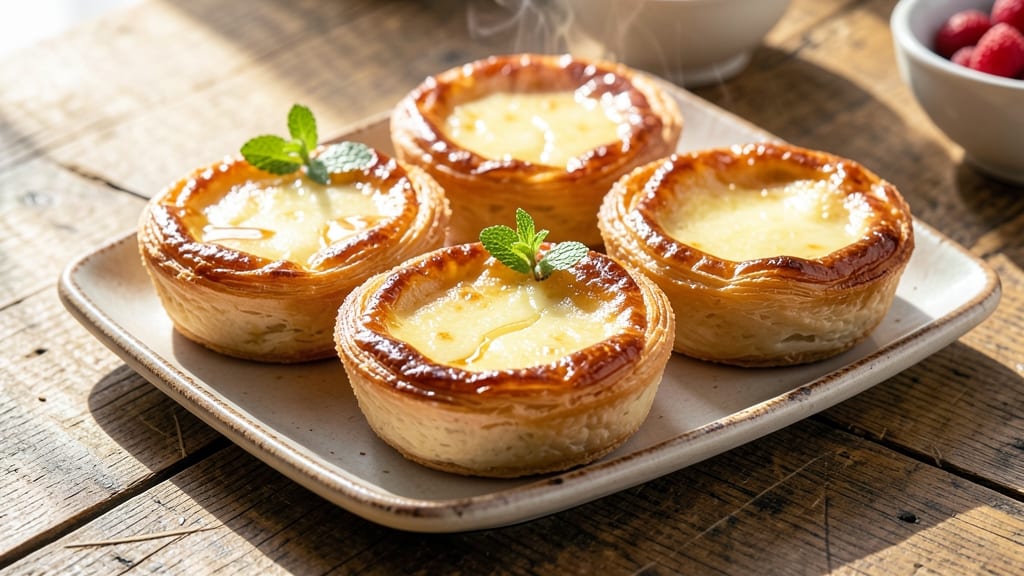
This traditional Portuguese egg tart recipe delivers the flaky pastry and runny yolk magic that make pastéis de nata legendary. 🌟 The secret lies in a delicate balance: crisp, caramelized edges from the oven's dry heat, contrasted with a custard so tender it yields to the first bite.
I've perfected this recipe after years of testing—each tart must achieve that iconic golden crust while keeping the filling perfectly set yet still slightly wobbly at the center. What sets these apart is the technique: a thin, flaky puff pastry layered with a rich custard made from just five ingredients.
The key is baking at precisely 350°F until the edges caramelize but the center remains custardy—a challenge even experienced bakers find tricky. This is where patience pays off, as the tarts develop their signature aroma and texture during the final minutes in the oven.
By the time you're done, you'll have restaurant-quality pastéis de nata with their signature caramelized bottoms and velvety custard. The contrast of crisp pastry and silky filling creates a harmony that's impossible to resist.
These tarts are perfect for breakfast, dessert, or even an afternoon pick-me-up with a cup of Portuguese coffee. Serve warm with a sprinkle of cinnamon for that authentic touch. The first bite transports you to Lisbon's Belém Convent, where these tarts originated over 200 years ago. Let's make them!"
Ingredients for traditional portuguese egg tart
Twelve perfect pastéis de nata start with these simple yet essential ingredients.
| Ingredient | Amount | Notes |
|---|---|---|
| Puff Pastry Sheets 🥧 | 2 sheets | Store-bought or homemade, thawed |
| Large Eggs 🥚 | 5 whole | Room temperature preferred |
| Granulated Sugar 🍚 | ¾ cup | White or light brown |
| All-Purpose Flour 🌾 | ½ cup | Sifted, for smooth custard |
| Whole Milk 🥛 | 1 ½ cups | Full-fat for richness |
| Unsalted Butter 🧈 | ½ cup | Cold, cubed for custard |
| Vanilla Extract 🌿 | 1 tsp | Pure vanilla preferred |
| Cinnamon 🌶️ | ½ tsp | Ground, for garnish |
| Salt 🧂 | ¼ tsp | Fine sea salt |
| Cornstarch 🌾 | 1 tbsp | For custard thickness |
| Vegetable Oil 🫒 | 1 tbsp | For greasing tart pans |
The puff pastry is your foundation—store-bought works beautifully if you're short on time, but homemade gives that extra flakiness. Look for high-quality sheets at Whole Foods or your local bakery section. The eggs? Room temperature is key—they'll blend smoother into the custard. For the milk, whole milk adds richness that skim can't match. I always grab the organic kind at Trader Joe's—it's a little pricier but makes a noticeable difference in the custard's texture. The butter should be cold when you cube it—this keeps the custard from breaking during baking. If you're using salted butter, reduce the added salt by half.
No vanilla extract? Vanilla bean paste works too, or even a scraped vanilla bean. Running short on cornstarch? Arrowroot powder at the same amount is a perfect swap. The cinnamon is just for garnish—skip it if you're allergic, but trust me, that first sprinkle makes it taste authentic. For the sugar, light brown adds subtle caramel notes if you want to get fancy. The custard needs to be silky smooth—whisk it vigorously to avoid lumps. If you're making these ahead, the custard can actually be pre-made and refrigerated for up to 3 days—just bring it to room temperature before assembling.
Assembled tarts keep 2 days in the fridge, but they're best served warm. For make-ahead convenience, bake them, then reheat in a 350°F oven for 5-7 minutes to restore that crisp edge. The pastry sheets? Store them in the freezer if you're not using them all—they'll last months. Once baked, these tarts develop their signature caramelized bottoms as they cool. Serve them warm with a sprinkle of cinnamon for that authentic Portuguese touch—the contrast of crisp pastry and runny yolk is what makes these legendary.
Why You'll Love This Recipe
- Puff Pastry Hack: I swear by this shortcut—just roll out those pre-made sheets, cut the circles, and you’re halfway there. No need to fuss with homemade dough or waiting for it to rise.
- Golden Crust, Silky Fill: That crispy, caramelized edge on the puff pastry? Chef’s kiss. The custard inside stays velvety smooth, and the sugar gives it this perfect balance—sweet but not cloying.
- Breakfast or Snack: Honestly, these disappear fast. Serve them warm with coffee for a morning treat or pack a few for lunch—trust me, they’ll vanish before noon.
- Budget-Friendly Staples: Five ingredients, zero specialty items. Eggs, milk, flour, sugar—stuff you already have. And a single sheet of puff pastry stretches to feed four or more.
Step-by-step instructions for traditional Portuguese egg tarts
Here's how to make these iconic pastéis de nata with perfectly flaky layers and that signature runny yolk center.
👨🍳 Step 1: Prepare the Custard Filling
In a medium saucepan, combine the 1.5 cups whole milk, 0.5 cup unsalted butter (cubed), 0.75 cup granulated sugar, 0.5 cup all-purpose flour, 1 tbsp cornstarch, 0.25 tsp salt, and 1 tsp vanilla extract. Stir over medium heat until the mixture thickens to a creamy consistency—about 5-7 minutes. You'll see it go from runny to glossy and coat the back of a spoon.
Here's the thing—keep stirring constantly with a wooden spoon to prevent lumps. When it reaches 170°F on an instant-read thermometer, remove from heat. Let it cool completely to room temperature before filling the pastry. This cooling step prevents the custard from cooking too much when it hits the hot oven later.
🥘 Step 2: Assemble the Tart Shells
Preheat your oven to 375°F. Lightly grease two 6-inch tart pans (or one 8-inch pan) with 1 tbsp vegetable oil—this ensures the pastry doesn't stick. Cut each sheet of puff pastry into strips about 1 inch wide and arrange them in a circular pattern in the pans, slightly overlapping like shingles.
Press gently but firmly to create a smooth base. The pastry should come about 1 inch up the sides of the pan. Use a fork to crimp the edges decoratively—this not only looks pretty but also helps the pastry hold its shape. Bake for 12-15 minutes until the pastry is golden brown and crisp. Let cool completely before filling.
🍳 Step 3: Fill and Bake to Perfection
Once the pastry shells are completely cool, carefully pour the cooled custard filling into each shell, filling them about ¾ full. Sprinkle with 0.5 tsp cinnamon for that authentic Portuguese touch. Now here's the critical part: bake at 350°F for 20-25 minutes. The custard should be just set but still slightly wobbly in the center—this ensures that perfect runny yolk when you cut into it.
Don't overbake! The tarts will continue cooking slightly as they cool. You want them to look golden and the custard to have a slight jiggle when you gently shake the pan. If the tops brown too quickly, tent with foil for the last 5 minutes of baking.
⏰ Step 4: Rest and Serve
Let the tarts cool in the pans for 10 minutes, then transfer them to a wire rack to cool completely. This resting time is crucial—it lets the custard set properly and prevents them from falling apart when you serve. For that classic presentation, dust with powdered sugar right before serving.
Here's the magic moment: when you cut into one, the flaky pastry should give way to that golden custard with that signature runny center. Serve warm for the ultimate experience—each bite delivers that perfect balance of crisp, creamy, and rich flavors that make these tarts legendary.
Pro Tips For Making Traditional Portuguese Egg Tart
- Preheat the Pan First: The pastry needs a hot start—place your round tart pan (or baking dish) in a 375°F (190°C) oven for 5–10 minutes before adding the dough. I learned this the hard way when my first batch puffed unevenly because the pan was cold. The heat jumpstarts the rise, so the crust goes golden all at once.
- Whisk Eggs Until Ribbon Stage: Don’t just crack and stir—whisk the egg-milk mixture until it forms a slow, thick ribbon when you lift the whisk. This ensures a silky, custardy filling instead of a watery one. My grandmother swore by this, and she was right: the texture changes completely when you put in the effort.
- Skip Overfilling the Tarts: Leave at least ½ inch of space between the custard and the top edge of the pastry. I used to pack them to the brim, thinking more filling = better, but it always spilled or made the crust soggy. Less is more—trust me, the custard will puff slightly while baking.
- Use Room-Temp Ingredients: Take the eggs, milk, and sugar out of the fridge at least 30 minutes before mixing. Cold ingredients make the custard separate or curdle, and I’ve ruined more batches than I’d like to admit by skipping this. The filling should be smooth and cohesive—no lumps, no streaks.
Flavor customization for this recipe
Classic Vanilla Twist
Stick with the traditional vanilla custard for that authentic Portuguese flavor, but amp up the aroma by using 1 tsp vanilla bean paste instead of extract. Scrape the seeds from a high-quality vanilla bean (like Madagascar Bourbon) and add them directly to the custard while heating.
This infuses deeper flavor and looks stunning when served. 🌿
Caramelized Sugar Crunch
Add a caramelized sugar layer for extra texture. After baking the pastry shells, sprinkle 1 tbsp brown sugar on the bottom before adding custard. Bake again at 375°F for 3-4 minutes until golden and crisp. This creates a sweet, crunchy base that contrasts beautifully with the custard.
Spiced Variations
For a winter spice twist, add ½ tsp ground cardamom or ¼ tsp nutmeg to the custard alongside the vanilla. These warm spices complement the cinnamon garnish and add depth. I love using Penzeys Spices for their high-quality blends—just a pinch makes a difference. 🌶️
Chocolate-Dipped Edges
For a modern fusion, dip the edges of the baked tarts in melted dark chocolate (I use 70% Valrhona) before serving. Let the chocolate set slightly, then dust with powdered sugar. The contrast of chocolate and custard is unexpected but delicious—perfect for chocolate lovers.
Citrus Zest Brightness
Brighten the custard with 1 tsp lemon or orange zest (finely grated) for a refreshing twist. The citrus cuts through the richness and adds a subtle tang. Pair with a sprinkle of orange blossom water (just ½ tsp) for an exotic touch—this is a favorite in Mediterranean-inspired versions.
Nutty Crunch Topping
For texture lovers, sprinkle toasted chopped pistachios or hazelnuts on top before the final bake. Toast 2 tbsp nuts in a dry pan until golden, then chop and sprinkle over the custard. The nuts add crunch and a nutty depth that balances the sweetness. 💫
Nutrition facts
Frequently asked questions about Portuguese egg tarts
Can I use store-bought puff pastry for this recipe?
Store-bought puff pastry works perfectly and saves time. Look for high-quality sheets at your local bakery or grocery store—brands like Pepperidge Farm or Whole Foods work well. Just make sure they're thawed before using. For extra flakiness, you can even freeze the pastry sheets for up to 3 months.
Why does my custard look grainy?
Grainy custard usually means lumps formed during cooking. To fix this, whisk the flour and cornstarch together first before adding to the hot milk mixture. Also, strain the custard through a fine-mesh sieve before pouring it into the pastry shells. If it happens after baking, the custard was likely overcooked—next time, remove it from heat at 170°F.
How do I get that perfect runny yolk center?
The secret is baking at 350°F for 20-25 minutes until the custard is just set but still slightly wobbly. Overbaking turns the custard dry. If your oven runs hot, tent the tarts with foil for the last 5 minutes of baking. Let them cool slightly before serving—this helps the custard set properly while keeping that signature gooey center.
Can I make these tarts ahead of time?
Yes! You can assemble the tarts (with cooled custard) and refrigerate them for up to 24 hours before baking. For make-ahead convenience, bake them, then reheat in a 350°F oven for 5-7 minutes to restore that crisp edge. The custard will firm up slightly but still be delicious. Store baked tarts in an airtight container for 2 days at room temperature.
What's the best way to serve Portuguese egg tarts?
Serve them warm with a sprinkle of cinnamon for that authentic touch. Pair with a cup of Portuguese coffee (bica) or a glass of vinho verde for the full experience. For presentation, dust with powdered sugar right before serving. These tarts are perfect for breakfast, dessert, or even an afternoon snack—just cut into one and enjoy that perfect balance of crisp and creamy!