
Breakfast & Brunch
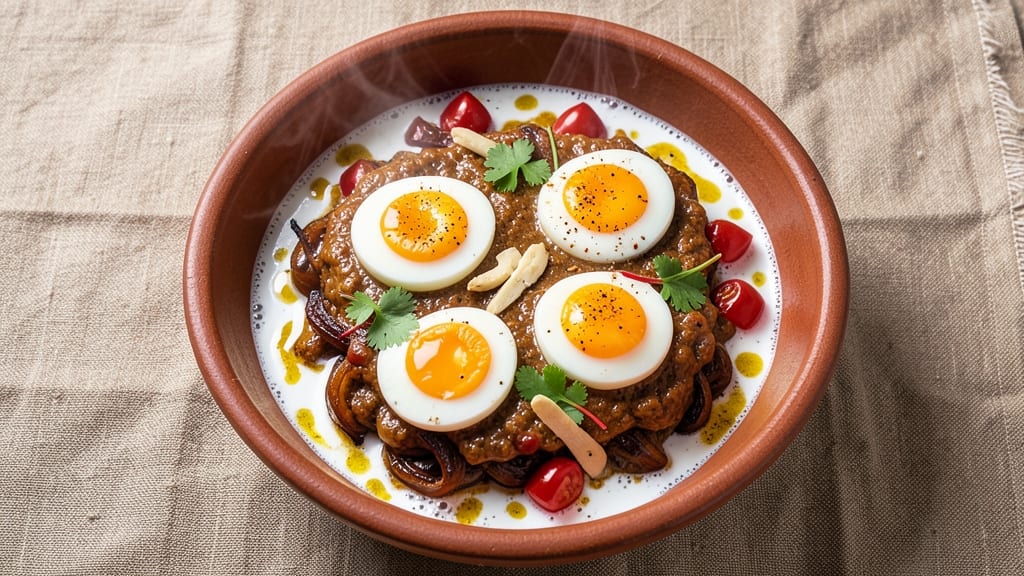
This unique egg curry recipe transforms a simple breakfast into a fragrant, coconut-infused masterpiece that balances creamy richness with bright tomato acidity. The secret lies in poaching eggs directly in the simmering curry, creating tender yolks that absorb the aromatic spices without overcooking—something you won’t find in traditional preparations.
The foundation begins with a slow-cooked tomato base, where onions caramelize until deep amber and spices bloom into complex harmony. Coconut milk adds velvety depth, while a touch of tamarind introduces a subtle tang that brightens every spoonful.
The eggs cook just until set, their centers remaining runny and luxurious, suspended in a sauce that’s both comforting and unexpectedly vibrant.
What makes this curry truly special is the fusion of textures: silky coconut, tender eggs, and the slight crunch of toasted spices. Served with steamed basmati rice or warm naan, it becomes a complete meal—one that’s hearty enough for breakfast but elegant enough for dinner.
The aroma alone will draw everyone to the table.
Perfect for brunch gatherings or a cozy weeknight dinner, this recipe proves that eggs can be the star of a rich, flavorful curry. The technique is straightforward, but the result feels like a restaurant-quality dish you’ve been craving. Let’s get cooking!
Ingredients for unique egg curry
Fifteen ingredients blend into a fragrant, restaurant-quality egg curry masterpiece.
| Ingredient | Amount | Notes |
|---|---|---|
| Large Eggs 🥚 | 4 whole | Freshly poached in curry |
| Coconut Milk 🥥 | 1 can (13.5 oz) | Full-fat preferred for creaminess |
| Canned Crushed Tomatoes 🍅 | 1 can (14.5 oz) | San Marzano preferred |
| Yellow Onions 🧅 | 2 large | Thinly sliced for caramelization |
| Garlic Cloves 🧄 | 6 cloves | Minced for aromatic base |
| Ginger Root 🌿 | 1 inch | Freshly grated for zing |
| Tamarind Paste 🍯 | 1 tbsp | For subtle tang |
| Ground Turmeric 🌶️ | ½ tsp | Freshly ground preferred |
| Ground Cumin 🌿 | 1 tsp | Toasted for depth |
| Ground Coriander 🌶️ | 1 tsp | Freshly ground preferred |
| Garam Masala 🌶️ | 1 tsp | Homemade if possible |
| Vegetable Oil 🫒 | 2 tbsp | For sautéing onions |
| Salt 🧂 | 1 tsp | Diamond Crystal preferred |
| Fresh Cilantro 🌿 | ¼ cup | Chopped for garnish |
| Steamed Basmati Rice 🍚 | 2 cups | Cooked separately |
The coconut milk is non-negotiable—full-fat canned varieties like Thai Kitchen or Goya deliver the creamiest texture. For the tomatoes, San Marzano crushed tomatoes are worth the splurge; their sweetness balances the spices perfectly. Fresh ginger and garlic should be vibrant—no yellowing or soft spots. The tamarind paste adds that signature tang, so if you can't find it, lemon juice at half the amount works in a pinch. Toast your whole spices (cumin, coriander) in a dry pan for 30 seconds before grinding—this unlocks their depth. For garam masala, Madras brand is a trusted choice, but any blend with cardamom and cinnamon will do.
No tamarind? Lime juice or vinegar can mimic the acidity, though tamarind's unique sourness is ideal. Substituting coconut milk? Cashew cream works beautifully—blend soaked cashews with water for a rich alternative. The eggs should be room temperature when poached for even cooking. For a quicker version, use pre-cooked hard-boiled eggs, though fresh poaching yields the best texture. The onions caramelize best when cooked low and slow—don't rush this step. If you're short on time, quick-pickled red onions add a bright contrast without extra effort.
This curry reheats beautifully—better the next day as flavors meld. Store in an airtight container for 4-5 days in the fridge or 3 months frozen. The rice can be cooked ahead and reheated separately. For meal prep, portion the curry into containers with a scoop of rice—microwave for 2 minutes to restore creaminess. Garnish with fresh cilantro just before serving to preserve its vibrant color and aroma.
Why You'll Love This Recipe
- One-Pot Magic: I swear by this recipe when I’m too tired to scrub pots—just fry the onions and garlic, toss in the tomatoes and eggs, then pour in the coconut milk. Simmer, and you’ve got dinner without a sink full of dishes.
- Rich Without Effort: That coconut milk turns the eggs into little pockets of creamy, spiced goodness—no fancy techniques, just simmering until the yolks melt into the sauce. Honestly, the first time I made it, my roommate asked for the recipe before I even finished serving.
- Leftover Goldmine: This curry actually improves the next day. The flavors meld into something deeper, and I’ve reheated portions for lunch all week. (Yes, even on a Tuesday night.) Plus, it freezes like a dream—just add a splash of water when reheating.
- Budget-Friendly Luxury: You’re getting restaurant-quality richness for pennies—eggs, tomatoes, and coconut milk stretch into a meal that feels special. Between us, this is how I feed my book club without breaking the bank. The onions and garlic add layers of flavor without costing a fortune.
Step-by-step instructions for fragrant coconut egg curry
Master this aromatic curry where poached eggs float in a velvety coconut-tomato sauce infused with warm spices.
Build the Spiced Tomato-Coconut Base
Heat the 2 tablespoons vegetable oil in a heavy-bottomed pot over medium heat. Add the 2 large yellow onions, sliced thinly, and cook for 8-10 minutes until they turn a deep golden brown and caramelize. This step develops the curry's rich foundation.
Stir in the 6 cloves garlic cloves and 1 inch ginger root, both freshly grated, and cook for 1 minute until fragrant. Add the 0.5 teaspoon ground turmeric, 1 teaspoon ground cumin, and 1 teaspoon ground coriander, stirring continuously for 30 seconds to toast the spices and release their aromas. The spices should smell earthy and warm, not burnt.
Pour in the 1 can (14.5 oz) canned crushed tomatoes and 1 can (13.5 oz) coconut milk, scraping up any browned bits from the bottom of the pot. Add the 1 tablespoon tamarind paste and 1 teaspoon salt, then bring the mixture to a gentle simmer. Let it cook uncovered for 10 minutes to allow the flavors to meld and the sauce to thicken slightly. The sauce should coat the back of a spoon and have a vibrant orange hue.
Poach the Eggs Directly in the Curry
While the sauce simmers, carefully crack the 4 whole large eggs into a small bowl or ramekin. This prevents shell fragments from falling into the curry. Using a slotted spoon, gently lower each egg into the simmering sauce one at a time. The water in the eggs will slowly cook away, allowing the curry to poach them perfectly.
Simmer the curry with the eggs for 6-8 minutes, maintaining a gentle simmer. The whites should set around the yolks, but the yolks should remain runny and vibrant. If the sauce threatens to boil over, reduce the heat to low and let it cook gently. The eggs should float just below the surface, surrounded by the rich, spiced sauce.
Here's the thing—don't lift the eggs to check them too often. Each time you disturb them, you risk breaking the delicate whites. Trust the timing and the visual cues: the whites should appear opaque but still slightly translucent around the edges.
Finish with Garam Masala and Fresh Cilantro
Remove the pot from heat and stir in the 1 teaspoon garam masala. This step adds a final layer of complexity to the curry, balancing the tangy tamarind and creamy coconut with warm, earthy notes. Let the curry sit off the heat for 2-3 minutes to allow the spices to bloom and infuse.
Gently stir in the 0.25 cup fresh cilantro, chopped finely. The cilantro adds a bright, herbaceous finish that cuts through the richness of the coconut and eggs. Taste the curry and adjust the seasoning if needed—you may need a pinch more salt or a squeeze of lemon juice to balance the flavors.
Serve the curry immediately over the 2 cups steamed basmati rice, ensuring each serving gets an equal share of the poached eggs and sauce. The rice should be fluffy and slightly warm, providing a neutral base that lets the curry shine. Each bite should deliver a harmonious blend of creamy coconut, tangy tamarind, warm spices, and silky poached eggs.
Rest and Serve for Optimal Texture
Let the curry rest for 5 minutes before serving. This brief resting period allows the flavors to settle and the sauce to thicken slightly, ensuring it clings beautifully to the rice and eggs. During this time, you can prepare any accompanying sides, such as a simple cucumber raita or a sprinkle of toasted cashews for added crunch.
When ready to serve, gently spoon the curry over the rice, distributing the poached eggs evenly. The eggs should be the star of each plate, surrounded by the fragrant sauce. The contrast between the creamy yolks, set whites, and the rich, spiced sauce creates a textural and flavor experience that's both comforting and sophisticated.
This curry is best enjoyed fresh, while the eggs are still warm and the sauce maintains its velvety consistency. If you find you have leftovers, store them in the refrigerator for up to 2 days, but reheat gently to preserve the texture of the eggs and the creaminess of the sauce.
Pro Tips For Making Unique Egg Curry
- Sear Eggs First: Crack eggs into a dry, hot pan before adding any liquid—this sets a crispy base that soaks up the curry flavors instead of turning rubbery. I used to add them to the sauce, and the result was always sad, soggy yolks.
- Blend Onions Raw: Pulse chopped onions with garlic in a food processor until they’re almost paste-like—this dissolves them faster and avoids that raw onion bite in the final curry. Skipping this step leaves you with chunks that never fully soften, no matter how long you simmer.
- Simmer Coconut Milk Low: Reduce heat to a bare simmer after adding coconut milk, or it’ll split into a greasy mess. I learned this the hard way when my curry looked like a science experiment gone wrong—now I keep it at a whisper of a boil.
- Salt Tomatoes Early: Stir in crushed tomatoes with a pinch of salt right as they hit the pan—this breaks down their texture faster and balances their acidity before the coconut milk takes over. Waiting too long means you’re fighting flavor instead of building it.
Best sauces and condiments for this unique egg curry
Coconut-Tamarind Sauce
The star of this dish is the coconut-tamarind base, where full-fat coconut milk (like Thai Kitchen brand) creates luxurious creaminess while tamarind paste delivers that signature tang.
For a smoother texture, blend the sauce briefly with an immersion blender—just 10-15 seconds—to break up any chunks while keeping it rustic. If you prefer a thicker consistency, simmer the sauce uncovered for an extra 5 minutes to reduce it naturally. 🥥
Spiced Tomato Base
Don’t skip the caramelization of the onions—they should turn deep golden brown, almost like candy. This step builds the curry’s depth. For extra richness, add 1 tablespoon tomato paste to the onions while sautéing.
If using San Marzano tomatoes, their natural sweetness balances the spices beautifully. For a smoky twist, add ½ teaspoon smoked paprika with the other spices. 🍅
Garam Masala Finish
The garam masala is non-negotiable—it ties all the flavors together. For a fresher taste, toast the whole spices (cardamom, cinnamon, cloves, cumin, coriander) in a dry pan for 1 minute before grinding them into powder.
If you can’t find garam masala, blend ½ tsp each of cumin, coriander, and cinnamon for a quick substitute. Add it off the heat to preserve its aromatic oils. 🌶️
Cilantro and Lime Garnish
Fresh cilantro brightens the dish, but don’t overdo it—¼ cup is perfect. For an extra zing, add 1 teaspoon lime juice at the end, especially if the tamarind’s tang needs balancing.
If you’re serving this curry at a gathering, set out small bowls of lime wedges and extra garam masala so guests can adjust to their taste. 🍋
Creamy Cashew Alternative
If you’re avoiding coconut, blend ½ cup soaked cashews with ½ cup hot water until smooth for a rich, nutty substitute. This works especially well if you’re making this curry for someone with coconut allergies.
The cashew version has a slightly earthier flavor, but it still pairs beautifully with the poached eggs. 🥜
Nutrition facts
Frequently asked questions
Can I use hard-boiled eggs instead of poaching them in the curry?
Yes! If you prefer convenience, use 4 pre-cooked hard-boiled eggs and gently warm them in the curry sauce for 2-3 minutes just before serving. For best results, peel the eggs first and add them to the curry when it's fully heated through. The texture won't be as delicate as poached eggs, but it still works beautifully.
How can I make this curry spicier? Add ½ teaspoon cayenne pepper or 1 teaspoon red chili powder when toasting the spices. For heat lovers, stir in 1-2 chopped green chilies with the garlic and ginger.
What's the best way to reheat leftovers?
Reheat gently in a saucepan over low heat for 3-4 minutes, stirring occasionally to prevent the sauce from separating. For microwave reheating, use 50% power for 1-2 minutes—this preserves the creamy texture better than full power. Add a splash of water or coconut milk if the sauce thickens too much.
Can I make this curry without tamarind?
Replace the 1 tablespoon tamarind paste with 1 tablespoon lime juice or 1½ teaspoons lemon juice. For a deeper flavor, try ½ teaspoon white vinegar—it adds a similar tangy brightness. The tamarind's unique sourness is hard to replicate, but these alternatives work in a pinch.
How do I know when the onions are caramelized enough?
Perfect caramelization happens when the onions turn deep golden brown with a sweet, almost jam-like consistency. They should be soft enough to mash between your fingers but still hold their shape. If they're still pale, cook them 2-3 minutes longer—don't rush this step, as it builds the curry's depth!