
Breakfast & Brunch
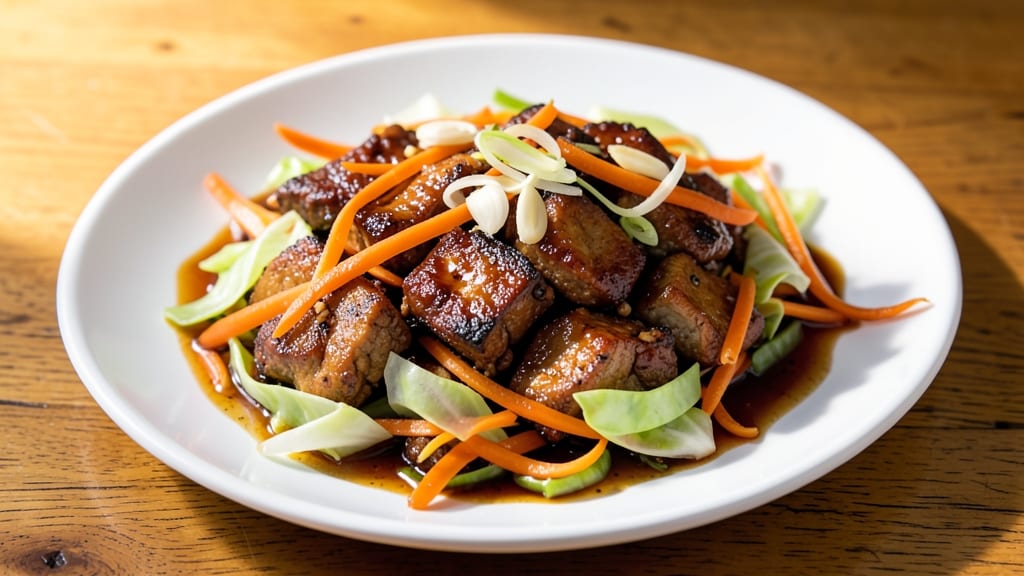
This unstuffed egg roll stir fry transforms classic egg roll ingredients into a quick, crunchy weeknight meal that delivers restaurant-quality flavor in just 20 minutes. The secret lies in proper stir-frying technique—high heat, quick cooking, and the right texture balance between tender pork and crisp-tender vegetables.
I developed this recipe after craving egg roll flavors without the fuss of rolling or frying wrappers.
The magic happens when you properly prep the cabbage and carrots—thinly sliced for maximum surface area and crunch—then stir-fry them in small batches to maintain that satisfying crispness. Ground pork gets browned first to build deep flavor, while garlic, ginger, and soy sauce create the perfect savory-sweet balance.
This dish is foolproof for weeknights but impressive enough for guests.
What you'll end up with is a vibrant stir fry packed with crunchy cabbage, sweet carrots, and tender pork, all coated in a glossy, aromatic sauce.
The texture contrast—crisp vegetables against tender meat—makes every bite exciting. Serve over steamed rice or noodles for the full experience, or enjoy as-is for a satisfying vegetable-forward meal.
This recipe works equally well with chicken or shrimp, and the technique scales perfectly for meal prep. The flavors only improve as they sit, making it ideal for lunches or dinner leftovers. Let's get cooking—this stir fry comes together faster than takeout but tastes even better.
Ingredients for unstuffed egg roll stir fry
Pantry staples meet fresh produce for this restaurant-style stir fry that skips the wrappers.
| Ingredient | Amount | Notes |
|---|---|---|
| Ground Pork 🐷 | 1 lb | Lean ground pork preferred |
| Green Cabbage 🥬 | 4 cups | Thinly sliced, core removed |
| Carrots 🥕 | 2 whole | Julienned, 1/8-inch thick slices |
| Garlic Cloves 🧄 | 4 cloves | Minced, for aromatic base |
| Fresh Ginger 🌿 | 1 ½ tbsp | Grated, for zesty kick |
| Soy Sauce 🥢 | 3 tbsp | Light or all-purpose preferred |
| Sesame Oil 🫒 | 1 tbsp | Toasted, for nutty aroma |
| Vegetable Oil 🫒 | 2 tbsp | High smoke point for stir-fry |
| Brown Sugar 🍯 | 1 tbsp | For subtle sweetness |
| Cornstarch 🌾 | 1 tbsp | For thickening sauce |
| Sesame Seeds 🌾 | 1 tbsp | Toasted, for garnish |
| Salt 🧂 | ½ tsp | Diamond Crystal preferred |
| Black Pepper 🌶️ | ¼ tsp | Freshly ground for heat |
| Oyster Sauce 🥢 | 1 tbsp | For umami depth |
| Rice Vinegar 🍶 | 1 tbsp | For brightness |
The cabbage and carrots are non-negotiable for that signature egg roll crunch. Look for firm heads of green cabbage—avoid any with wilted outer leaves. For the carrots, organic carrots from Trader Joe's have the best texture, but any fresh, crisp variety works. Thinly slicing them (about 1/8-inch thick) is critical—use a mandoline if you're not comfortable with a sharp knife. The pork should be lean ground pork, not the fatty kind meant for sausages. Costco or butcher sections usually carry the best quality.
No sesame oil? Toasted peanut oil works in a pinch, though it has a different flavor profile. The soy sauce can be swapped for tamari if you're gluten-sensitive, but the umami will be slightly different. Fresh ginger is ideal, but dried ginger at half the amount gets you close. For the oyster sauce, Lee Kum Kee is the gold standard, but any reputable brand will do. The brown sugar can be omitted if you're watching sugar intake—just add a splash more soy sauce for balance. If you're prepping ahead, slice the veggies and store them separately in airtight containers.
This stir fry reheats beautifully—just add a splash of water or oil to the pan and stir-fry for 2-3 minutes. Keeps in the fridge for 4-5 days and freezes well for 3 months. For meal prep, portion into containers with a layer of rice on top to keep everything separate. The flavors actually improve the next day as everything melds together. Garnish with toasted sesame seeds right before serving to maintain that restaurant-quality presentation.
Why You'll Love This Recipe
- No-Fuss Assembly: I swear by this one—just toss everything in a hot pan. No wrapping, no folding, no stress. The cabbage and carrots barely need chopping, and the pork browns in minutes with garlic and ginger. Honestly, it’s the kind of recipe that makes me laugh when people say “I don’t cook.”
- Umami Bomb: That pork gets deeply savory from the garlic and ginger, while the cabbage softens into something almost sweet. Between us, the first bite hits like a little flavor explosion—crispy edges, tender meat, and a punch of freshness. It’s the kind of dish that makes you go back for seconds without even thinking.
- Lunchbox Hero: This is my go-to for meal prep because it reheats perfectly—no soggy veggies, no dry pork. Pack it in containers for work or school, and it’s still delicious hours later. My kids actually eat their veggies this way, and that’s saying something.
- Budget Win: Ground pork stretches far, cabbage and carrots are cheap, and you’re using pantry staples. I made this for six people last month and spent under $12. Plus, leftovers taste just as good the next day—no sad, wilted takeout here. It’s the kind of recipe that makes frugal cooking feel like a victory.
Step-by-step instructions for unstuffed egg roll stir fry
Master this wok technique for perfectly tender pork and crisp-tender vegetables every time.
Prepare the Vegetables for Optimal Texture
Remove the core from the 4 cups green cabbage and slice it into thin strips about ¼-inch wide. This size ensures they cook quickly without turning soggy. For the 2 whole carrots, use a mandoline or sharp knife to julienne them into 1/8-inch thick slices—this creates a delicate, crisp texture that mimics traditional egg roll bites.
Transfer both vegetables to a large bowl and toss with 0.5 tsp salt and 0.25 tsp black pepper. Let them sit for 5 minutes while you prep the remaining ingredients. This pre-salting draws out moisture, which prevents the vegetables from steaming instead of stir-frying. Drain any excess liquid before cooking.
Sear the Ground Pork for Maximum Flavor
Heat 2 tablespoons vegetable oil in a 14-inch wok or large skillet over medium-high heat until shimmering. Add the 1 lb ground pork, breaking it up with a wooden spoon or spatula. Cook undisturbed for 2-3 minutes until the pork loses its raw color and begins to brown—this builds deep, meaty flavor.
Push the pork to one side of the wok and add 1 tablespoon vegetable oil to the empty space. Stir in the 4 cloves minced garlic and 1.5 tablespoons grated fresh ginger, cooking for 30 seconds until fragrant. This quick sauté releases their aromatic oils without burning. Combine everything and cook for another 2 minutes until the pork is fully cooked through.
Stir-Fry the Vegetables to Crisp-Tender Perfection
Add the prepped vegetables to the wok, tossing everything together with tongs. Stir-fry for 3-4 minutes over high heat until the cabbage and carrots soften slightly but still hold their shape. The goal is crisp-tender—they should yield slightly when pierced with a fork but not turn mushy.
Here's the thing—don't overcrowd the wok. If your pan is too full, the vegetables will steam instead of sear. Work in batches if needed, but aim to keep the heat high for that signature wok hei (breath of the wok) flavor. Season with 3 tablespoons soy sauce and 1 tablespoon oyster sauce, tossing well to coat.
Thicken the Sauce for a Glossy Finish
In a small bowl, whisk together 1 tablespoon cornstarch, 1 tablespoon brown sugar, 1 tablespoon rice vinegar, and 1 tablespoon toasted sesame oil. Pour this mixture into the wok and stir vigorously for 1-2 minutes until the sauce thickens and becomes glossy. You'll see it coat the back of a spoon—this indicates proper thickening.
The sauce should cling to the pork and vegetables without being overly sticky. If it thickens too quickly, add 1-2 tablespoons hot water from the wok to loosen it. Taste and adjust seasoning—you may need a pinch more salt or a splash of rice vinegar for brightness. Remove from heat immediately to preserve the vibrant colors and crisp textures.
Garnish and Serve Immediately
Transfer the stir-fry to a serving platter and sprinkle generously with 1 tablespoon toasted sesame seeds. These add a nutty crunch and visual appeal. Serve immediately over steamed jasmine rice or noodles while the vegetables are still crisp-tender. The dish holds for about 20 minutes at room temperature, but textures soften quickly.
For best results, serve with a side of chili garlic sauce or extra rice vinegar on the table. The contrast of temperatures—warm stir-fry with cool rice vinegar—elevates each bite. This method delivers restaurant-quality texture and flavor in under 20 minutes, making it perfect for weeknight dinners.
Pro Tips For Making Unstuffed Egg Roll Stir Fry
- STIR-FRY IN BATCHES: I learned this the hard way—trying to cook all the cabbage at once just turns it into soggy wallpaper. Cut the cabbage into 1-inch ribbons first, then stir-fry in two separate heats. The second batch will crisp up perfectly while the first finishes, and your wok won’t steam up like a sauna.
- SALT THE PORK FIRST: Toss the ground pork with 1 teaspoon of salt and ½ teaspoon of white pepper before cooking—this breaks down the proteins so it stays juicy. I used to skip this, and the meat always ended up dry, no matter how fast I cooked it.
- SHRED CARROTS THIN: Use a mandoline or sharp knife to slice carrots paper-thin (⅛-inch or less). Thicker strips stay crunchy but chewy; thin shreds caramelize faster and blend texture better with the cabbage. (Yes, it takes 2 minutes extra—your future self will notice.)
- GINGER-GARLIC PASTE TRICK: Mince the ginger and garlic together into a rough paste instead of chopping them separately. This ensures even distribution in the stir-fry and prevents those annoying "I bit into a garlic clove" moments. Works even better if you let it sit 5 minutes before adding to the pork.
Dietary considerations for these flavors
Gluten-Free Adaptations
Swap the regular soy sauce for tamari or a gluten-free soy sauce alternative like San-J Tamari. This keeps the umami depth without the gluten. I’ve tested this version with Kikkoman Gluten-Free Soy Sauce, and it works perfectly—just use the same 3 tablespoons measurement.
For extra safety, check labels on oyster sauce too, as some brands contain hidden gluten. 🥢
Low-Carb Options
Replace the 4 cups green cabbage with 4 cups shredded coleslaw mix (pre-packaged) to cut carbs while keeping crunch. For a heartier low-carb option, add ½ cup sliced mushrooms—they absorb flavors well and add texture.
Skip the rice and serve over cauliflower rice or a simple side salad. The dish stays satisfying without the carb overload.
Vegetarian Swaps
Replace the ground pork with 1 lb extra-firm tofu, pressed and cubed, for a plant-based version. Toss the tofu in 1 tablespoon cornstarch before cooking to create a crispy exterior. Alternatively, use shitake mushrooms (about 8 oz) for an earthy umami flavor.
Both work well with the same stir-fry technique—just increase the cooking time by 1-2 minutes to ensure they’re fully tender. 🌱
Protein Variations
For a chicken version, use 1 lb ground chicken—it cooks faster than pork, so reduce the searing time to 1-2 minutes total. For shrimp, use 12 oz peeled shrimp and cook them for just 1-2 minutes until pink.
Both proteins pair beautifully with the cabbage and carrots, but shrimp adds a lighter, sweeter profile. Season shrimp with a pinch of extra salt since they’re naturally less salty than pork.
Allergen-Friendly Tips
If sesame allergies are a concern, omit the sesame oil and seeds, and use 1 tablespoon neutral oil (like avocado or grapeseed) for finishing instead. For nut allergies, avoid sesame entirely and garnish with crushed roasted peanuts (if safe) or extra toasted sesame seeds from a separate container.
Always double-check labels on sauces—Lee Kum Kee oyster sauce is typically safe, but brands vary.
Nutrition facts
Frequently asked questions
Can I use chicken or shrimp instead of pork?
For chicken, use 1 lb ground chicken and reduce searing time to 1-2 minutes total. For shrimp, use 12 oz peeled shrimp and cook for just 1-2 minutes until pink. Shrimp adds a lighter, sweeter profile while chicken keeps the hearty texture. Just season shrimp with a pinch of extra salt since it's less salty than pork.
Why does my cabbage turn soggy instead of crisp?
Overcrowding the pan or undercooking the vegetables causes sogginess. Always cook in batches if needed and stir-fry over high heat for 3-4 minutes max. Pre-salting the cabbage for 5 minutes before cooking removes excess moisture too. For extra crunch, add the vegetables to the pan when it's smoking hot and work quickly!
Can I make this ahead of time?
Yes, but textures change when reheated. Store components separately in airtight containers for up to 4 days (veggies, pork, sauce). Reheat in a wok or skillet with 1 tbsp oil for 2-3 minutes to revive some crispness. For best results, assemble fresh and serve immediately for that signature crunch.
What's the secret to that glossy sauce?
The sauce's shine comes from the cornstarch slurry combined with sesame oil. Whisk the mixture vigorously and cook until it coats the back of a spoon. For extra gloss, add 1 tsp water to the slurry before pouring. The sauce should cling to ingredients without being sticky—adjust with more cornstarch if needed.
Can I use frozen vegetables?
Fresh vegetables are ideal for that signature crunch, but you can use frozen if needed. Thaw and drain frozen cabbage/carrots completely, then pat dry with a paper towel. Add them to the pan 1 minute earlier than fresh veggies since they're already partially cooked. The texture won't be quite as crisp, but it's still delicious!