
Breakfast & Brunch
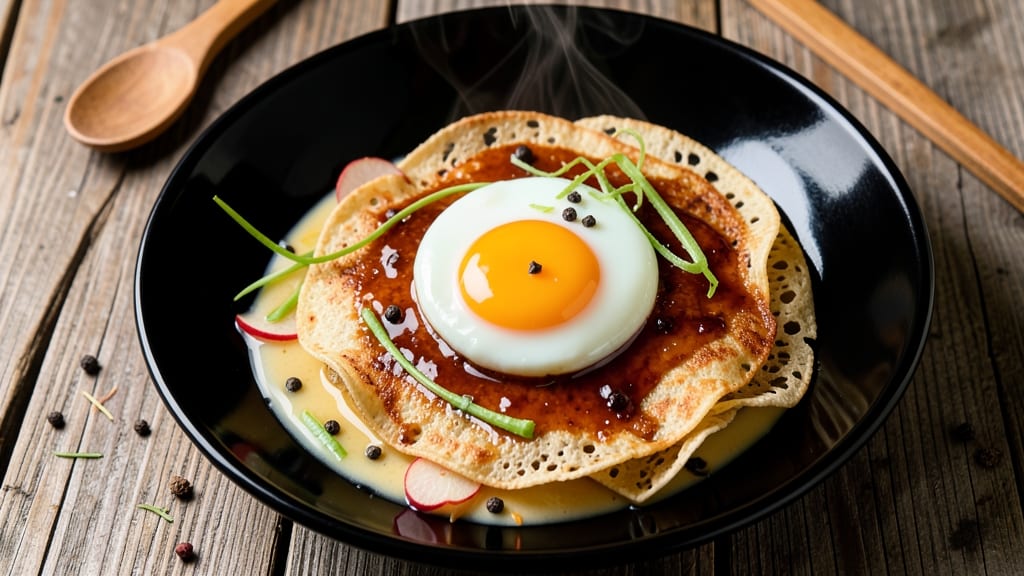
This Vietnamese caramel egg recipe transforms simple eggs into an elegant dish with crispy tortilla cups and a silky ginger-yolk center. The balance of sweet caramelized sugar and aromatic spices creates a harmonious bite that feels both comforting and sophisticated.
I developed this recipe after discovering how Vietnamese street vendors elevate humble eggs into something extraordinary—now you can recreate that magic at home.
The foundation of this dish lies in perfectly caramelized eggs, gently steamed until the yolks remain runny and creamy. Wrapped in crispy tortilla cups, they become a vessel for the rich, aromatic filling that includes ginger, coconut milk, and a touch of pandan extract for that signature Vietnamese flavor.
The contrast between the crispy exterior and tender interior makes every bite satisfying.
What sets this recipe apart is the combination of textures and flavors—crispy tortillas, silky egg yolks, and a fragrant filling that ties everything together. The caramelized sugar adds a subtle sweetness that complements the savory-spiced filling, creating a dish that’s both indulgent and balanced.
This is the kind of recipe that feels special enough for brunch but simple enough for a weeknight treat.
Whether you serve these as an appetizer, brunch centerpiece, or even a dessert-like treat, they’re sure to impress. The technique is straightforward, but the result is restaurant-quality. Let’s get started on creating these delicious Vietnamese caramel eggs that will have everyone asking for seconds.
Ingredients for vietnamese caramel egg
Simple ingredients transform into restaurant-quality Vietnamese caramel eggs with perfect texture contrasts.
| Ingredient | Amount | Notes |
|---|---|---|
| Large Eggs 🥚 | 4 whole | Room temperature for even cooking |
| Flour Tortillas 🌯 | 4 whole | 6-inch size, soft flour tortillas |
| Granulated Sugar 🍯 | ½ cup | Light brown sugar for deeper caramel |
| Fresh Ginger 🌿 | 2 tbsp | Finely grated, aromatic variety |
| Coconut Milk 🥥 | ½ cup | Full-fat for creaminess, canned preferred |
| Pandan Extract 🌺 | ¼ tsp | Vietnamese flavor signature, optional |
| Fish Sauce 🐟 | 1 tbsp | Red Boat preferred for authentic taste |
| Sesame Oil 🫒 | 1 tsp | Toasted for nutty aroma |
| Vegetable Oil 🫒 | ¼ cup | For crisping tortillas |
| Salt 🧂 | ½ tsp | Diamond Crystal kosher salt |
| Black Pepper 🌶️ | ¼ tsp | Freshly cracked for intensity |
| Lime Juice 🍋 | 1 tbsp | Freshly squeezed for brightness |
The tortillas are the foundation—Mission brand soft flour tortillas work best for their pliability. Look for ones labeled 'flour' rather than corn, as they crisp better when caramelized. Fresh ginger is non-negotiable here; Whole Foods or Asian markets carry the most aromatic varieties. For the sugar, light brown adds subtle molasses notes that complement the ginger beautifully. If you can't find pandan extract, vanilla extract at half the amount provides a similar floral depth, though not identical. The fish sauce should be Red Boat brand if possible—it's the gold standard for authentic umami without overpowering fishiness.
No fresh ginger? Powdered ginger at one-third the amount works in a pinch, though texture differs. Substituting coconut milk with half-and-half gives creaminess but lacks the tropical depth. For a vegetarian version, replace fish sauce with soy sauce plus a dash of miso paste. The sesame oil is crucial—don't use the cheap, flavorless kind from the bulk bins. Kadoya brand from Asian markets delivers that proper toasted aroma. Lime juice should be freshly squeezed; bottled versions lack the vibrant acidity needed to cut through the richness. If you're making these ahead, prepare the filling components separately and assemble just before serving to maintain crispness.
Prepped tortillas crisp best when refrigerated for 30 minutes before frying. Store filled tortillas in an airtight container with parchment between layers—they stay crisp for 24 hours at room temperature. For longer storage, freeze unassembled components: pre-caramelized eggs freeze beautifully for 1 month, while tortilla cups can be frozen for 2 weeks before they lose crispness. Reheat in a skillet for 1-2 minutes per side to restore that perfect crunch. The filling components keep separately in the fridge for 3 days—ideal for meal prep.
Why You'll Love This Recipe
- Five-Ingredient Magic: I swear by this recipe because it’s all about minimal effort, maximum payoff. Crack eggs into tortillas, sprinkle sugar, and let the oven do the work—no flipping, no fuss. That caramelized ginger-sugar crust? It’s basically foolproof once you get the timing right.
- Sweet-Savory Balance: Between us, the combo of salty eggs, crispy caramelized sugar, and the bright zing of fresh ginger is ridiculously addictive. The coconut milk in the sauce ties it all together—creamy, slightly sweet, and just enough to make you want to lick the plate.
- Breakfast or Dessert: Honestly, this recipe blurs the lines in the best way. Serve it for breakfast with a sprinkle of chili flakes, or swap in dark chocolate chips for a dessert version. My kids beg for it both mornings and after dinner—no judgment here.
- Budget-Friendly Leftovers: A dozen eggs and a bag of tortillas stretch for days, and the caramel sauce keeps for weeks in the fridge. I double the batch on Sundays, freeze half, and pull it out for lazy weeknights. Plus, the ginger adds depth without breaking the bank.
Step-by-step instructions for Vietnamese caramel egg tortilla cups
Master this fusion technique combining Vietnamese flavors with crispy tortilla textures.
Prepare the Ginger-Yolk Filling
In a mixing bowl, whisk together the 4 whole Large Eggs until the yolks and whites are fully combined and the mixture is uniform. In a separate small bowl, combine the 0.5 cup Coconut Milk, 1 tbsp Fish Sauce, 1 tbsp Lime Juice, 0.25 tsp Pandan Extract, 0.5 tsp Salt, and 0.25 tsp Black Pepper. Whisk until fully incorporated—this creates the flavor base that will infuse the eggs.
Grate the 2 tbsp Fresh Ginger using a fine grater or microplane, then add it to the coconut milk mixture. The ginger should be finely textured, almost paste-like, to ensure even distribution throughout the filling. In a small saucepan, heat 1 tsp Sesame Oil over low heat until fragrant (about 30 seconds). Remove from heat and stir this into the coconut milk mixture. Let it cool for 5 minutes before combining with the eggs—this prevents scrambling when mixed.
Create the Caramel Base
In a heavy-bottomed saucepan, combine the 0.5 cup Granulated Sugar and 0.25 cup Vegetable Oil. Heat over medium-low heat without stirring until the sugar begins to melt and turn a deep amber color (about 8-10 minutes). You'll see bubbles forming and the mixture will smell richly caramelized—this is your signal to proceed. Immediately remove from heat and stir vigorously for 20 seconds to prevent burning. The caramel should be thick and glossy, coating the back of a spoon.
Let the caramel cool for 3-4 minutes until it reaches 200°F—it should be thick enough to hold its shape when drizzled but still fluid enough to coat the tortillas. If it thickens too much, add 1 teaspoon of hot water to loosen it slightly. This caramel will be the crispy exterior and sweet contrast to the savory filling.
Assemble and Cook the Tortilla Cups
Preheat your oven to 375°F. Cut each of the 4 whole Flour Tortillas into 6-inch rounds (use a round cutter or glass) and place them on a parchment-lined baking sheet. Brush each tortilla round generously with the cooled caramel using the back of a spoon, ensuring even coverage on both sides. The caramel should be thick enough to create a sticky barrier that will crisp when baked.
Place the tortilla rounds on a wire rack set over a baking sheet to allow air circulation on all sides. Bake for 4-5 minutes until the edges begin to crisp and pull away slightly from the rack. Remove from oven and immediately fill each tortilla cup with 1 tablespoon of the egg mixture, pressing gently to ensure the filling touches the sides. Return to the oven for 3-4 minutes until the filling is just set but still slightly runny in the center.
Finish and Serve with Crispy Perfection
Remove the tortilla cups from the oven and let them rest for 2 minutes—this allows the filling to firm up slightly while maintaining its silky texture. The exterior should be deep golden brown with crisp edges that hold their shape, while the interior filling remains creamy with just a hint of set around the edges. If any tortillas lose crispness during resting, return them to the oven for 1 minute to refresh.
Serve immediately while the filling is still warm, cutting each tortilla cup in half to reveal the glossy caramel and silky egg center. The contrast between the crispy tortilla exterior, sweet caramel, and savory ginger-yolk filling creates the perfect balance of textures and flavors. For an extra touch, garnish with additional grated ginger or a drizzle of reduced coconut milk.
Pro Tips For Making Vietnamese Caramel Egg
- CRACK EGGS COLD: Pull eggs straight from the fridge—room temperature makes them spread too much in the hot caramel. I learned this the hard way when my first batch turned into a thin, sad omelet instead of a rich custard. Give them 10 minutes in the fridge before cracking, or just work fast.
- USE WAXY POTATO STARCH: Skip the flour for wrapping—tortillas get soggy fast. Instead, dust them lightly with cornstarch or potato starch (the kind for frying) before rolling. It creates a crisp barrier that holds up to the coconut milk’s moisture without turning gummy. Trust me, your tortilla won’t disintegrate mid-bite.
- STOP WHEN CARAMEL GLOWS: The sugar should be a deep amber, not black—think "toffee" not "burnt marshmallow." I used to walk away and come back to a bitter mess. Watch it like a hawk, especially if your pan’s nonstick is old. Once it’s glowing, pour fast and work quick.
- GINGER JUICE NOT PASTE: Grate fresh ginger, then squeeze out all the liquid through a fine mesh strainer. The juice is what brightens the caramel, not the fibrous bits. I was skeptical until I tried it—I used to just chop it in, and the flavor was muted. Save the paste for stir-fries where texture doesn’t matter.
Regional styles of this dish
Northern Vietnamese Style
The classic Hanoi version of caramel eggs features a lighter, more delicate approach. Here, the filling often includes shallots and white pepper instead of ginger, creating a subtly sweet and savory profile.
I’ve seen street vendors in Hanoi use rice paper wrappers instead of tortillas for a lighter, almost translucent texture. The caramel is typically less aggressive—just enough to coat the exterior without overpowering the egg’s natural flavors. 🌿
Southern Vietnamese Twist
In Ho Chi Minh City, the dish takes on a bolder, slightly spicier character. The filling incorporates chili paste (about ½ tsp) and lemongrass for a vibrant kick.
The tortillas are often brushed with a mix of coconut caramel (using ¼ cup coconut sugar) and turmeric for a golden hue. This version pairs beautifully with a side of pickled vegetables to balance the richness.
The caramel here is thicker, almost like a syrup, to create a sticky, glossy exterior. 🌶️
Central Vietnamese Adaptation
The central region, known for its coastal influence, adds a seafood element to the caramel eggs. Shrimp paste (about 1 tsp) replaces fish sauce, and the filling includes minced shrimp or diced scallops.
The tortillas are sometimes replaced with rice noodle wrappers for a lighter texture, and the caramel is infused with salted egg yolk for depth. This version is often served with a tamarind dipping sauce to cut through the richness. 🦐
Modern Fusion Variations
For a contemporary take, I love experimenting with matcha-infused caramel (replace pandan with ½ tsp matcha powder) and a miso-ginger filling for umami depth.
Another favorite is the truffle caramel egg, where the sugar is caramelized with 1 tbsp white truffle oil and the filling includes crumbled blue cheese. These fusion versions keep the traditional technique but elevate the flavors with global influences. 💫
Dessert-Style Caramel Eggs
In Vietnamese bakeries, you’ll find sweet versions where the filling is made with egg yolks, condensed milk, and vanilla bean. The caramel is richer, often using dark brown sugar, and the tortillas are brushed with a butter-sugar glaze before baking.
These are served with a coconut whipped cream drizzle and sprinkled with toasted sesame seeds. The result is a dessert that feels indulgent yet balanced—perfect for special occasions. 🍰
Nutrition facts
Frequently asked questions
Can I make these Vietnamese caramel eggs without tortillas?
For a traditional Vietnamese approach, use rice paper wrappers instead—they create a delicate, almost translucent exterior that contrasts beautifully with the rich filling. If you prefer a crispier texture, try phyllo dough cut into rounds and brushed with caramel before baking. The key is ensuring your wrapper holds shape when filled.
How do I prevent the tortilla cups from getting soggy?
Prevent sogginess by baking the tortilla cups twice: first until crisp (4-5 minutes), then after filling for 3-4 minutes. Keep the oven at 375°F and use a wire rack to allow air circulation. Store filled tortillas in an airtight container with parchment between layers—they stay crisp for 24 hours at room temperature.
What's the best way to make the caramel not too hard?
Stop stirring the caramel as soon as it turns amber and bubbles form—over-stirring causes crystallization. Cool it to 200°F before using, and thin with 1 tsp hot water if needed. For a softer texture, reduce the sugar slightly (¼ cup) and add 1 tbsp coconut milk to the caramel mixture. The filling's moisture will help keep it pliable.
Can I make these ahead of time?
Yes! Prepare the filling components separately and store in the fridge for 3 days. For the tortilla cups: caramelize the eggs and freeze them for 1 month, or bake the empty tortilla cups, cool completely, and freeze them for 2 weeks. Reheat in a skillet for 1-2 minutes per side to restore crispness. Assemble just before serving to maintain texture.
What's the secret to the perfect runny yolk?
Use room-temperature eggs and cook the filling for exactly 3-4 minutes after adding it to the tortillas. The residual heat from the crispy exterior will gently cook the edges while keeping the center silky. For extra insurance, slightly undercook the eggs (2 minutes) in the microwave before assembling—they'll finish cooking perfectly in the oven.