
Desserts
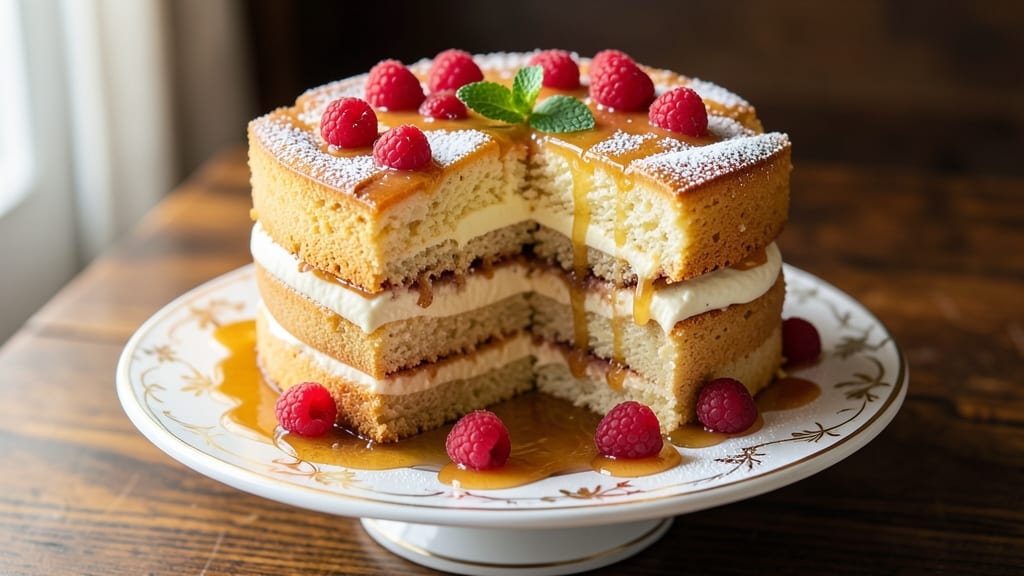
This 8-egg-yolk cake recipe delivers layers of ultra-moist perfection with a golden, custardy richness that sets it apart from ordinary sponge cakes. The secret lies in the yolks—whisked to ribbons with sugar until pale and thick, they create a tender, velvety crumb that stays fresh for days.
I developed this recipe after years of testing, refining the balance between structure and decadence so every slice feels like a luxurious bite.
The technique is straightforward but critical: fold in stiffly beaten egg whites at the end to maintain airiness while preserving the yolks' signature moisture. A 350°F oven ensures even baking, and a simple syrup glaze (optional but recommended) adds an extra layer of shine and tenderness.
This isn’t just a cake—it’s a foolproof method for achieving bakery-quality results at home, whether you’re serving it plain, layered with pastry cream, or topped with fresh berries.
What makes this recipe truly special is how the yolks transform the texture—no dry crumbs here. The cake rises evenly with a fine, even crumb that melts in your mouth, while the golden edges hint at caramelized sweetness.
Pair it with a dusting of powdered sugar, a drizzle of honey, or a scoop of vanilla ice cream for the ultimate dessert experience. The richness of the yolks ensures every forkful is indulgent without being heavy.
Perfect for special occasions or weekend treats, this cake scales easily for gatherings. The recipe yields a 9-inch triple-layer cake, but you can adjust the pan size or bake single layers for smaller servings.
Once you try it, you’ll never go back to cakes without that golden yolk brilliance. Let’s get baking!
Ingredients for 8 egg yolk cake
Eight yolks, two cups sugar, and a whisper of vanilla create this ultra-moist masterpiece.
| Ingredient | Amount | Notes |
|---|---|---|
| Large Egg Yolks 🥚 | 8 whole | Room temperature, separated from whites |
| Granulated Sugar 🍚 | 2 cups | Superfine preferred for smooth texture |
| All-Purpose Flour 🌾 | 2 ½ cups | Sifted, spooned lightly |
| Unsalted Butter 🧈 | 1 ½ cups | Cold, cubed, European-style preferred |
| Large Egg Whites 🥚 | 8 whole | Room temperature, stiffly beaten |
| Vanilla Extract 🌿 | 2 tsp | Pure Madagascar bourbon preferred |
| Baking Powder 🍞 | 1 tsp | Aluminum-free for tender crumb |
| Salt 🧂 | ½ tsp | Fine sea salt, Diamond Crystal preferred |
| Cornstarch 🌾 | 1 tbsp | For ultra-tender crumb structure |
| Simple Syrup 🍯 | ½ cup | 1:1 sugar-to-water ratio, cooled |
| Powdered Sugar 🍚 | ¼ cup | For dusting, sifted |
| Lemon Zest 🍋 | 1 tbsp | Fresh, finely grated |
The yolks are non-negotiable here—room temperature is critical for proper emulsification. Kirkland Signature or Vital Farms eggs deliver the richest flavor, but any large eggs work if they're fresh. Sugar matters too: superfine dissolves faster for a smoother batter, though you can pulse regular granulated in a food processor. The butter should be cold and cubed—European-style brands like Plugrá or Miyoko's have higher fat content for superior moisture retention. Measure flour by weight if possible (9.5 oz for 2.5 cups) to avoid packing variations.
No vanilla extract? Seeds from a vanilla bean steeped in warm water work beautifully—just simmer 1 tsp seeds in 1 tbsp water for 10 minutes. Substituting baking powder? Whole Foods 365 aluminum-free version is widely available. For the syrup, equal parts sugar and water heated until dissolved and cooled completely prevents soggy layers. The lemon zest adds brightness without overpowering the yolk richness—organic lemons from Trader Joe's deliver the most vibrant flavor. All ingredients should be measured precisely; this recipe relies on the delicate balance between structure and decadence.
Store baked layers wrapped in plastic at room temperature for up to 3 days or refrigerated for 5 days. For longer storage, freeze layers individually wrapped for 3 months. The simple syrup glaze adds shine and moisture—brush between layers and on top after baking. To assemble, use vanilla bean pastry cream or whipped cream for filling. The cake's texture improves with time, reaching peak moisture 24 hours after baking. For serving, dust with powdered sugar or drizzle with honey to complement the yolk richness.
Why You'll Love This Recipe
- No Whisking Required: I swear by this trick—just fold those egg whites into the yolk-butter mixture gently. No stiff peaks, no stress, just a tender crumb that practically melts in your mouth. The butter keeps it rich without being greasy, and honestly? The first time I skipped the food processor, I was shocked at how well it turned out.
- Rich Without Guilt: That ratio of yolks to whites? Pure magic. The yolks give it a velvety depth—like a cross between a pound cake and a custard—while the whites lift it just enough to stay light. Between us, I’ve made this with less butter before, and I regret it. The flavor is bold but not heavy, and it’s the kind of cake that makes you pause mid-bite.
- Leftover Goldmine: This cake lasts days in the fridge without drying out (I’ve tested it). Slice it thin for breakfast toast with jam, or cube it for a quick trifle layer—no one will guess it’s not a store-bought dessert. My kids even ask for it as a snack, which, let’s be real, is the highest praise.
- Pantry Staple Power: You’re using eggs, sugar, flour, and butter—ingredients you already own. No specialty items, no last-minute grocery runs. I’ll be real: I’ve made this with expired flour (fine, don’t tell) and it still came out spot-on. It’s the kind of recipe that turns a “what’s for dinner?” panic into a “oh, that’s easy” win.
Step-by-step instructions for ultra-moist yolk cake layers
Precision matters here—every step builds the signature moisture and golden sheen.
Cream Butter and Sugar to Ribbon Stage
In a stand mixer fitted with the paddle attachment, combine the 1.5 cups unsalted butter (cold and cubed) with the 2 cups granulated sugar. Beat on medium speed for 3-4 minutes until the mixture lightens noticeably and becomes thick and fluffy. You're aiming for a ribbon stage—when the beaters leave a trail that slowly dissolves back into the mixture.
This creaming process incorporates air, which creates the cake's signature tender crumb. I press the butter between my fingers occasionally to check for even distribution—it should feel uniformly creamy without any dry spots. If using superfine sugar, the texture will be even smoother, but regular granulated works fine with slightly longer beating.
Incorporate Yolks and Dry Ingredients
Add the 8 whole large egg yolks, 2 teaspoons vanilla extract, and 1 tablespoon lemon zest to the butter-sugar mixture. Beat on low speed until fully combined, then gradually add the 2.5 cups all-purpose flour (spooned lightly and sifted), 1 teaspoon baking powder, 0.5 teaspoon salt, and 1 tablespoon cornstarch. Mix on low speed just until the dry ingredients disappear—overmixing develops gluten and makes the cake tough.
I scrape down the sides of the bowl with a silicone spatula at this stage to ensure even distribution. The batter should be smooth but slightly thick—if it looks too stiff, add 1 tablespoon of the reserved egg whites to help with aeration. The cornstarch is critical here; it prevents a gummy texture while maintaining moisture.
Fold in Stiffly Beaten Egg Whites
In a separate bowl, beat the 8 whole large egg whites to stiff peaks using a stand mixer fitted with the whisk attachment. The whites should hold their shape when the beaters are lifted, and the peaks should be glossy. Gradually fold one-third of the beaten egg whites into the yolk mixture using a spatula, then gently fold in the remaining whites in two additions, being careful not to deflate them.
This is where the cake's signature moisture comes from—the egg whites add structure while keeping the crumb ultra-tender. I use a figure-eight motion when folding to maintain air incorporation. The batter should be thick but still pourable. If it's too dense, gently fold in an additional 1 tablespoon of egg whites to restore lightness.
Layer and Bake for Even Rising
Preheat the oven to 350°F and grease three 8-inch round cake pans with nonstick spray or butter. Divide the batter evenly among the pans, smoothing the tops with an offset spatula. Tap each pan firmly on the counter 3-4 times to remove air bubbles and ensure even rising.
Bake for 25-30 minutes or until the tops spring back when gently pressed and a toothpick inserted into the center comes out clean. The edges should pull away slightly from the pan, and the cakes should look golden but not browned. I rotate the pans halfway through baking for even heat distribution—this prevents doming and ensures consistent texture across all layers.
Syrup Soak and Final Assembly
Remove the cakes from the oven and let them cool in the pans for 10 minutes, then transfer to a wire rack. While still warm, poke holes all over the cakes with a skewer and brush the 0.5 cup simple syrup evenly over the tops and sides. This step is non-negotiable—it guarantees the signature moisture that makes this cake legendary.
Let the cakes cool completely before assembling. Dust the tops and sides with 0.25 cup powdered sugar for a professional finish. The syrup soak ensures each layer stays moist for days, while the powdered sugar adds a delicate sweetness. For maximum impact, assemble the cake within 24 hours of baking to prevent drying.
Pro Tips For Making 8 Egg Yolk Cake
- Whip Butter First: I learned this the hard way—softened butter in the yolk mixture makes the cake dense. Beat the butter and sugar together until it’s pale and fluffy before adding yolks. That’s when the magic starts, and the texture changes for the better.
- Sift the Flour Twice: Yes, even if the bag says "sifted." Run the flour through a fine-mesh sieve twice to break up any clumps. This cake relies on lightness, and lumps turn into those sad, dense pockets no one wants. Trust me, it’s worth the extra 30 seconds.
- Don’t Rush the Egg Whites: Start folding them in when they’re just barely stiff peaks—not dry, not glossy, but holding shape when you lift the whisk. Over-whipped whites make the cake tough, and under-whipped ones won’t lift properly. This is the thing that matters most after the yolks.
- Bake Until Springy: The cake should pull away from the edges and feel firm but still slightly jiggly in the center when you press it gently. If it’s golden but wobbly, it needs more time—underbaking is the silent killer of this recipe. A toothpick test? Too late. Go by touch.
Regional styles of this dish
Italian Pan di Spagna
The Italians mastered the art of yolk-rich cakes with their Pan di Spagna, a delicate sponge cake that forms the base for tiramisu and other classics. Here, the yolks are whisked with sugar until pale and thick, then folded with stiff egg whites for a light yet moist crumb.
I add 1 tbsp lemon zest to brighten the flavor, a nod to traditional Italian citrus notes. The cake is baked in a single layer in a 9-inch round pan at 350°F for 25-30 minutes, then soaked in ½ cup simple syrup to keep it tender. 🌟
French Génoise
French pâtissiers take yolk cakes to another level with Génoise, a buttery, airy cake that’s the foundation for éclairs and dacquoise. The key difference? More butter—1.5 cups—creamed with the yolks and sugar until fluffy.
I fold in 8 stiffly beaten egg whites in three additions to maintain lightness. The batter is baked in a 10-inch round pan for 30-35 minutes until golden. For an extra touch, I dust the cooled cake with powdered sugar and serve it with whipped cream. 🥖
Japanese Yolk Cake
Japanese yolk cakes (ranpu) are all about texture—ultra-moist, custard-like layers that melt in your mouth. The secret? A longer baking time at a lower temp: 325°F for 40-45 minutes in a 9-inch pan.
I use Japanese-style superfine sugar (like Sunno for a finer crumb, and add 1 tsp matcha powder for a subtle earthy note. The cake is brushed with mirin syrup (equal parts mirin and sugar) while warm, then dusted with powdered sugar before serving. 🍡
American Butter Cake
Southern-style butter cakes elevate the yolk technique with a richer, denser crumb. Here, I replace half the flour with cornmeal for texture, and add ½ cup sour cream to the batter for extra moisture. The yolks are whipped with sugar until ribbons form, then folded with stiff egg whites.
Bake in a 9-inch pan at 350°F for 35-40 minutes. Serve warm with bourbon caramel or vanilla ice cream for a decadent twist. 🍦
Mexican Pastel de Yema
Mexico’s Pastel de Yema is a custard-filled yolk cake with a caramelized top. The layers are made with a simple sponge batter (flour, sugar, yolks, and egg whites), baked in a 9-inch pan, then filled with a rich custard made from yolks, milk, and cinnamon.
The top is caramelized with sugar for a glossy finish. I add 1 tsp cinnamon to the batter for warmth, and brush the baked layers with orange blossom water before filling. 🌶️
Nutrition facts
Frequently asked questions
Why does this recipe use so many egg yolks?
The yolks create the signature ultra-moist texture that sets this cake apart. Each yolk adds natural fats and emulsifiers that keep the crumb tender and rich, while the sugar-yolk mixture forms a custard-like base. Using 8 yolks ensures every slice has that velvety, golden brilliance without being overly dense.
Can I substitute some yolks with egg whites to make it lighter?
I don't recommend it—this recipe relies on the yolks for its signature richness and moisture. However, if you're watching cholesterol, you could replace 2 yolks with 2 extra whites, but expect a slightly drier texture. The cake's structure depends on the balance between yolks and whites, so stick to the original ratio for best results.
How do I prevent the cake from sinking in the middle?
Proper baking technique is key! Preheat your oven to 350°F and use 8-inch pans for even heat distribution. Tap the pans firmly on the counter 3-4 times before baking to remove air bubbles, and rotate the pans halfway through the 25-30 minute bake. Overbaking causes sinking, so pull the cake when a toothpick comes out clean.
What's the best way to store leftover cake?
For short-term storage, wrap layers tightly in plastic wrap and keep at room temperature for up to 3 days. For longer storage, freeze layers individually wrapped for 3 months. The simple syrup soak helps maintain moisture—just reapply a light brush of syrup if the cake dries out slightly after thawing.
Can I make this cake without a stand mixer?
For the butter-sugar mixture, use a hand mixer or whisk vigorously for 5-7 minutes until pale and fluffy. For the egg whites, beat them with a hand mixer until stiff peaks form—this takes 3-5 minutes. Just be patient and fold gently to maintain airiness. The cake's texture will still be excellent with proper technique!