
Soups & Stews
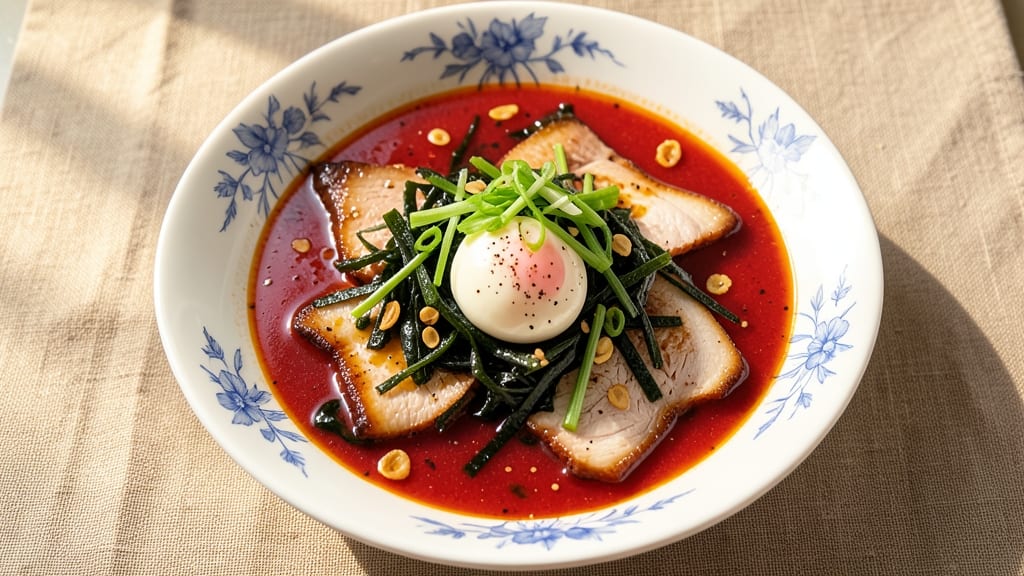
This seaweed egg soup delivers the comforting essence of Chinese home cooking in every steaming bowl. The delicate balance of silky egg ribbons, tender seaweed, and umami-rich broth creates a dish that's both nourishing and deeply satisfying—perfect for chilly evenings or quick weeknight meals.
What makes it special is the harmony of textures: crisp seaweed, tender eggs, and a velvety broth that's impossible to resist.
The foundation lies in a carefully crafted broth that combines simple ingredients like chicken, ginger, and scallions with dried seaweed to create that signature oceanic depth. The eggs are cooked just right—firm enough to hold their shape yet tender enough to melt in your mouth when sliced.
This isn't just soup; it's a complete meal that warms the body and soul, rooted in tradition yet effortless to prepare.
What you'll achieve is a bowl of soup that's both elegant and comforting—golden egg ribbons floating in a fragrant, lightly seasoned broth with just the right amount of seaweed's natural brininess.
The aroma alone will draw everyone to the table, while the first spoonful delivers that perfect balance of savory, umami, and subtle sweetness. It's the kind of dish that feels like a hug in a bowl.
Serve this soup as a light lunch, a comforting dinner, or even as a healing meal when you're under the weather. The recipe scales beautifully, so you can easily adjust the quantity to feed a family or prepare leftovers for busy days.
Here's how to make it—step by step, just as it's been made for generations.
Ingredients for seaweed egg soup chinese
Simple ingredients that transform into a comforting bowl of Chinese seaweed egg soup.
| Ingredient | Amount | Notes |
|---|---|---|
| Chicken Breast 🍗 | 1 ½ lb | Boneless, skinless, cut into chunks |
| Fresh Ginger 🧄 | 1 inch | Peeled, sliced into thin coins |
| Dried Seaweed 🍃 | ½ oz | Wakame or kombu variety |
| Green Onions 🧅 | 4 whole | White and green parts separated |
| Large Eggs 🥚 | 4 whole | Fresh, room temperature |
| Chicken Broth 💧 | 4 cups | Homemade or low-sodium store-bought |
| Soy Sauce 🍶 | 1 tbsp | Light or all-purpose variety |
| Sesame Oil 🫒 | 1 tsp | Toasted, for finishing |
| Salt 🧂 | 1 tsp | Kosher or sea salt |
| White Pepper 🌶️ | ¼ tsp | Freshly ground preferred |
| Cornstarch 🌾 | 1 tsp | For egg slurry |
| Water 💧 | 2 tbsp | For egg slurry |
The dried seaweed is the secret ingredient—look for wakame or kombu at Asian markets or the international aisle. It adds that signature oceanic depth without overpowering. Costco or H Mart usually have good options, or check the bulk section at Whole Foods. Fresh ginger should be firm and fragrant—skip any with soft spots or mold. The chicken breast is key too; boneless, skinless cuts work best for even cooking. If you're using store-bought chicken broth, low-sodium is ideal so you control the saltiness.
No dried seaweed? Nori sheets from sushi rolls work in a pinch—tear into small pieces. For the eggs, room temperature is crucial—they'll cook more evenly. The cornstarch slurry is non-negotiable for those perfect silky ribbons. If you're short on time, pre-cut the ginger and green onions while the broth simmers. The soy sauce can be swapped for light coconut aminos if you're avoiding soy. For extra umami, add a dash of fish sauce (if not vegetarian) or a splash of mushroom broth.
This soup tastes even better the next day—reheats beautifully with a splash of water. Store leftovers in the fridge for 3-4 days or freeze for up to 3 months. I always double the batch because it disappears fast. The seaweed can be prepped ahead and stored in a dry container for up to 6 months. Garnish with extra green onions and a drizzle of sesame oil right before serving—that's when it gets restaurant-worthy.
Why You'll Love This Recipe
- Few Ingredients, Big Payoff: I swear by this recipe because it’s that simple—just chicken, ginger, seaweed, eggs, and green onions. No fancy pantry staples, no last-minute grocery runs. Honestly, I’ve made it with whatever chicken I had in the fridge, and it still comes out rich and satisfying.
- Umami Bomb: That dried seaweed? It’s the secret weapon. When it rehydrates, it turns the broth into something deep and savory—like a lighter, cleaner version of miso. Plus, the eggs poach perfectly in that broth, silky-yet-firm every time.
- Lunchbox Hero: Between us, this soup is my go-to for meal prep. It reheats beautifully, and the seaweed keeps it interesting even after a day. I’ll pack it for work, and by noon, I’m already dreaming of the next bowl. (Yes, even on a Tuesday.)
- Budget-Friendly Powerhouse: Chicken breast and eggs are cheap, and a little dried seaweed goes a long way. I’ve fed four people for under $10 with leftovers that taste just as good cold the next day. Not the prettiest, but the taste makes up for it—and my wallet thanks me.
Step-by-step instructions for seaweed egg soup
Here's how to create this comforting, umami-packed soup with tender chicken and delicate egg ribbons.
🍳 Step 1: Sear the Chicken and Build the Broth Base
Heat a large pot over medium-high heat and add the 1.5 lb chicken breast cut into chunks. Sear for 4-5 minutes until the chicken turns opaque and releases easily from the pan. This builds deep flavor in the broth.
Remove the chicken and set aside. In the same pot, add the 1 inch fresh ginger sliced into coins and the 0.5 oz dried seaweed. Stir for 30 seconds until fragrant. Pour in the 4 cups chicken broth and bring to a gentle boil. Skim off any foam that rises to the surface.
🥘 Step 2: Simmer the Chicken and Season
Return the seared chicken to the pot and reduce heat to low-medium. Let it simmer uncovered for 15-20 minutes until the chicken is fork-tender and the broth has reduced slightly. You'll see the seaweed soften and release its oceanic flavor into the broth.
Add the 1 tsp salt, 0.25 tsp white pepper, and 1 tbsp soy sauce. Stir gently and continue simmering for another 5 minutes to let the flavors meld. The broth should be aromatic with a subtle seaweed tang and savory depth.
🍳 Step 3: Prepare the Egg Slurry for Perfect Ribbons
In a small bowl, whisk together the 4 whole large eggs, 1 tsp cornstarch, and 2 tbsp water until completely smooth. This slurry creates those signature silky egg ribbons that melt in your mouth. Keep this mixture at room temperature for best results.
Here's the thing—don't overmix. Just combine until smooth, about 10-15 seconds of whisking. Overmixing develops gluten and makes the eggs tough instead of delicate.
🥘 Step 4: Cook the Eggs to Silky Perfection
With the broth still simmering gently, carefully pour the egg slurry into the pot. Use a heatproof spatula to stir the broth in one direction continuously for 30-45 seconds. You'll see the eggs begin to set into delicate ribbons that float on the surface.
The key is constant stirring—this prevents the eggs from curdling and creates those beautiful, translucent strands. Once the eggs are mostly set but still slightly runny in the center, remove the pot from heat. The residual heat will finish cooking them perfectly.
🍽️ Step 5: Finish and Serve with Fresh Garnishes
Return the chicken to the pot and let it warm through for 2 minutes. Using two forks, shred the chicken into bite-sized pieces and return it to the broth. Add the 1 tsp sesame oil and stir gently to combine.
Ladle the soup into bowls and garnish with the 4 whole green onions (white and green parts separated). The white parts add subtle sweetness while the green tops provide fresh contrast. Serve immediately while the egg ribbons are still warm and silky.
Pro Tips For Making Seaweed Egg Soup Chinese
- STIR-FRY GINGER FIRST: Toss the julienned ginger into the hot wok before adding chicken—this unlocks its flavor instead of letting it sit like a sad, flavorless garnish. I used to add it later, and the soup just smelled like ginger without any real punch.
- SOAK SEAWEED 15 MINUTES: Dried seaweed expands like a sponge; skip the soak, and your soup’s texture turns to rubber. Toss it in warm water for 15 minutes, then drain well—this keeps the broth silky, not slimy. (Yes, even if you’re impatient like me.)
- CHICKEN TO 68°C: Chicken breast hits 63°C and still feels dry. Use a thermometer and pull it at 68°C—it’ll finish cooking in the broth while staying juicy. I learned this the hard way after serving rubbery slices.
- EGGS IN COLD WATER: Drop the eggs into ice water first, then transfer to simmering broth. This prevents cracking and gives you perfectly round, cloudy yolks—no sad broken yolks floating away. (Your future self will thank you.)
Pro cooking tips for seaweed egg soup chinese
Broth Perfection
The secret to an exceptional seaweed egg soup lies in the broth—it should be aromatic, lightly seasoned, and perfectly balanced. I always start by searing the chicken first to build deep Maillard reaction flavors in the pan before adding broth.
Use a medium-high heat for 4-5 minutes until the chicken releases easily—this caramelization forms the flavor foundation. 🌡️
For the seaweed, wakame or kombu varieties work best—they dissolve beautifully and infuse that signature oceanic depth. Soak the dried seaweed in warm water for 5 minutes before adding to the broth to soften it.
Skim any foam that rises during the initial boil—this ensures a clean, smooth broth without bitterness.
Egg Ribbon Mastery
The egg slurry technique is where this soup becomes truly special. Whisk the eggs with cornstarch and water until completely smooth—no streaks, no lumps. I use a wire whisk for this step because it creates a finer emulsion than a fork.
The key is gentle stirring—once in the broth, stir in one direction for 30-45 seconds to form those signature silky ribbons. 💫
Never let the broth boil vigorously when adding the eggs—gentle simmer is critical. If the broth is too hot, the eggs will curdle instead of forming delicate strands. Remove from heat just as the eggs begin to set but remain slightly runny—the residual heat will finish cooking them perfectly.
Timing Precision
Simmer the chicken in the broth for exactly 15-20 minutes—any less and it won't be tender, any more and it'll turn rubbery. The seaweed should soften completely, releasing its umami into the broth.
Taste and adjust seasoning with soy sauce or a pinch of fish sauce if needed. The broth should be savory but not salty, with just a hint of seaweed's brininess. ⏱️
When adding the sesame oil at the end, do it off the heat—this prevents the oil from breaking and turning the broth cloudy. A quick stir is all it takes to distribute the aroma evenly throughout each bowl.
Garnish Like a Pro
Fresh green onions are non-negotiable for garnish—the white parts add subtle sweetness while the green tops provide a bright contrast. I like to separate them completely: chop the white parts into ¼-inch slices and leave the green tops whole for garnish.
Add them just before serving so they stay vibrant and crisp. 🧅
For an extra touch, sprinkle a pinch of white pepper on each bowl—it adds a subtle warmth that complements the seaweed's oceanic notes. The contrast between the pepper's heat and the broth's delicate flavors is what makes this soup truly memorable.
Nutrition facts
Frequently asked questions
Can I substitute dried seaweed with fresh?
Fresh seaweed (like nori) works in a pinch, but dried is ideal for this recipe. If using fresh, tear it into small pieces and add it directly to the simmering broth for 5 minutes before removing the chicken. Fresh seaweed has a more intense flavor, so start with half the amount and adjust to taste.
Why did my egg ribbons turn rubbery?
Overcooking is the most common cause—remove the pot from heat as soon as the eggs begin to set (about 30-45 seconds of stirring). The residual heat will finish cooking them perfectly. Also, ensure your broth is at a gentle simmer, not a rolling boil, when adding the eggs.
How can I make this vegetarian?
Swap the chicken for shiitake mushrooms or tofu—both work beautifully. Press firm tofu to remove excess water, then cube and pan-fry until golden before adding to the broth. For extra umami, add 1 tsp mushroom powder or a splash of vegetable broth with a dash of soy sauce.
Can I prepare this soup ahead of time?
Make the broth and chicken mixture up to 2 days ahead and store it in the fridge. Reheat gently on the stove, then add the egg slurry fresh for the best texture. The seaweed can also be prepped and stored in a dry container for up to 6 months—just add it directly to the broth when reheating.
What's the best way to store leftovers?
Store in an airtight container in the fridge for 3-4 days or freeze for up to 3 months. For best results, reheat gently on the stove and add fresh egg ribbons when serving. The broth reheats beautifully, but the eggs are best made fresh for that signature silky texture.