
Beverages
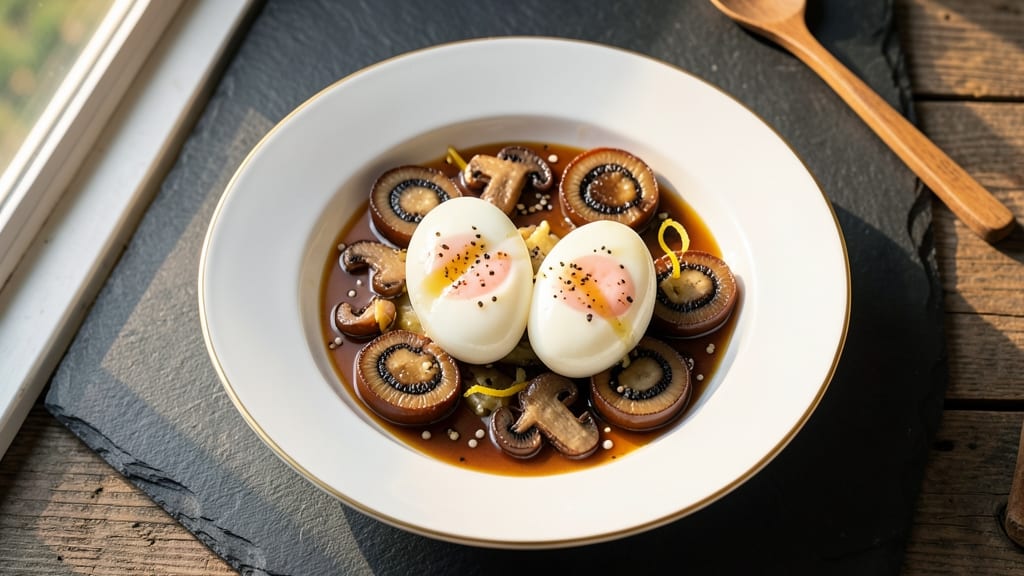
This steamed egg with century egg recipe delivers a striking contrast of textures and flavors that define Chinese culinary artistry. The delicate, silky steamed eggs meet the deep, preserved richness of century eggs—a pairing that balances umami, saltiness, and subtle bitterness in every bite.
What makes this dish special is how simple preparation transforms ordinary ingredients into a restaurant-worthy experience.
The secret lies in technique: century eggs must be peeled and sliced carefully to reveal their dark, jelly-like interior, while the steamed eggs achieve their signature smoothness through precise timing and gentle heat.
This dish isn’t just about the eggs—it’s about the harmony of flavors that comes together when paired with pickled vegetables or a bowl of congee.
What you’ll end up with is a plate that’s as visually stunning as it is delicious—creamy steamed eggs alongside century eggs with their distinctive marbled texture.
The contrast of temperatures (warm steamed eggs against cool preserved eggs) adds another layer of complexity. This is comfort food elevated to an art form.
Perfect for special occasions or when you want to impress guests, this recipe brings a taste of tradition to your table. Let’s create this iconic Chinese dish together.
Ingredients for steamed egg with century egg
Traditional Chinese ingredients elevated through precise technique and umami harmony.
| Ingredient | Amount | Notes |
|---|---|---|
| Century Eggs 🥚 | 4 whole | Preserved, peeled, sliced thinly |
| Chicken Eggs 🥚 | 8 whole | Fresh, room temperature |
| Light Soy Sauce 🍶 | ½ cup | Kikkoman preferred for balance |
| Shaoxing Wine 🍷 | ¼ cup | Dry, aged minimum 3 years |
| Sesame Oil 🌿 | 2 tbsp | Toasted, for aroma |
| White Peppercorns 🌶️ | ½ tsp | Freshly ground for heat |
| Sugar 🍚 | 1 tbsp | Granulated, for sweetness |
| Water 💧 | 2 cups | Filtered, room temperature |
| Cornstarch 🌾 | 1 tbsp | For silky texture |
| Dried Shiitake Mushrooms 🍄 | 4 pieces | Rehydrated, sliced thin |
| Green Onions 🧅 | 4 whole | Thinly sliced, for garnish |
| Pickled Vegetables 🥬 | 1 cup | Optional, for contrast |
Century eggs are the heart of this dish—authentic brands like Hong Kong-style deliver the signature marbled texture and deep umami flavor. Look for eggs with a glossy, dark exterior and firm jelly-like interior when peeled. Asian markets typically carry them in jars with brine; if unavailable, specialty online retailers offer them in vacuum-sealed packs. The shiitake mushrooms should be dried and rehydrated for maximum depth of flavor—never use fresh mushrooms here. For Shaoxing wine, Moutai or Wuliangye alternatives work if traditional wine is unavailable, though the flavor profile will differ subtly. All ingredients should be prepped precisely: century eggs must be peeled and sliced uniformly, while green onions should be cut into 1-inch lengths for garnish.
No century eggs? Black salt (kala namak) mixed with hard-boiled eggs can mimic the sulfuric depth, though texture will differ. Substitute Shaoxing wine with dry sherry or mirin at half the amount, though the dish will lose some complexity. For the steamed eggs, duck eggs work better than chicken eggs—their richer yolks create a creamier texture. If pickled vegetables aren't available, quick-pickle cucumbers or radishes in rice vinegar and sugar for 30 minutes. The soy sauce must be light—dark soy sauce will overpower the delicate balance. For extra umami, add 1 tsp of MSG to the steaming water, though it's optional. All substitutions should prioritize maintaining the dish's signature contrast of textures and flavors.
Century eggs store in their brine for up to 3 months in the refrigerator, though they're best used within 2 weeks for optimal texture. Steamed eggs can be prepared 1 day ahead and reheated gently in a steamer for 5-7 minutes to restore their silky consistency. The pickled vegetables should be made fresh or stored in their brine for 1 week. For presentation, arrange the century egg slices in a circular pattern on the plate, with steamed eggs placed at the center. The dish is traditionally served with congee or steamed rice, which absorbs the rich flavors. Leftover components keep separately: century eggs in brine, steamed eggs in an airtight container, and pickled vegetables in their liquid.
Why You'll Love This Recipe
- Steam in Minutes: I swear by this recipe when I’m starving but don’t want to stand over the stove—just crack the eggs, layer them with century egg slices, and steam for 10 minutes. No chopping, no fuss, and zero cleanup. That’s the magic of a bamboo steamer.
- Umami Bomb: The century egg’s deep, funky flavor meets the silky richness of fresh chicken eggs, all tied together with a splash of Shaoxing wine and light soy. Honestly, the first bite makes me pause—it’s that good.
- Party-Ready Side: This dish is my go-to for potlucks or family gatherings because it’s impressive but effortless. Serve it with rice and a sprinkle of sesame oil, and suddenly you’re the hero of the meal. (Yes, even on a Tuesday night.)
- Budget Win: Century eggs last forever in the fridge, and chicken eggs are always cheap. A single batch feeds four, and leftovers reheat beautifully—just a quick steam or microwave. My wallet and I both approve.
Step-by-step instructions for steamed egg with century egg
Achieve perfect balance between silky steamed eggs and preserved century egg textures.
Prepare the Century Egg and Shiitake Mushroom Base
Slice the 4 whole Century Eggs lengthwise into ¼-inch thick pieces and set aside. In a small bowl, combine the 4 pieces Dried Shiitake Mushrooms with 2 cups Water and let them soak for 15 minutes until fully rehydrated. Drain well, then slice the mushrooms thinly. This preparation ensures the mushrooms contribute their earthy depth without excess moisture.
The century egg's preserved texture contrasts beautifully with the silky steamed eggs. Slice them uniformly to ensure even distribution when layered. If the mushrooms aren't fully rehydrated, they'll release too much water during steaming, diluting the delicate egg custard.
Create the Egg Custard Mixture
In a mixing bowl, whisk together the 8 whole Chicken Eggs until the yolks and whites are fully combined. Add the 0.5 cup Light Soy Sauce, 0.25 cup Shaoxing Wine, 2 tbsp Sesame Oil, 0.5 tsp White Peppercorns, 1 tbsp Sugar, and 1 tbsp Cornstarch. Mix thoroughly until the cornstarch is fully dissolved and the mixture is smooth and homogeneous.
The Shaoxing wine adds depth while the cornstarch ensures a silky texture. Whisking vigorously incorporates air, which helps create the signature custard-like consistency. If you notice any lumps, strain the mixture through a fine-mesh sieve to achieve a flawless finish.
Assemble and Steam the Egg Custard
In a 4-inch heatproof ramekin, layer half of the sliced century egg pieces at the bottom. Distribute the sliced shiitake mushrooms evenly on top. Pour the egg mixture over the mushrooms, filling the ramekin ¾ full. Gently tap the ramekin on the counter to remove any air bubbles that may have formed.
Place the ramekin in a steamer basket lined with a dampened kitchen towel to prevent sticking. Bring 2 inches of water to a gentle simmer in a pot and place the steamer basket on top. Cover with a lid and steam for 12-15 minutes until the custard is set but still slightly jiggly in the center. This ensures a creamy texture without overcooking.
Finish and Garnish
Remove the ramekin from the steamer and let it rest for 5 minutes. Using a spatula, gently loosen the edges of the custard, then invert it onto a serving plate. Top with the remaining century egg slices and 4 whole Green Onions, sliced thinly. Optionally, arrange 1 cup Pickled Vegetables around the base for visual contrast and added tang.
The century egg slices should be evenly distributed, adding both visual appeal and a preserved texture that complements the silky steamed egg. The pickled vegetables, if used, should be arranged neatly to enhance the dish's presentation. Serve immediately while the custard is still warm and the flavors are at their peak.
Pro Tips For Making Steamed Egg With Century Egg
- Prep Century Eggs First: Peel and cut the century eggs into quarters before beating the fresh eggs—this keeps your sauce from turning into a murky sludge. I learned this the hard way when I dumped them in raw and ended up with a grayish mess that no amount of soy sauce could fix.
- Beat Eggs Until Silky: Whisk the chicken eggs until they’re actually ribbon-like—no lumps, no streaks. A hand mixer makes this easier, but if you’re doing it by hand, take the extra 30 seconds. Thin strands mean a lighter, more delicate texture when steamed, not a dense, rubbery egg curd.
- Salt the Water Lightly: Add just a pinch of salt to the steaming water—century eggs and soy sauce already pack enough umami. Too much salt and your dish tastes flat; too little, and the eggs won’t hold their shape. Trust me, your taste buds will notice the difference.
- Finish with Warm Sesame Oil: Drizzle the sesame oil after removing from steam, not before—heat destroys its nutty aroma. A quick toss with chopsticks while the eggs are still warm lets the oil bloom instantly, giving that restaurant-quality aroma in seconds. (Yes, even if you’re impatient like me.)
Best sauces and condiments for this recipe
Classic Century Egg Sauce
For an authentic touch, create a simple century egg sauce by blending 2 tbsp century egg yolk (scraped from the center of a peeled century egg) with 1 tbsp Shaoxing wine, 1 tsp light soy sauce, and ½ tsp toasted sesame oil.
Drizzle this over the steamed egg custard just before serving. The sauce enhances the umami depth while adding a glossy sheen. 🥚
Sweet Chili Glaze
Balance the dish’s richness with a vibrant sweet chili glaze. Combine 2 tbsp rice vinegar, 1 tbsp honey, 1 tsp chili crisp, and ½ tsp grated ginger in a small saucepan.
Simmer for 3 minutes until slightly thickened, then drizzle lightly over the plate. This adds a bright, tangy contrast that cuts through the custard’s creaminess.
Black Vinegar Drizzle
Elevate the dish with a bold black vinegar drizzle made from 1 tbsp black vinegar, ½ tsp sugar, and a pinch of white pepper. Heat gently until the sugar dissolves, then strain to remove any sediment.
Drizzle sparingly over the steamed egg and century egg slices—its deep, slightly smoky flavor bridges the preserved and fresh elements beautifully. 🌶️
Sesame-Ginger Dressing
Whisk together 1 tbsp toasted sesame oil, 1 tbsp rice vinegar, ½ tsp grated fresh ginger, and ¼ tsp sugar for a light dressing. Use it to lightly coat the pickled vegetables or drizzle over the plate for an aromatic finish.
This dressing amplifies the dish’s freshness while complementing the umami notes of the century eggs.
Spicy Chili Oil
For heat lovers, prepare a quick chili oil by infusing ¼ cup neutral oil with 1 tbsp dried chili flakes and 1 tsp Sichuan peppercorns. Heat gently for 2 minutes, then strain.
Drizzle a few drops over the steamed egg custard—it adds a fiery kick that contrasts the cool century egg texture. 🔥
Pickled Mustard Greens
While not a traditional sauce, quick-pickled mustard greens (tossed with 1 tbsp rice vinegar, ½ tsp sugar, and ¼ tsp salt) make a fantastic condiment.
Serve alongside the dish for a peppery crunch that balances the richness. This adds a fresh, vibrant element to the plate, enhancing both flavor and presentation.
Nutrition facts
Frequently asked questions
What’s the best way to peel century eggs without damaging them?
Gently tap the century egg on a hard surface to crack the shell, then roll it between your palms to loosen. Use a small spoon to carefully pry open the shell—never force it. The jelly-like interior should slide out easily when peeled lengthwise. Work quickly to prevent the egg from drying out during handling.
Can I substitute duck eggs for chicken eggs in the steamed custard?
Duck eggs create a richer, creamier custard due to their higher fat content. Use the same quantity, but expect the texture to be even more luxurious. The yolks will be deeper in color, adding visual appeal to the finished dish.
Why did my steamed egg custard come out rubbery instead of silky?
Oversteaming is the most common cause—remove the ramekin when the custard is just set (slightly jiggly in the center). Also check your water level: too much steam or boiling water will cook the eggs too quickly. For extra silkiness, whisk the eggs vigorously before steaming to incorporate air.
How do I store leftovers to maintain texture?
Store steamed egg custard in an airtight container in the fridge for 1 day max. Reheat gently in the steamer for 5-7 minutes—microwaving destroys the silky texture. Century egg slices keep in their brine for 3 months, but use within 2 weeks for best texture.
What’s the cultural significance of this dish?
This dish represents Chinese culinary artistry through yín-yáng balance—cool preserved century eggs contrast with warm, silky steamed eggs. Traditionally served during holidays, it symbolizes harmony between opposing elements. The combination of textures and flavors reflects Confucian principles of balance in nature.