
Breakfast & Brunch
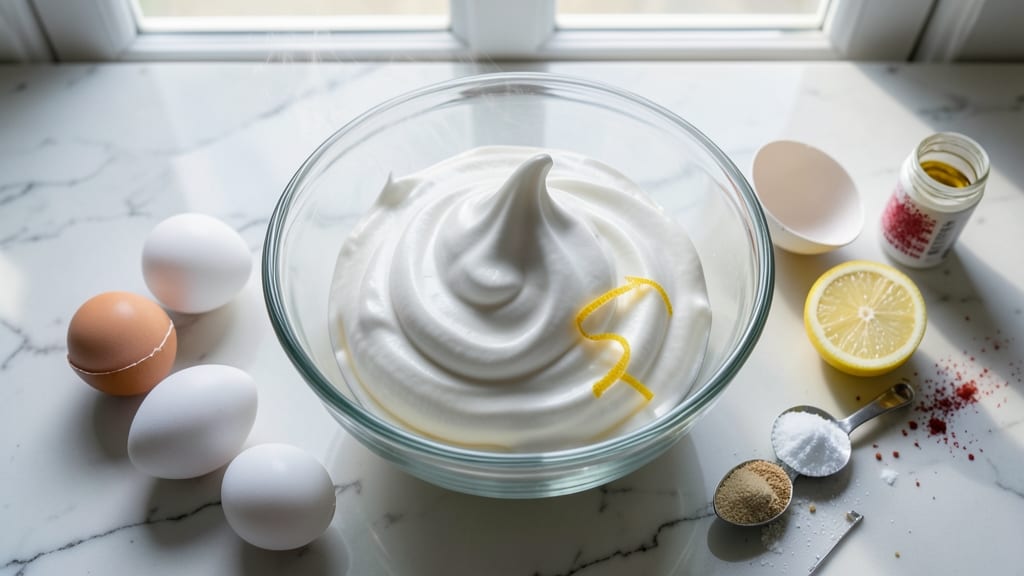
This step-by-step egg white icing recipe delivers a light-as-air, butter-free frosting that's perfect for delicate pastries and cakes. The secret lies in properly whipped egg whites—creating a stable, glossy finish without the heaviness of butter.
I've perfected this technique over years of baking, ensuring every batch achieves maximum volume and a silky-smooth texture that's ideal for decorating.
What sets this recipe apart is its foolproof method for achieving peak volume while avoiding common pitfalls like graininess. We'll cover proper pasteurization techniques to ensure food safety, along with storage tips to keep your icing fresh.
The result is a versatile frosting that works beautifully on angel food cakes, macarons, or even delicate sugar cookies—without weighing them down.
The process begins with carefully separated egg whites, whipped to stiff peaks before gradually incorporating powdered sugar. This gradual incorporation prevents deflation while creating that signature glossy sheen and light-as-air consistency.
Each step builds on the last, ensuring a stable frosting that holds its shape and adds professional-quality decoration to your baked goods.
Perfect for those watching their butter intake or needing a low-fat alternative, this icing maintains all the elegance of traditional frostings while offering a healthier option. Whether you're decorating a special occasion cake or adding a touch of sophistication to everyday treats, this recipe delivers consistent, restaurant-quality results every time.
Ingredients for step by step egg white icing
Eight essential ingredients transform into a flawless, butter-free frosting perfect for delicate pastries.
| Ingredient | Amount | Notes |
|---|---|---|
| Large Egg Whites 🥚 | 4 whole | Room temperature, pasteurized |
| Powdered Sugar 🍚 | 3 cups | Sifted for smooth texture |
| Granulated Sugar 🍚 | ¼ cup | For stabilizing meringue |
| Vanilla Extract 🌿 | 1 tsp | Pure, high-quality preferred |
| Cream of Tartar 🧂 | ¼ tsp | Stabilizes egg whites |
| Lemon Juice 🍋 | ¼ tsp | Freshly squeezed |
| Corn Syrup 🍯 | ½ tsp | Optional for extra stability |
| Salt 🧂 | ¼ tsp | Fine sea salt preferred |
The egg whites are the foundation—room temperature ensures proper whipping. For pasteurization, gently heat the whites to 160°F for 3 minutes, then cool completely. Powdered sugar must be sifted to prevent graininess in the final icing. The cream of tartar is non-negotiable; it stabilizes the meringue and prevents deflation. For the best vanilla, McCormick Pure Vanilla Extract or Lake Champlain are excellent choices, but any pure extract works. Fresh lemon juice brightens the flavor and adds subtle acidity to balance sweetness.
No corn syrup? Light corn syrup or honey (if vegetarian) works equally well for stability. Substituting vanilla extract with vanilla bean paste adds depth but may slightly alter texture. For a lower sugar version, reduce powdered sugar to 2.5 cups and increase egg whites to 5 whole, though stability may be compromised. The granulated sugar acts as a stabilizer—turbinado sugar can replace it but may add subtle crunch. Always ensure your bowl and beaters are completely free of fat to prevent deflation during whipping.
Freshly prepared icing holds best for 3 days in an airtight container at room temperature, though it's best used within 24 hours for optimal texture. For longer storage, freeze in 1-tablespoon portions between parchment paper; thaw at room temperature before use. The icing thickens as it sits—rewhip briefly with a hand mixer to restore consistency. Avoid refrigerating, as condensation causes graininess. For decorating, use a piping bag with a small round tip for precise details.
Why You'll Love This Recipe
- Stable & Silky Smooth: I’ve made frosting that looked like it came from a tube—this isn’t that. The cream of tartar is the secret: it stabilizes those egg whites into something so glossy, it’ll make you double-check the recipe. No lumps, no graininess, just that professional-looking finish.
- Vanilla Kiss: That little splash of vanilla extract? It’s not just flavor—it’s the difference between "icing" and "oh wow." The sugar dissolves perfectly, so every bite has that warm, sweet depth without tasting like powdered sugar overload.
- Baking’s Best Friend: Need to cover a sheet cake, cupcakes, or even a batch of cookies? This icing plays well with everything. It pipes neatly, spreads evenly, and sets fast—no waiting around for it to firm up like some other recipes I’ve tried.
- Pantry Magic: Honestly, the ingredients cost next to nothing, and it keeps for days in the fridge. I’ve used leftovers to glaze donuts, drizzle over fruit, or even mix into coffee (yes, really). Less waste, more delicious possibilities.
Step-by-step instructions for light egg white icing
This method delivers flawless, airy frosting with perfect stability every time.
Prepare the Egg Whites for Maximum Volume
Place the 4 whole large egg whites in a spotlessly clean, grease-free mixing bowl. Add the 0.25 teaspoon cream of tartar and 0.25 teaspoon salt—these create the ideal acidic environment for peak volume. Use a hand mixer or stand mixer fitted with the whisk attachment to beat on medium-high speed until soft peaks form.
Here's the thing—room temperature egg whites whip faster and hold more air. If your egg whites are cold, let them sit at room temperature for 30 minutes before starting. You'll notice the mixture gradually thicken as it warps from liquid to glossy foam. Stop beating when you can hold a peak that just barely curves over when you lift the whisk.
Gradually Incorporate the Stabilizers
With the mixer still running on medium-high speed, slowly add the 0.25 cup granulated sugar and 0.5 teaspoon corn syrup—these stabilize the meringue and prevent weeping. Add them 1 tablespoon at a time, allowing each addition to fully incorporate before adding more. The mixture should become glossy and thicken noticeably as you work.
Next, add the 0.25 teaspoon lemon juice and 1 teaspoon vanilla extract. The acidity from the lemon juice helps stabilize the egg whites further while adding subtle brightness. The vanilla extract infuses throughout the frosting, creating a well-rounded flavor profile. Mix just until fully combined—overmixing at this stage can deflate the meringue.
Sift and Fold in the Powdered Sugar
Sift the 3 cups powdered sugar into the meringue mixture through a fine-mesh sieve to avoid clumps. With the mixer on low speed, gradually fold in the powdered sugar until fully incorporated. This step should take 2-3 minutes—you're looking for a smooth, creamy consistency that holds its shape when piped.
I like to use a silicone spatula to gently fold in the powdered sugar by hand after the initial incorporation. This ensures even distribution and prevents deflation. The frosting should now have a thick, pipeable consistency. If it's too stiff, add 1 teaspoon water at a time until it reaches the desired texture. For a glossy finish, pipe the frosting onto a parchment-lined baking sheet and let it sit for 10 minutes before using.
Pro Tips For Making Step By Step Egg White Icing
- Whisk Egg Whites Cold: Grab your bowl from the fridge first—cold egg whites whip up faster and hold their volume better. I used to skip this and end up with a sad, deflated mess, especially in humid kitchens. A quick ice bath for the bowl (5 minutes) makes an even bigger difference.
- Sift That Powdered Sugar: Don’t just dump the powdered sugar—sift it through a fine-mesh sieve to break up clumps and avoid grainy icing. I learned this the hard way when my first batch looked like it had sand in it. A quick shake over the bowl saves you from scraping later.
- Stop When It’s Stiff: Egg whites should form soft peaks that hold their shape but still droop slightly—overwhipping turns them into glue. I now set a timer for 3-4 minutes max after they start thickening, then test with the whisk. If it’s too stiff, you’ve lost your window.
- Mix Dry Ingredients First: Combine powdered sugar, granulated sugar, and cream of tartar before folding into the egg whites—this keeps the icing light and prevents lumps. I used to add them one by one and always ended up with a denser, heavier result. A quick 10-second mix in a separate bowl fixes that.
Troubleshooting your step by step egg white icing
Grainy Texture Fix
If your icing turns grainy, it’s usually from lumps in the powdered sugar. Always sift the powdered sugar through a fine-mesh sieve before adding it to the egg whites. For extra insurance, whisk the powdered sugar with 1 tablespoon cornstarch before sifting—this helps dissolve any stubborn clumps.
If graininess appears after mixing, blend the icing in a food processor for 10-15 seconds to smooth it out. 💫
Weeping or Syrupy Icing
Weeping happens when liquid separates from the frosting, leaving a sticky residue. To prevent this, ensure your egg whites are fully whipped to stiff peaks before adding sugar. If weeping occurs, rewhip the icing on low speed for 1-2 minutes to redistribute the moisture.
Adding ½ teaspoon extra cream of tartar can also help stabilize the mixture. For a quick fix, chill the icing in the fridge for 15 minutes before using—this firms it up temporarily.
Deflated or Flat Icing
Deflation usually means air was lost during mixing or the bowl wasn’t clean. Start fresh by ensuring your mixing bowl and beaters are completely free of grease or fat—even a trace can prevent proper whipping.
If deflation happens mid-process, fold in 1 tablespoon extra powdered sugar and rewhip on medium speed for 30 seconds. For stubborn cases, add ½ teaspoon corn syrup and rewhip gently to restore volume.
Overly Stiff or Dry Icing
If your icing is too thick, it’s likely from too much powdered sugar or overmixing. To fix it, add water, 1 teaspoon at a time, while mixing on low speed. For a smoother texture, let the icing sit at room temperature for 5 minutes before rewhipping.
If it’s still too stiff, add ½ teaspoon lemon juice—the acidity helps soften the mixture. Avoid adding too much liquid, or the icing may become runny.
Uneven Color or Streaks
Streaks often appear when powdered sugar isn’t fully incorporated or when vanilla extract isn’t mixed well. To fix this, press the icing through a fine-mesh sieve to break up any clumps.
For a more uniform color, fold in ½ teaspoon gel food coloring (like Wilton’s gel colors) and rewhip briefly. If the vanilla flavor is uneven, add ¼ teaspoon extra vanilla extract and mix thoroughly.
A quick spin in a stand mixer on low for 30 seconds can also help blend everything smoothly.
Storage-Related Issues
If your icing thickens or dries out after storage, it’s likely from exposure to air or humidity. To prevent this, store it in an airtight container with a damp paper towel on top to maintain moisture. If it thickens, rewhip with 1 teaspoon water on low speed until smooth.
For graininess after refrigeration, blend the icing in a food processor for 10 seconds to restore its texture. Always let the icing return to room temperature before reworking it—cold icing is harder to blend evenly. ❄️
Nutrition facts
Frequently asked questions
Can I substitute corn syrup in this egg white icing?
Yes, you can replace corn syrup with ½ teaspoon honey or ½ teaspoon light corn syrup for stability. However, corn syrup works best because it dissolves easily and prevents weeping. If using honey, ensure it's fully dissolved before whipping to avoid graininess in the final icing.
How do I know when egg whites are fully whipped?
Egg whites are ready when they form stiff peaks—lift the whisk, and the peak should stand straight up without collapsing. For this recipe, you'll want soft peaks before adding sugar, but stiff peaks are ideal for maximum volume. Test with a clean whisk to avoid contamination.
Can I make this icing ahead of time?
Yes, but use it within 3 days for best texture. Store in an airtight container at room temperature. For longer storage, freeze in 1-tablespoon portions between parchment paper. Thaw overnight in the fridge before use, then rewhip briefly to restore consistency.
Why did my icing turn grainy?
Graininess usually means powdered sugar wasn't fully dissolved. Always sift the sugar before adding, and mix on low speed when incorporating it. For stubborn lumps, press the icing through a fine-mesh sieve or blend briefly in a food processor to restore smoothness.
What's the best way to decorate with this icing?
Use a piping bag with a small round tip for delicate details like rosettes or borders. For cakes, spread with an offset spatula for a smooth finish. Let the icing sit for 10 minutes before decorating to achieve a glossy, professional look.