
Soups & Stews
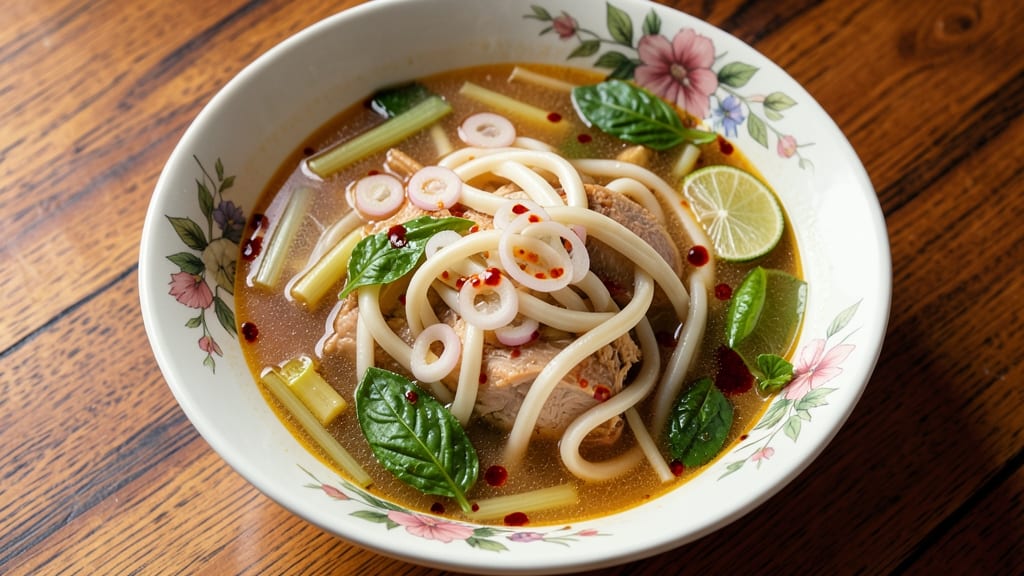
This Thai egg drop soup recipe delivers the perfect balance of fragrant lemongrass broth and delicate egg ribbons that melt in your mouth.
The secret lies in a slow-simmered broth infused with galangal, kaffir lime leaves, and fresh herbs—creating layers of aromatic depth that transport you to a bustling Bangkok street market. I've perfected this version to be both authentic and approachable, so home cooks can achieve restaurant-quality results without specialized ingredients.
The foundation begins with the broth, where lemongrass, ginger, and galangal steep for hours to develop their signature citrusy, peppery complexity. While it simmers, the egg drop technique transforms ordinary eggs into silky, feather-like strands that dissolve with each sip.
This isn't just soup—it's a sensory experience where every ingredient plays its part in harmony.
What makes this recipe truly special is how the flavors come together: the bright acidity of lime, the subtle heat of chili, and the umami depth from mushrooms all meld in the broth. The final touch—fresh cilantro and crushed peanuts—adds contrasting textures and freshness that elevate each spoonful.
It's the kind of dish that feels both comforting and exciting, perfect for chilly evenings or as a light yet satisfying meal.
Whether you're serving this as a starter or a complete meal, the versatility of Thai egg drop soup shines. The broth can be made ahead and reheated, while the egg ribbons are added fresh at the table for that signature restaurant presentation.
Ready to create a bowl that's as beautiful as it is delicious? Let's get started with the ingredients and techniques that bring this classic dish to life.
Ingredients for thai egg drop soup
Fragrant broth meets delicate egg ribbons in this authentic Thai egg drop soup.
| Ingredient | Amount | Notes |
|---|---|---|
| Chicken Broth 🍲 | 6 cups | Low-sodium preferred, homemade or quality store-bought |
| Galangal Slices 🌿 | 3 pieces | Fresh, peeled, about 2-inch thick slices |
| Lemongrass Stalks 🌿 | 3 whole | Bruised, bottom 3 inches only |
| Fresh Ginger 🧄 | 2 tbsp | Finely minced, peeled |
| Kaffir Lime Leaves 🍋 | 4 whole | Torn into strips |
| Shallots 🧅 | 3 whole | Thinly sliced, about 3 tbsp total |
| Garlic Cloves 🧄 | 4 cloves | Minced, peeled |
| White Mushrooms 🍄 | ½ lb | Thinly sliced, cremini or button work too |
| Red Chili Peppers 🌶️ | 2 whole | Thinly sliced, adjust for heat preference |
| Large Eggs 🥚 | 4 whole | Cold, room temperature for best ribbons |
| Fish Sauce 🍶 | 1 tbsp | Red Boat preferred for authentic flavor |
| Lime Juice 🍋 | 2 tbsp | Freshly squeezed |
| Fresh Cilantro 🌿 | ¼ cup | Chopped, stems included for extra flavor |
| Crushed Peanuts 🥜 | ¼ cup | Roasted, for garnish |
| Soy Sauce 🍶 | 1 tbsp | Light or all-purpose |
| Sugar 🍚 | 1 tsp | White or brown, balances flavors |
Galangal is the aromatic soul of this soup—Asian markets carry it fresh, or substitute with ginger if unavailable (though it won't be identical). Look for firm, pale rhizomes with minimal shriveled spots. The lemongrass should be vibrant green with no brown ends, and the kaffir lime leaves should be fragrant and slightly oily to the touch. Thai Kitchen or Mae Ploy brands often stock these essentials if your local market doesn't. For the mushrooms, cremini or button varieties work perfectly—they absorb the broth's flavors beautifully without overpowering.
No galangal? Ginger plus a pinch of coriander mimics some of its peppery notes, though it won't be exact. The fish sauce is non-negotiable for authenticity—Red Boat is the gold standard, but Three Crabs is a solid budget alternative. For heat, adjust the chili peppers: bird's eye for authentic bite or jalapeño for milder heat. The broth can be made ahead and reheated gently—just avoid boiling after adding the eggs to maintain their silky texture. If you can't find kaffir lime leaves, lime zest plus a bay leaf offers a decent substitute.
Store the broth base (without eggs) for up to 5 days in the fridge or 3 months frozen. The eggs should be added fresh at serving for that signature restaurant presentation. For extra convenience, pre-chop the mushrooms and shallots, then store them separately in the fridge for up to 3 days. When reheating, keep the broth simmering at low heat—never boiling—to maintain clarity and prevent the eggs from curdling. Garnish with crushed peanuts and cilantro just before serving for maximum freshness.
Why You'll Love This Recipe
- Few Ingredients, Big Payoff: I swear by this—just broth, galangal, lemongrass, and a handful of other pantry staples. No cluttered spice blends or hard-to-find herbs here. The galangal alone (that citrusy, peppery root) does the heavy lifting, so you’re not stuck measuring 10 different things.
- Layered Flavor Magic: Between us, the first sip hits like a warm hug. The ginger and kaffir lime leaves add this bright, almost floral note, while the lemongrass simmers into the broth like a secret weapon. It’s not just "flavor"—it’s depth without overcomplicating things.
- Weeknight or Weekend: Honestly, this soup works for both. Toss it together when you’re exhausted and need something fast, or let it simmer slow on a lazy Sunday. The egg ribbons? They’re the easy finishing touch that makes it feel special—no fuss, just satisfaction.
- Leftovers That Don’t Suffer: I make a double batch every time. The broth stays rich overnight, and the egg ribbons reheat beautifully (just a splash of hot water to loosen them up). It’s my go-to for busy mornings or when I need a cheap, filling lunch—no sad, rubbery leftovers here.
Step-by-step instructions for Thai egg drop soup
Master the balance of fragrant broth and delicate egg ribbons with this precise technique.
Build the Aromatic Broth Base
In a large pot, combine the 6 cups chicken broth, 3 pieces galangal slices, 3 whole lemongrass stalks (bruised), 2 tbsp minced fresh ginger, and 4 whole kaffir lime leaves. Bring to a gentle simmer over medium heat. The broth should bubble gently but not boil vigorously—this prevents the delicate aromatics from burning.
Simmer uncovered for 10 minutes to allow the galangal and lemongrass to infuse the broth with their signature citrusy, piney depth. You'll notice the broth developing a subtle golden hue and an aromatic steam rising from the surface. This is when the galangal's peppery notes begin to emerge. Remove and discard the galangal slices, lemongrass stalks, and kaffir lime leaves after infusion.
Sauté the Aromatic Vegetables
In a separate small saucepan, heat a dry skillet over medium heat. Add the 3 whole shallots and 4 cloves minced garlic, cooking for 2-3 minutes until the shallots turn translucent and the garlic releases its sweet aroma. This dry sautéing prevents the vegetables from steaming and preserves their flavor.
Transfer the sautéed shallots and garlic to the simmering broth. Add the 0.5 lb thinly sliced white mushrooms and 2 whole sliced red chili peppers. Simmer for an additional 5 minutes until the mushrooms soften and release their earthy flavor. The broth should now carry a complex aroma combining lemongrass, ginger, galangal, and the subtle heat of chili.
Season and Prepare the Egg Ribbons
Reduce heat to low and stir in the 1 tbsp fish sauce, 1 tbsp soy sauce, and 1 tsp sugar. Taste the broth and adjust seasoning—you're aiming for a balance of salty, umami, and just a touch of sweetness. The broth should be seasoned but not overpowering, allowing the egg to shine.
In a small bowl, whisk together the 4 whole large eggs until the yolks and whites are fully combined. This ensures even cooking and creates those signature silky ribbons. Keep the eggs at room temperature—they'll incorporate more smoothly into the hot broth.
Create the Signature Egg Ribbons
Slowly pour the whisked eggs into the simmering broth while gently stirring with a heatproof spatula. The key here is to work quickly but steadily—pour in a thin stream while maintaining constant motion. You'll see the eggs immediately begin to form delicate ribbons as they cook in the hot broth.
Continue stirring for 30-45 seconds until the egg ribbons are fully set but still maintain their silky texture. The broth should remain hot enough to gently cook the eggs without scrambling them. Remove from heat immediately after the eggs are fully cooked to preserve their delicate texture.
Finish and Serve
Stir in the 2 tbsp fresh lime juice and taste again. The acidity should brighten the flavors and cut through the richness of the egg. Ladle the soup into bowls, dividing the 0.25 cup chopped fresh cilantro evenly among servings. Garnish each bowl with 1 tbsp crushed peanuts for added crunch and visual appeal.
Serve immediately while the broth is hot and the egg ribbons maintain their delicate texture. Each spoonful should deliver a harmonious balance of fragrant broth, silky egg, and contrasting textures from the peanuts and herbs. The soup should be aromatic, flavorful, and perfectly balanced—no single element overpowering the others.
Pro Tips For Making Thai Egg Drop Soup
- BLANCH GALANGAL FIRST: I learned this the hard way—raw galangal slices will make your broth bitter. Toss them in boiling water for 30 seconds to mellow the heat, then add to the soup. The flavor stays vibrant, but the sharpness softens.
- SIMMER LEMONGRASS LOW: High heat turns lemongrass bitter. After adding it to the broth, keep the heat at a gentle simmer—just enough to see tiny bubbles. If you rush it, you’ll taste the grassy edge instead of the bright citrusy aroma.
- CHOP GINGER THIN: Skip the thick slices; thin, matchstick-cut ginger infuses faster without overpowering. Toss it in at the end with the eggs—it’ll brighten the broth without lingering harshness.
- USE PASTE FOR LAZY DAYS: No fresh galangal or lemongrass? A teaspoon of store-bought Thai galangal paste (or even a dash of lime zest) works in a pinch. It’s not identical, but it’ll save you from skipping the dish entirely.
Essential equipment for this recipe
Broth Pot Essentials
Start with a large, heavy-bottomed stockpot—I recommend a 5-quart stainless steel pot like the All-Clad Stainless for even heat distribution. This prevents hot spots that can burn your delicate aromatics like galangal and lemongrass.
A fine-mesh strainer (like the OXO Good Grips) is crucial for removing infused ingredients after simmering. 🌿
Egg Whisking Tools
For perfect egg ribbons, use a small, heatproof bowl (I love Corelle stoneware) and a balloon whisk (like the Zyliss 3-in-1) to fully emulsify the eggs. The whisk creates tiny air pockets that help the eggs form those signature silky strands.
A heatproof spatula (such as OXO Good Grips) is essential for gently stirring the eggs into the broth without breaking them.
Temperature Control
Invest in a candy or instant-read thermometer (I use Thermoworks Thermapen ONE) to monitor broth temperature—ideal range is 185-195°F. This precision ensures your eggs cook evenly without scrambling.
A small saucepan (like Le Creuset 1.5-quart) is perfect for sautéing shallots and garlic separately before adding to the broth.
Garnish Prep Tools
Chop fresh cilantro efficiently with a sharp chef's knife (I prefer Wüsthof Classic) and a cutting board (like John Boos bamboo). For crushed peanuts, use a rolling pin or mortar and pestle to achieve that perfect texture.
A small bowl (like Pyrex 8-oz) keeps garnishes ready at serving time.
Optional Upgrades
For extra convenience, a high-quality immersion blender (like Ninja CB101) lets you blend the broth directly in the pot for ultra-smooth texture. A steamer basket (like OXO Good Grips) is handy if you want to steam mushrooms separately before adding to the broth.
These aren't essential, but they elevate the process for frequent cooks. ✨
Nutrition facts
Frequently asked questions
Can I make this Thai egg drop soup vegetarian?
Replace the chicken broth with a rich vegetable broth (or coconut milk for creaminess) and swap fish sauce for soy sauce or vegetarian oyster sauce. Use mushrooms as the primary protein source and add tofu or bean sprouts for extra texture. The egg ribbons will still shine as the star!
Why does my egg drop soup look scrambled instead of silky?
This usually happens when the broth is too hot or you're stirring too vigorously. Keep the broth at a gentle simmer (185-195°F) and pour the eggs in a thin stream while stirring with a slow, circular motion. Remove from heat immediately after 30 seconds—overcooking turns eggs rubbery.
How can I make this soup ahead of time?
Prepare the broth base (without eggs) up to 3 days ahead and store it in the fridge. Reheat gently on low heat—never boil—to preserve flavors. For the egg ribbons, whisk eggs at room temperature and add them fresh to hot broth just before serving. The contrast of warm broth and just-cooked eggs is what makes it special!
What's the best way to store leftovers?
Store the broth (without eggs) in an airtight container for up to 5 days refrigerated or 3 months frozen. To reheat, warm gently on low heat—never boil—and add fresh egg ribbons when serving. Leftovers won't have the same delicate egg texture, but the flavorful broth makes great ramen or noodle soup!
Can I add noodles to make it a full meal?
Yes! Use rice noodles (sen lek) or thin egg noodles—cook them separately and add them to individual bowls before ladling the hot broth over top. For extra richness, stir in a spoonful of peanut butter or coconut milk when serving. The noodles absorb the fragrant broth beautifully!