
Main Courses
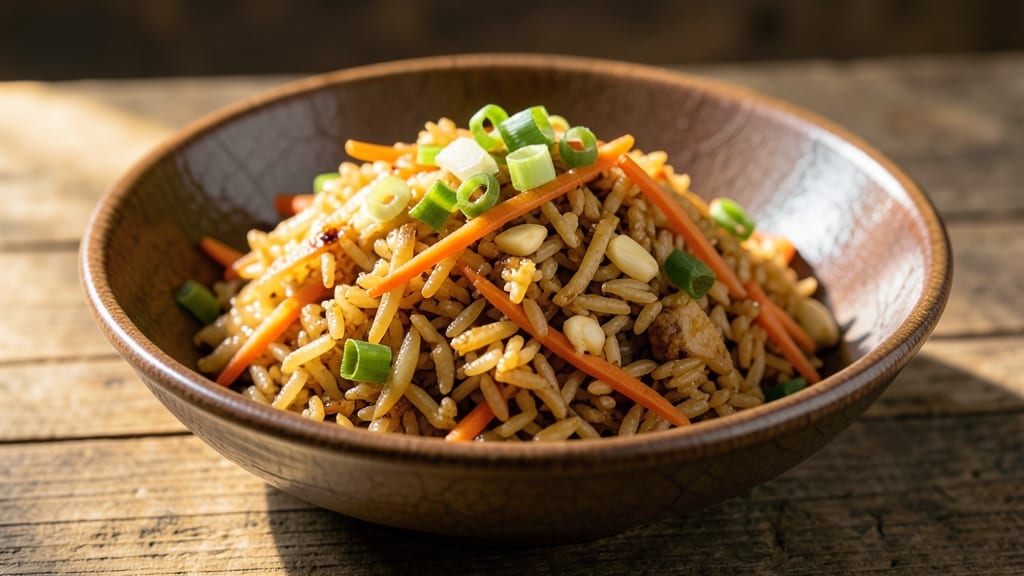
This traditional Chinese egg fried rice delivers the restaurant-quality wok-heated flavor you crave, with that signature perfectly separated yolk at its heart. The secret lies in high-heat stir-frying and precise ingredient ratios that transform day-old rice into a fragrant, savory dish with every bite.
I've refined this recipe through countless wok sessions to ensure authenticity without sacrificing home-cook simplicity.
The magic begins with properly cooled jasmine rice that's broken into individual grains, then combined with eggs cooked to a silky, curdled texture before being tossed with aromatics.
Light soy sauce, dark soy sauce, and a touch of sesame oil create the signature umami depth while maintaining that bright, fresh wok hei flavor. The protein-to-veggie ratio is carefully balanced to ensure each component shines without overpowering the others.
What you'll achieve is a dish that's equally satisfying as a standalone meal or dim sum accompaniment—golden-brown at the edges, fragrant with garlic and ginger, and featuring that cloud-like egg yolk that melts into creamy perfection.
The texture contrast between crisp-tender rice, silky eggs, and fresh vegetables creates an experience that transports you straight to a bustling Cantonese restaurant.
This recipe serves 2-3 as a main dish or 4 as a side, making it perfect for weeknight dinners or meal prep. The technique is approachable yet delivers professional results, with room for customization while maintaining authentic Chinese restaurant quality. Let's create this flavorful classic together.
Ingredients for traditional chinese egg fried rice
High-quality ingredients transform simple rice into restaurant-style egg fried rice with perfect texture and wok-hei flavor.
| Ingredient | Amount | Notes |
|---|---|---|
| Day-Old Jasmine Rice 🍚 | 4 cups | Cool completely before using |
| Large Eggs 🥚 | 4 whole | Fresh, room temperature |
| Light Soy Sauce 🥄 | 2 tbsp | Kikkoman preferred for authenticity |
| Dark Soy Sauce 🥄 | 1 tbsp | For color and depth |
| Sesame Oil 🫒 | 1 tbsp | Toasted, not flavored |
| Garlic Cloves 🧄 | 6 cloves | Minced, not pressed |
| Fresh Ginger 🌿 | 1 ½ tbsp | Finely grated, peeled |
| Carrots 🥕 | 1 cup | Julienned, medium dice |
| Green Onions 🧅 | 4 whole | White and green parts separated |
| Vegetable Oil 🫒 | ½ cup | High smoke point preferred |
| Salt 🧂 | ½ tsp | Diamond Crystal preferred |
| White Pepper 🌶️ | ¼ tsp | Freshly ground |
| Optional Protein 🍗 | 1 cup | Diced chicken or shrimp |
The jasmine rice must be day-old and completely cooled—fresh rice steams instead of frying. Day Old Rice sells at Asian markets, but homemade works too. For the eggs, room temperature is critical—they should be silky when cooked. Kikkoman soy sauces deliver authentic flavor, but any quality brands work. Fresh ginger and garlic? Grated and minced just before cooking to preserve their bright flavors. The vegetable oil should have a high smoke point—avocado or peanut oil work best for wok-heating without burning.
No light soy sauce? Substitute with 1 tbsp extra dark soy sauce plus 1 tsp sugar. Fresh ginger missing? Ground ginger at half the amount works in a pinch, but the texture differs. The optional protein can be swapped for tofu or mushrooms—just adjust cooking time. Carrots can be replaced with bell peppers or snap peas for color variation. For extra umami, add 1 tsp fish sauce if not vegetarian. The white pepper should be freshly ground—pre-ground loses potency quickly.
Store prepped ingredients separately: rice in an airtight container, aromatics in sealed bags. Fresh ginger keeps 2 weeks in the fridge, garlic 1 month. The cooked fried rice reheats beautifully—2 minutes in a wok or 1 minute in microwave with a splash of water. For meal prep, portion into containers with a thin layer of sesame oil on top to prevent sticking. Keeps 3 days refrigerated or 3 months frozen—though texture changes slightly after freezing.
Why You'll Love This Recipe
- No-Chop Nightmare: I swear by this trick—just break up that day-old rice with my hands while the wok heats. No knife skills needed, no tiny bits flying everywhere. The eggs scramble in seconds, and the soy sauces blend effortlessly into the mix.
- Umami Magic: That dark soy sauce? It’s the secret weapon—deep, caramelized flavor in every bite. Light soy keeps it salty but bright, and a single drizzle of sesame oil at the end? Pure satisfaction, like a little flavor bomb you didn’t even see coming.
- Lunchbox Hero: Make a big batch on Sunday, and you’ve got lunch for the week. Pack it in containers, and it’s still crispy and delicious by Friday. My kids actually ask for this—no sad desk lunches here.
- Pocketbook Friendly: Eggs, rice, and a splash of soy? This feeds four for under five bucks. Honestly, it’s the kind of meal that makes me feel like I’m winning at life, especially when I’m stretching a grocery budget.
Step-by-step instructions for traditional Chinese egg fried rice
Master the wok technique and achieve that signature restaurant-style texture with tender rice and silky yolk.
Prepare the Base Ingredients
First, spread the 4 cups day-old jasmine rice on a baking sheet and let it dry at room temperature for 10-15 minutes. This step is crucial—it prevents the rice from turning mushy when cooked. While the rice dries, separate the 4 whole large eggs into a bowl and beat them lightly with a fork. The eggs should be room temperature for even cooking.
In a small bowl, combine the 2 tablespoons light soy sauce, 1 tablespoon dark soy sauce, 1.5 tablespoons finely grated fresh ginger, and 0.5 teaspoon salt. Mix well to create your seasoning base. The dark soy sauce will give the rice its signature reddish hue, while the light soy sauce adds depth of flavor. Keep this mixture nearby—you'll use it in the next step.
Cook the Protein and Aromatics
Heat a wok or large skillet over medium-high heat and add 0.5 cup vegetable oil. Once the oil is shimmering, add the 1 cup optional protein (diced chicken or shrimp) and cook until just done—about 3-4 minutes for chicken or 2 minutes for shrimp. Remove the protein and set it aside on a plate.
In the same wok, add 6 cloves minced garlic and cook for 30 seconds until fragrant. Immediately add the 1 cup julienned carrots and stir-fry for 1-2 minutes until they begin to soften but still retain a slight crunch. Here's the thing—don't overcook the vegetables or they'll turn to mush. The goal is to preserve texture while building flavor.
Scramble the Eggs Perfectly
Return the wok to medium heat (reduce slightly from high) and add a thin layer of oil—just enough to coat the bottom lightly. Pour in the beaten eggs and let them sit undisturbed for 5-10 seconds until the edges begin to set. This initial pause is what creates those beautiful, separated curds and silky strands.
Using a spatula, gently push the eggs toward the center of the wok, tilting the pan to let the uncooked egg flow to the edges. Continue this motion for 20-30 seconds until the eggs are 80% set but still slightly runny in the center. The eggs should look like soft, creamy ribbons—this is the hallmark of authentic egg fried rice. Remove the eggs and set them aside with the protein.
Stir-Fry the Rice to Al Dente
Increase the heat to high and add the remaining 0.5 cup vegetable oil. Once smoking hot, add the 4 cups day-old rice and stir-fry vigorously for 1-2 minutes. The high heat and constant motion prevent the rice from sticking and help achieve that characteristic "wok-hei" smokiness.
Pour the prepared soy sauce-ginger mixture over the rice and stir continuously for 1-2 minutes until the rice absorbs the seasoning. Add the white and green parts of the 4 whole green onions (chopped separately) and the 1 tablespoon sesame oil. The sesame oil should infuse quickly—you'll notice the aroma become rich and nutty. Cook for another 30 seconds while stirring constantly.
Combine and Finish
Return all the components—the protein, eggs, and any accumulated juices—to the wok. Add 0.25 teaspoon white pepper and toss everything together for 30-60 seconds until well combined. The rice should be hot throughout, with each grain distinct and the eggs evenly distributed. Taste and adjust seasoning if needed—you may need a touch more light soy sauce for balance.
Serve immediately while the rice is piping hot. The dish should have a vibrant reddish hue from the dark soy sauce, distinct rice grains, and those beautiful separated egg strands. The aroma should be a perfect blend of smoky wok-hei, nutty sesame, and umami-rich soy sauce. This is where traditional Chinese fried rice shines—simple ingredients transformed into something extraordinary through technique.
Pro Tips For Making Traditional Chinese Egg Fried Rice
- STIR-FRY THE RICE DRY: I used to add oil to the wok before tossing in the rice, but that makes it greasy. Instead, heat the wok until it’s smoking hot, then add the rice—it’ll release its own starch and get that perfect crispy texture without extra oil. The rice should sizzle like bacon for the first 30 seconds.
- SCRAMBLE EGGS SEPARATELY: Crack the eggs into a bowl first, then scramble them in a separate pan until just set—about 2 minutes on medium-low. The eggs should be soft and slightly runny when you fold them into the rice later. Trust me, mixing them in raw makes the rice gummy.
- USE DARK SOY FOR COLOR: Skip the light soy in the final toss—just a teaspoon of dark soy sauce (the black stuff) at the very end gives that classic golden hue without overpowering the flavor. I learned this after burning through three batches of bland, pale rice.
- TOSS IN SESAME OIL LAST: Add the sesame oil when the dish is almost done—just before serving. It burns fast and turns bitter if you wait too long. A quick drizzle at the end adds aroma without cooking it off. (Yes, even if you’re impatient like me.)
Best sauces and condiments for this traditional chinese egg fried rice
Soy Sauce Mastery
The foundation of authentic flavor lies in the right soy sauce balance. Use 2 tbsp light soy sauce for umami depth and 1 tbsp dark soy sauce for color and richness. I recommend Kikkoman for that classic restaurant taste—light soy provides the savory base while dark soy adds visual appeal.
For extra depth, add 1 tsp fish sauce if you're not vegetarian, or 1 tsp oyster sauce for a seafood-inspired twist. 🥄
Never substitute with regular salt—soy sauce contains amino acids that create the signature wok-hei flavor. If you only have dark soy sauce, combine 1 tbsp dark soy sauce with ½ tsp sugar to mimic light soy's balance.
The key is to taste as you go and adjust gradually—too much soy sauce can overpower the dish.
Sesame Oil Secrets
Toasted sesame oil is non-negotiable for that nutty aroma that elevates every bite. Use 1 tbsp and add it only at the end of cooking—this preserves its delicate flavor. I prefer La Choy toasted sesame oil for its balanced roasted taste.
For a vegetarian version, replace fish sauce with 1 tsp vegetarian oyster sauce to maintain umami without animal products.
Never use flavored sesame oil—the artificial flavors will ruin the dish. A little goes a long way, so start with the full amount and adjust to taste. The oil should infuse quickly, filling your kitchen with that signature aroma that signals the dish is complete.
Ginger-Garlic Base
Freshly grated ginger and minced garlic are the aromatic soul of this dish. Use 1.5 tbsp grated ginger (about 1-inch piece) and 6 cloves minced garlic for maximum impact. The ginger should be finely grated to release its oils without becoming fibrous.
Cook these aromatics until fragrant but never browned—this prevents bitterness and preserves their bright flavors. 🌿
For a milder version, reduce garlic to 4 cloves or use ½ tsp garlic powder (though fresh is always better). If you're short on time, pre-minced garlic works, but it loses flavor quickly—use within 30 minutes of opening the package for best results.
Umami Boosters
For restaurant-quality depth, add 1 tsp fish sauce (if using protein) or 1 tsp vegetarian oyster sauce. These ingredients amplify the soy sauce's flavor without overpowering. I also recommend ½ tsp white pepper for a subtle kick—it's traditional in many regional versions and adds complexity without heat.
The pepper should be freshly ground for maximum potency.
For a vegetarian version, combine 1 tsp soy sauce with ½ tsp mushroom powder to mimic meaty umami. The powder dissolves instantly and adds that savory depth without animal products. This trick works particularly well when using tofu or mushrooms as the protein base.
Finishing Touches
The final flourish comes from green onions—use 2 white parts (finely chopped) and 2 green parts (cut into ½-inch pieces). The white parts add subtle sharpness while the greens provide freshness.
Add them 30 seconds before serving to maintain their vibrant color and crisp texture. A drizzle of extra sesame oil right before eating enhances the aroma dramatically. ✨
For a smoky finish, crack a ¼ tsp smoked salt over the top just before serving. This adds a subtle campfire note that mimics traditional wok cooking.
The salt should be sprinkled evenly so every bite gets that smoky aroma. This is my secret weapon for achieving that authentic restaurant experience at home.
Nutrition facts
Frequently asked questions
Why does my egg fried rice turn out mushy instead of separate grains?
This happens when using fresh rice that hasn't dried properly. Always use day-old jasmine rice that's been spread out to dry for 10-15 minutes before cooking. Fresh rice contains too much moisture, which steams instead of frying. For best results, refrigerate cooked rice overnight before using.
Can I make this with fresh rice? What's the workaround?
Fresh rice will never give you that signature crisp-tender texture, but you can try this trick: Cook the rice, spread it on a tray, and microwave it uncovered for 2-3 minutes to dry it out. Then proceed with the recipe. The texture won't be perfect, but it'll be better than completely mushy rice.
How do I get that perfect separated yolk look in the eggs?
The secret is cooking the eggs at medium heat and letting them sit undisturbed for 5-10 seconds after pouring. Use room temperature eggs and stir gently with a spatula to create ribbons. Overcooking or using cold eggs will make them rubbery. The eggs should be 80% set when removed from the wok.
What's the best protein to use if I'm not using chicken or shrimp?
For vegetarian options, try firm tofu (pressed and cubed) or shiitake mushrooms (sliced). For meat lovers, diced pork shoulder works beautifully. If using tofu, add it with the eggs and cook until golden. Mushrooms should be cooked until their liquid evaporates before adding to the rice.
Can I make this ahead of time? How does reheating work?
This dish tastes best fresh, but you can prepare components ahead: Cook the rice, chop veggies, and beat eggs. Store separately in the fridge for up to 3 days. To reheat, use a wok or skillet over medium-high heat with a splash of water to steam. For microwave reheating, cover with a damp paper towel for 1-2 minutes.