
Soups & Stews
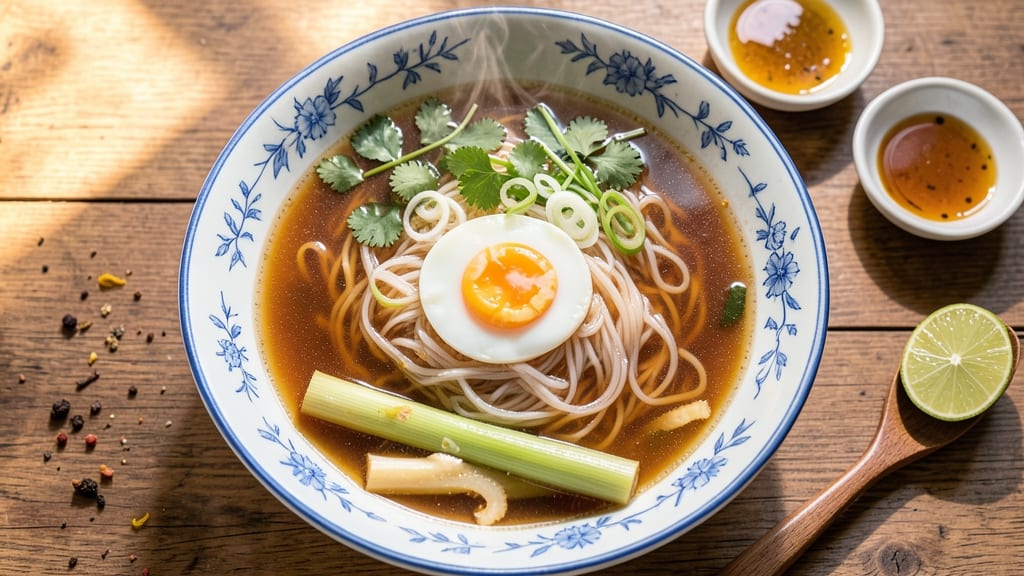
This Vietnamese egg drop soup recipe delivers the delicate balance of silky egg ribbons and aromatic ginger broth that defines Vietnamese comfort food. The key lies in a light, fragrant broth infused with lemongrass and ginger, where the egg is dropped in thin streams to create those signature translucent strands.
What makes this dish special is how each element comes together—clear broth, tender noodles, fresh herbs, and a squeeze of lime—to create a harmonious bowl that's both nourishing and deeply satisfying.
The broth forms the foundation, simmered with ginger, lemongrass, and a touch of fish sauce for umami depth. Thin rice noodles are added just before serving to maintain their delicate texture, while the egg is whisked to a delicate ribbon consistency.
Garnishes like fresh herbs, bean sprouts, and a sprinkle of chili powder elevate the dish, offering both visual appeal and layers of flavor. This recipe captures the essence of Vietnamese home cooking—simple yet refined, with every component playing its part.
What you'll achieve is a bowl of soup where each element is perfectly balanced—silky egg ribbons glide through the fragrant broth, the noodles remain tender, and the herbs add a fresh contrast.
The result is a dish that's comforting yet sophisticated, perfect for a light lunch or a cozy dinner. The technique is straightforward, but the attention to detail ensures restaurant-quality results at home.
This soup is versatile enough to serve as a standalone meal or pair with grilled meats for added heartiness. The broth can be made ahead and reheated, making it ideal for meal prep.
Whether you're introducing someone to Vietnamese flavors or recreating a favorite dish, this recipe delivers the authentic taste and texture that makes it a classic.
Ingredients for vietnamese egg drop soup
Fragrant broth meets delicate egg ribbons. These ingredients create a harmonious Vietnamese bowl.
| Ingredient | Amount | Notes |
|---|---|---|
| Chicken Broth 🍲 | 4 cups | Homemade or high-quality store-bought |
| Fresh Ginger 🧅 | 2 tbsp | Grated, peeled, fresh preferred |
| Lemongrass Stalks 🌿 | 2 whole | Bruised, bottom 3 inches only |
| Fish Sauce 🍶 | 1 tbsp | Red Boat preferred for quality |
| Large Eggs 🥚 | 2 whole | Fresh, room temperature |
| Rice Noodles 🍜 | 4 oz | Thin, dried, Vietnamese style |
| Bean Sprouts 🌱 | 1 cup | Fresh, rinsed, drained |
| Fresh Thai Basil 🌿 | ¼ cup | Chopped, stems removed |
| Fresh Cilantro 🌿 | ¼ cup | Chopped, stems removed |
| Lime Wedges 🍋 | 2 whole | For serving |
| Chili Powder 🌶️ | ½ tsp | Adjust to taste |
| Salt 🧂 | ½ tsp | Kosher or sea salt |
| Sugar 🍬 | 1 tsp | White or brown sugar |
The broth is the soul of this soup, so don't cut corners. Red Boat fish sauce is worth the investment for authentic umami, but Three Crabs or Thai Kitchen work in a pinch. Fresh ginger and lemongrass are non-negotiable—Asian markets often have the best quality, but regular grocery stores carry them too. Look for ginger with tight, smooth skin and firm stalks of lemongrass. If you can't find fresh lemongrass, substitute 1 tbsp lemongrass paste, but fresh is ideal. The chicken broth should be clear and flavorful—homemade is best, but Swanson or Pacific Foods brands are solid store-bought options.
No fresh basil? Cilantro alone works, though Thai basil adds that signature anise flavor. Bean sprouts can be swapped for mung bean sprouts or shredded cabbage if unavailable. The eggs should be fresh and cold when whisked—they'll ribbon better. For extra richness, add a splash of coconut milk (2 tbsp max) to the broth. If you're avoiding fish sauce, soy sauce or mushroom sauce can substitute at half the amount. The rice noodles should be thin and springy—if they're too thick, soak them for 10 minutes before adding to the soup.
Broth keeps for 5 days in the fridge, but reheat gently to preserve clarity. Eggs should be whisked just before serving—they don't reheat well. Store noodles in an airtight container for up to 1 month. For meal prep, assemble bowls without the egg until ready to serve. Garnishes like herbs and bean sprouts stay fresh 3-4 days wrapped in damp paper towels. Freeze broth in ice cube trays for quick portions later.
Why You'll Love This Recipe
- Minimal Chopping Required: I swear by this one—just a few ginger slices and lemongrass stalks to pound (or skip if you’re lazy). That’s it. The broth does all the heavy lifting while you sip your coffee.
- Umami Bomb Combo: Fish sauce and ginger? Oh, that’s the magic. The eggs ribbon through the broth like silk, and the lemongrass lingers with this bright, citrusy punch—salty, sweet, and just a little funky. It’s the kind of flavor that sticks with you.
- Leftovers That Don’t Suck: Honestly, I make a double batch on Sundays. The broth stays rich overnight, and reheating it just means a quick simmer. Add a splash of water, crack an egg in, and—boom—lunch is sorted. No sad, watery soup here.
- Cold Weather Hug: Between us, this is my winter secret weapon. The warmth of the broth, the slight heat from the ginger, and that eggy richness? It’s like a cozy blanket for your mouth. Perfect for when you’re curled up with a book or nursing a headache.
Step-by-step instructions for Vietnamese egg drop soup
Master this delicate balance of silky egg ribbons and aromatic broth with precise technique.
Prepare the Ginger-Lemongrass Broth Base
In a medium saucepan, combine the 4 cups chicken broth, 2 tbsp grated fresh ginger, and the bottom 3 inches of 2 lemongrass stalks (bruised with the flat side of a knife). Bring to a gentle simmer over medium heat—you want just enough heat to maintain warmth without boiling vigorously. This prevents the broth from becoming cloudy.
Simmer uncovered for 10 minutes until you can smell the ginger's aromatic oils rising. The broth should be fragrant but not overpowering—this is your foundation. Strain through a fine-mesh sieve to remove the ginger and lemongrass, pressing gently to extract all the flavor. Return the strained broth to the pan and keep it warm over low heat.
Season and Prepare the Noodles
While the broth simmers, add the 1 tbsp fish sauce, 0.5 tsp salt, and 1 tsp sugar to the pan. Stir gently to dissolve completely—this balances the broth's flavor profile. Taste and adjust seasoning if needed; the fish sauce should enhance the broth without making it taste salty.
In a separate bowl, soak the 4 oz rice noodles in hot water for 8-10 minutes until pliable but still slightly firm. Drain and rinse briefly under cold water to stop the cooking process. This prevents the noodles from becoming mushy when added to the soup later. Keep them covered with a damp towel to prevent drying.
Create Silky Egg Ribbons
Crack the 2 large eggs into a small bowl. Using a fork, whisk vigorously until the whites and yolks are fully combined—no streaks should remain. The mixture should be smooth and pale yellow. This step is critical; under-whisked eggs will create lumpy ribbons instead of delicate strands.
With the broth still simmering gently, position a small heatproof bowl slightly above the pan (or use a double boiler setup). This allows the egg mixture to heat slowly without curdling. Gradually drizzle the egg mixture into the simmering broth while stirring constantly with chopsticks or a spoon. The broth's temperature should be around 170-180°F—hot enough to cook the eggs gently but not boil.
Assemble and Finish the Soup
Once the egg ribbons form delicate strands (about 1-2 minutes after adding the eggs), remove the pan from heat. Add the drained 4 oz rice noodles and 1 cup bean sprouts, gently tossing to coat everything in the broth. The noodles should soften slightly from the residual heat but remain al dente.
Divide the soup among 4 bowls, garnishing each with 0.25 cup fresh Thai basil and 0.25 cup fresh cilantro. Serve immediately with the 2 lime wedges on the side—this brightens the soup's flavors with each bite. The soup should be aromatic, with silky egg ribbons floating effortlessly in the ginger-infused broth.
Pro Tips For Making Vietnamese Egg Drop Soup
- Simmer Lemongrass Slow: I used to rush this step and end up with broth that tasted like perfume rather than food. Bruise the lemongrass stalks with the flat side of your knife first—then simmer them in the broth for 10 minutes before straining. That’s where the actual flavor hides, not just the aroma.
- Slice Ginger Thin: Forget the big chunks—you’re not making tea. Use a mandoline or sharp knife to slice ginger paper-thin (about 1mm). Toss it directly into the hot broth and let it steep for 5 minutes. It’ll dissolve just enough to add brightness without turning the soup into a ginger bath.
- Beat Eggs Lightly: Whisk the eggs until they’re just combined—no need for meringue fluff. When you drizzle them into the broth, they should ribbon out smoothly. Over-whisking makes them tough, and under-whisking gives you lumpy sadness. Aim for a consistency where the yolk and white blend but still hold shape.
- Season Broth Last: Taste the broth before adding fish sauce—it’s easy to overdo it. Add a splash (½ teaspoon to start), let it simmer 2 minutes, then adjust. The eggs will soak up flavor, so you’re basically seasoning the whole dish in one go. No take-backs.
Troubleshooting perfect results
Broth Turned Cloudy
If your broth looks cloudy instead of clear, it’s likely from boiling too vigorously or using low-quality broth. Always simmer gently—just enough to maintain warmth without bubbles. For extra clarity, strain the broth through a cheesecloth-lined sieve after simmering.
If using store-bought broth, opt for low-sodium, high-quality brands like Swanson or Pacific Foods to avoid cloudiness. 🌡️
Eggs Curdling
Curdled eggs happen when the broth is too hot or the eggs aren’t whisked properly. Keep the broth at 170-180°F and use a double boiler or heatproof bowl placed above the pan.
Whisk the eggs until completely smooth—no streaks—before drizzling. If it’s too late, strain the eggs through a fine-mesh sieve to salvage some texture. 🥚
Noodles Too Soft
Overcooked noodles ruin the texture. Soak them in hot water for only 8-10 minutes until pliable but still firm. Rinse briefly in cold water to stop cooking, then drain well. Add them to the broth just before serving—they’ll soften slightly from the residual heat without turning mushy. 🍜
Flavor Too Mild
A weak broth often means insufficient seasoning. Boost umami with an extra ½ tsp fish sauce or a splash of soy sauce. For depth, add a pinch of white pepper or a thin slice of star anise while simmering.
Taste as you go—Vietnamese soups should balance ginger’s sharpness, fish sauce’s saltiness, and sugar’s sweetness. 🌶️
Herbs Too Strong
Fresh herbs can overpower if added in excess. Stick to ¼ cup each of Thai basil and cilantro per bowl. If using dried herbs, reduce to 1 tbsp total and steep in warm broth for 5 minutes before straining.
For a milder taste, chop herbs just before serving to preserve their freshness. 🌿
Egg Ribbons Too Thick
Thick egg strands mean the broth was too cool or the eggs weren’t drizzled properly. Heat the broth to 175°F and drizzle the eggs very slowly while stirring constantly with chopsticks. For extra silkiness, whisk the eggs with 1 tsp cold water to thin them slightly before adding. 💫
Nutrition facts
Frequently asked questions
Can I use beef broth instead of chicken broth?
The traditional recipe calls for chicken broth to keep the soup light and aromatic, but you can absolutely use beef broth for a richer flavor. Just reduce the fish sauce to ½ tbsp to avoid overpowering the dish. This works especially well if you're adding thinly sliced beef or pork to your soup. The key is balancing the umami—taste as you go!
How do I make the egg ribbons extra silky?
For the most delicate ribbons, whisk your eggs until completely smooth with no streaks, then thin them slightly by adding 1 tsp cold water before drizzling. Keep your broth at a gentle simmer (170-180°F) and use a double boiler setup. Drizzle the eggs slowly while stirring constantly with chopsticks—this creates those signature translucent strands. Patience is key!
What if I don't have fresh lemongrass?
No problem! You can substitute with 1 tbsp lemongrass paste or even 2 tbsp minced lemongrass powder (though fresh is always best). For a different but still aromatic flavor, try 1 tsp lemongrass essential oil—just be sure to use food-grade oil and add it to the broth after simmering to preserve its delicate aroma. The ginger will still provide warmth.
Can I make this soup vegetarian?
Replace the fish sauce with 1 tbsp soy sauce plus ½ tsp mushroom sauce for umami depth. Use vegetable broth instead of chicken, and consider adding 1 tsp miso paste to the broth for extra richness. The egg ribbons will still be the star—just ensure your broth is flavorful enough to carry the dish. Garnish with extra herbs and lime for brightness.
How long will leftovers keep?
Store leftovers in an airtight container in the fridge for up to 3 days, but note that the egg ribbons won't be as silky when reheated. Keep the broth separate and reheat gently—add noodles and fresh egg ribbons just before serving. The broth itself will stay flavorful for 5 days if stored properly. For best texture, make fresh whenever possible!