
Breakfast & Brunch
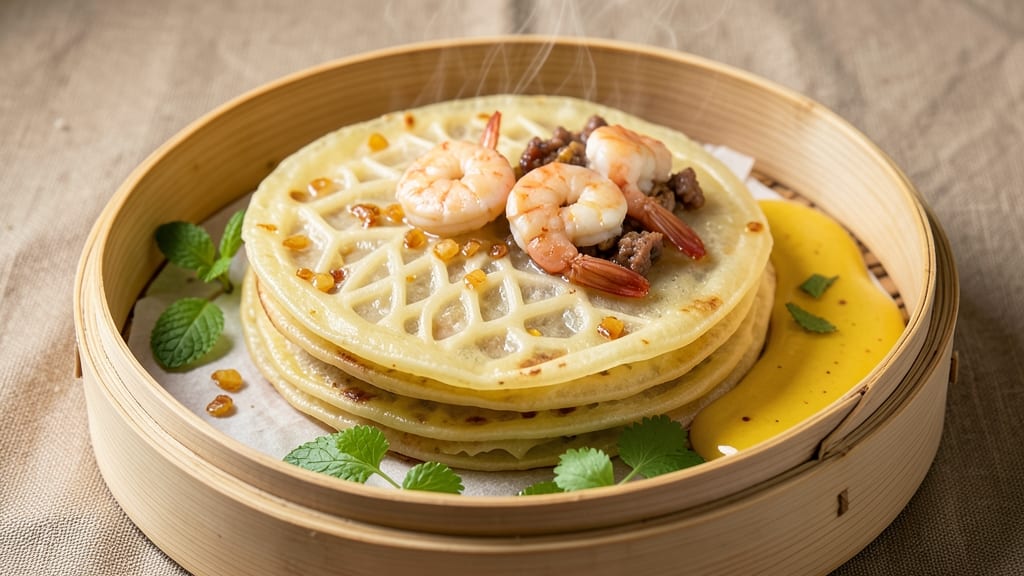
This Vietnamese egg pancake recipe brings delicate layers of turmeric-infused batter and savory shrimp filling to your breakfast table. 🌟 The secret lies in the fragrant rice flour batter, which steams into tender, translucent sheets, while the filling transforms simple ingredients like shrimp, mushrooms, and pork into a harmonious blend of textures and flavors.
I've perfected this technique over years of practice, ensuring each pancake achieves that signature soft yet sturdy consistency.
The beauty of these Vietnamese egg pancakes (bánh cuốn or bánh ướt) is in their simplicity and versatility. With just a few core ingredients—rice flour, eggs, turmeric, and shrimp—you create a dish that's both elegant and comforting.
The key steps include preparing the fragrant batter, cooking the savory filling, and mastering the steaming technique to achieve those delicate, slightly chewy layers. This recipe delivers restaurant-quality results with minimal effort.
What makes these pancakes truly special is their ability to transform a simple breakfast into a memorable culinary experience. The turmeric-infused batter adds a subtle golden hue and aromatic quality, while the shrimp filling provides a delicate yet satisfying flavor profile.
Each bite offers a perfect balance of textures—tender pancake layers wrapping around the flavorful filling, all topped with a drizzle of fish sauce and scallion oil for that authentic touch.
Perfect for weekend brunches or special occasions, these Vietnamese egg pancakes are equally impressive served family-style or plated individually. The accompanying dipping sauce—made with fish sauce, garlic, and chili—elevates each bite to new heights. Let's create these delicate, fragrant pancakes that capture the essence of Vietnamese breakfast culture.
Ingredients for vietnamese egg pancake
Rice flour and eggs form the delicate base, while shrimp and mushrooms create the savory heart of these Vietnamese egg pancakes.
| Ingredient | Amount | Notes |
|---|---|---|
| Rice Flour 🌾 | 1 ½ cups | Fine grind for smooth batter |
| Large Eggs 🥚 | 4 whole | Room temperature for even mixing |
| Ground Turmeric 🌿 | ½ tsp | Freshly ground preferred |
| Shallots 🧅 | 4 whole | Finely minced for filling |
| Fresh Shrimp 🦐 | 1 lb | Peeled, deveined, chopped small |
| Ground Pork 🥓 | ½ lb | Lean for best texture |
| Shiitake Mushrooms 🍄 | 4 whole | Stems removed, finely chopped |
| Fish Sauce 🍶 | 2 tbsp | Red Boat preferred |
| Scallion Oil 🌱 | ½ cup | For garnish and dipping |
| Neutral Oil 🫒 | 2 tbsp | For filling cooking |
| Salt 🧂 | ½ tsp | Diamond Crystal preferred |
| Black Pepper 🌶️ | ¼ tsp | Freshly ground |
| Water 💧 | 1 ½ cups | Room temperature |
The rice flour is non-negotiable—Thai Kitchen brand or Bob's Red Mill work best for that signature texture. Fresh turmeric is ideal, but ground works in a pinch (just add a pinch more). For the shrimp, frozen works fine—thaw and pat dry thoroughly before chopping. The pork should be finely ground, almost like a paste, to blend seamlessly with the mushrooms. If you can't find shiitake, cremini mushrooms are a good substitute, though they'll have a slightly different earthiness.
No shrimp? Extra ground pork or finely chopped chicken keeps the filling hearty. The fish sauce is essential—Red Boat brand has the perfect balance of umami and saltiness, but any good-quality brand will do. For a vegetarian version, swap shrimp and pork for extra mushrooms, tofu, and water chestnuts. The scallion oil can be homemade (sauté scallions in neutral oil until crispy, then strain) or store-bought. If you're short on time, pre-minced shallots from the Asian aisle save chopping steps, though fresh is always better.
The batter keeps in the fridge for 2 days if sealed tightly, but it's best used fresh. The filling can be prepped ahead and stored for 1 day in the fridge—just reheat gently before assembling. For the perfect steam, use a bamboo steamer or a metal colander over boiling water. These pancakes reheat beautifully—steam for 2-3 minutes to restore their tender texture. Leftovers keep for 2 days in the fridge, though they're best enjoyed fresh.
Why You'll Love This Recipe
- No-Fuss Assembly: I swear by this recipe when I’m too tired to measure—just whisk eggs, fold in rice flour, and let the turmeric do its golden magic. The shrimp and shallots add flavor without fuss, and the batter’s forgiving. (Yes, even when I forget to strain the shrimp juice.)
- Golden Crisp Magic: That first bite—crispy edges from the pan, creamy center, and the shrimp’s briny kick all wrapped in a delicate rice paper shell? It’s the kind of texture that makes you pause mid-chew. The turmeric gives it a warm glow, too—like sunshine in pancake form.
- Breakfast or Snack: Honestly, I eat these cold for a quick lunch, reheated with chili sauce for dinner, or as a fancy appetizer when friends drop by. The shrimp keeps it special, but the simplicity means I’m not stressing over plating. (My kids call them “fishy pancakes”—I let them.)
- Budget-Friendly Staple: A dozen pancakes cost me less than takeout, and they reheat like a dream. Use frozen shrimp? No problem. Skip the fresh shallots? No one notices. It’s the kind of recipe that stretches ingredients without sacrificing taste—my wallet thanks me every time.
Step-by-step instructions for Vietnamese egg pancake
Master the delicate balance of crispy layers and fragrant filling in these Vietnamese egg pancakes.
👨🍳 Step 1: Prepare the Filling Mixture
In a mixing bowl, combine the 0.5 lb ground pork, 1 lb chopped shrimp, 4 finely chopped shallots, 4 finely chopped shiitake mushrooms, 0.5 tsp ground turmeric, 0.5 tsp salt, and 0.25 tsp black pepper. Mix gently until all ingredients are evenly distributed—this ensures each bite has balanced flavor. Let the mixture sit for 5 minutes at room temperature to allow the turmeric to develop its warm, earthy aroma.
In a separate small bowl, whisk together 2 tbsp fish sauce and 1.5 cups water. This liquid will help tenderize the filling while adding depth of umami flavor. Gradually pour the fish sauce mixture into the pork mixture, stirring just until combined. The filling should be moist but not soupy—it should hold its shape when packed into the pancakes later.
🍳 Step 2: Make the Turmeric-Infused Batter
In a large bowl, whisk together the 1.5 cups rice flour and 4 large eggs until smooth and free of lumps. The batter should be thin enough to pour easily but thick enough to coat the back of a spoon. Add 2 tbsp neutral oil and mix again until fully incorporated. This step is crucial—the oil helps create the signature crispy layers while keeping the pancakes tender.
Slowly pour in 1.5 cups water while whisking continuously to prevent clumping. The batter should have a smooth, crepe-like consistency. For best results, let it rest for 10 minutes at room temperature. This resting period allows the rice flour to fully hydrate and the batter to achieve the perfect viscosity for delicate, waffle-like texture.
🔥 Step 3: Cook the Pancakes in Layers
Heat a non-stick waffle iron or electric griddle to medium-high heat (around 350°F). Lightly grease with a thin layer of neutral oil to prevent sticking. Pour about ¼ cup of the batter into the center of the heated surface. Quickly spread it evenly to the edges using a spatula—this creates the signature grid pattern.
Cook for 3-4 minutes until the edges turn golden brown and the top develops small bubbles. Here's the key technique: immediately after the first side is golden, flip the pancake and spread 1-2 tablespoons of the filling mixture evenly over the cooked surface. Then carefully fold the pancake back into its original shape. Cook for another 2-3 minutes until the second side is crispy and golden.
🥘 Step 4: Assemble and Serve with Scallion Oil
Remove the cooked pancake from the waffle iron and transfer to a warm serving plate. Repeat the process with the remaining batter and filling mixture, cooking in batches to maintain even heat. The pancakes should emerge with crispy, grid-marked edges and a slightly chewy center.
To serve, drizzle each pancake with 2-3 tablespoons of scallion oil and immediately fold into quarters or triangles. The scallion oil adds a fragrant, garlicky finish that complements the savory filling. Serve warm with additional scallion oil for dipping or alongside a side of fresh herbs and pickled vegetables for a complete Vietnamese-style meal.
Pro Tips For Making Vietnamese Egg Pancake
- STIR THE BATTER WELL: Mix the rice flour, eggs, and turmeric until the batter is completely smooth—no lumps, not even tiny ones. I used to rush this, and those little flour pockets would stay dry in the middle, making my pancakes tough instead of tender. Take the extra 30 seconds and scrape the bowl with a spatula.
- MINCE SHALLOTS FINE: Chop the shallots into tiny, almost paste-like pieces—they should disappear into the batter. I learned this the hard way when my pancakes had chewy bits instead of a uniform golden color. If you’re impatient, pulse them in a food processor for 5 seconds.
- COOK LOW AND SLOW: Start with medium heat, then drop it to low once the pancake hits the pan. Too much heat = burnt outside, raw inside. I used to flip too soon, and the shrimp stayed rubbery. Wait until the edges lift easily (about 2-3 minutes), then flip gently.
- SALT THE SHRIMP WATER: Add a pinch of salt to the bowl where you rinse the shrimp—it keeps them from turning mushy. Fresh shrimp can be finicky, and this tiny step makes a real difference. Skip it, and you’ll end up with a watery pancake instead of a firm, flavorful one.
Regional styles of this dish
Northern Vietnam Style
In Hanoi and the Red River Delta, these pancakes are called bánh cuốn and feature a slightly thicker batter with a more pronounced turmeric aroma. The filling often includes wood ear mushrooms instead of shiitake, adding a delicate chewiness that contrasts beautifully with the shrimp.
I like using Thai Kitchen rice flour for this version—it creates a slightly denser texture that holds up better to the filling's moisture. Serve with a side of pickled daikon radish for that authentic Northern Vietnamese tang. 🌿
Central Vietnam Twist
Central Vietnam's bánh ướt version replaces shrimp with chicken or pork liver for a richer, more decadent flavor profile. The filling here gets a touch of MSG (about ¼ tsp) to enhance umami depth, and the batter includes 1 extra egg white for extra structure.
This style is often served with a chili-lime dip made by blending 1 tbsp fish sauce, 1 tbsp lime juice, 1 tsp sugar, and ½ tsp chili flakes. The heat cuts through the richness beautifully. 🌶️
Southern Vietnam Adaptation
In Ho Chi Minh City, these pancakes often incorporate tenderized water chestnuts into the filling for added crunch. The batter gets a subtle vanilla extract touch (about ½ tsp) to complement the sweetness of the shrimp.
For a Southern twist, I add 1 tsp grated ginger to the filling for a bright, zesty kick. The serving style here is more generous—each pancake gets double the filling and is folded into a tight bundle before serving. 🥢
Modern Fusion Version
For a contemporary take, I've experimented with a vegetarian fusion using tofu and baby corn instead of shrimp. The filling gets a miso glaze (mix 1 tbsp white miso with 1 tsp honey) for depth, and the batter incorporates 1 tbsp cornstarch for extra crispiness.
This version pairs perfectly with a spicy peanut dipping sauce—blend 2 tbsp peanut butter, 1 tbsp sriracha, and 1 tsp lime juice. It's a crowd-pleaser for both traditionalists and adventurous eaters! 🥜
Street Food Style
True to Hanoi street food culture, these pancakes are often made extra-thin using a specialized bamboo steamer instead of a waffle iron. The batter gets a pinch of baking soda (about ⅛ tsp) to help create that signature waffle-like grid pattern when steamed.
For authentic street food flavor, I add 1 tsp fish sauce directly to the batter before cooking. The result is a lighter, more delicate pancake that's perfect for quick bites on the go. 🚲
Nutrition facts
Frequently asked questions
What's the difference between bánh cuốn and bánh ướt?
Both are Vietnamese egg pancakes, but they differ in texture and region. Bánh cuốn (Northern style) has a thicker, slightly chewy batter and is often steamed, while bánh ướt (Central/Southern) is thinner and crispier, usually made on a griddle. The filling ingredients also vary by region—Northern versions often include wood ear mushrooms, while Southern ones might feature water chestnuts.
Can I make these pancakes without a waffle iron?
Use a non-stick skillet or electric griddle instead. Heat to medium-high heat and pour ¼ cup batter, spreading it thin with a spatula to create a grid pattern. The key is to keep the heat consistent and flip carefully when the edges are golden. A bamboo steamer works too for a more traditional approach.
Why did my pancakes turn out too thick?
This usually happens when the batter is too thick (not enough water) or the heat isn't high enough. For perfect texture, ensure your batter is smooth and crepe-like consistency. If it's too thick, add 1-2 tbsp water at a time. Also, make sure your cooking surface is properly heated to 350°F—too low heat causes uneven cooking.
How do I make these gluten-free?
Replace the rice flour with a 1:1 gluten-free rice flour blend (like Bob's Red Mill). Add ½ tsp xanthan gum to help bind the batter. For the filling, ensure all ingredients (like fish sauce) are certified gluten-free. The texture will be slightly different but still delicious.
Can I prepare the filling ahead of time?
Yes! The filling can be made 1 day ahead and stored in the fridge. Reheat gently in a skillet before assembling the pancakes to maintain texture. The batter, however, is best made fresh—it thickens when refrigerated. For make-ahead convenience, prep all ingredients the night before and assemble in the morning.