
Sauces & Condiments
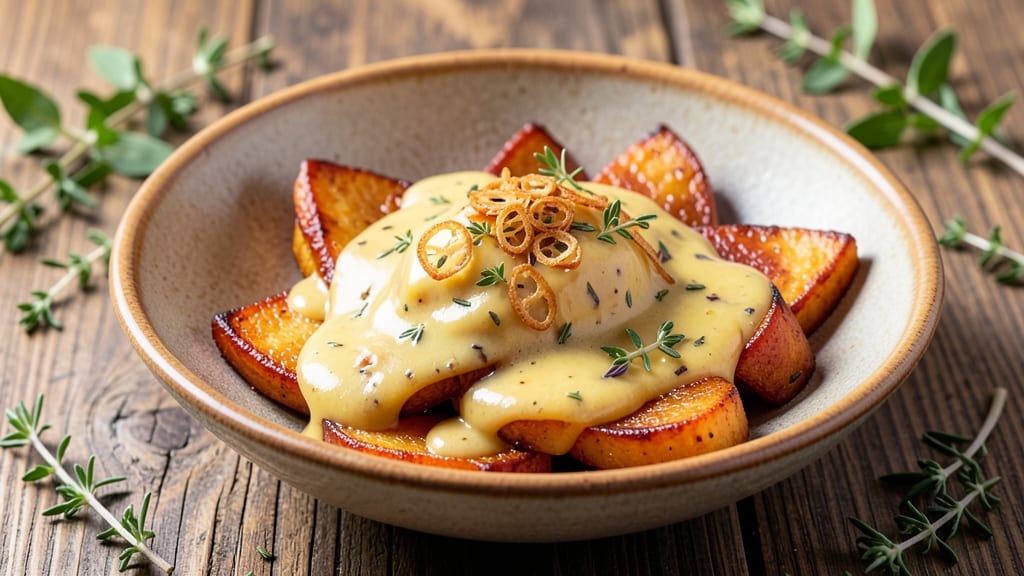
This yam and egg sauce recipe transforms humble ingredients into a velvety, sweet-savory masterpiece that elevates everything from rice to grilled meats. The secret lies in slow-cooked yams and perfectly emulsified eggs, creating a silky texture that clings beautifully to any dish.
I developed this recipe after craving a sauce that balanced natural sweetness with rich umami depth—something versatile enough for weeknight dinners or special occasions.
The foundation begins with slow-cooked yams, their natural sugars caramelizing into a deep, honeyed base. Egg yolks, tempered gently, bind the sauce into a luscious consistency that’s neither too thick nor too thin.
Fresh garlic, a touch of soy sauce, and aromatic herbs like thyme or bay leaf round out the flavors, ensuring each spoonful delivers both comfort and sophistication.
This sauce is vegetarian-friendly and requires just 15 minutes of active prep, with most of the work happening while you cook your main dish.
What makes this sauce truly special is its adaptability. Drizzle it over steamed rice for an instant flavor boost, toss it with tofu or grilled chicken for a sticky glaze, or serve it as a dipping sauce for spring rolls.
The silky texture and balanced sweetness make it a crowd-pleaser, while the subtle earthiness of the yams adds depth that store-bought sauces simply can’t match. Once you try it, you’ll never reach for jarred sauces again.
The best part? This sauce stores beautifully in the refrigerator for up to 5 days, making it perfect for meal prep. Simply reheat gently on the stove, stirring constantly to maintain that creamy perfection.
Whether you’re cooking for one or feeding a crowd, this yam and egg sauce will become your go-to secret weapon for adding restaurant-quality flavor to any dish.
Ingredients for yam and egg sauce
Eight simple ingredients transform into the silkiest sauce you'll ever make.
| Ingredient | Amount | Notes |
|---|---|---|
| Yams 🍠 | 2 lbs | Medium size, peeled and cubed |
| Large Egg Yolks 🥚 | 6 whole | Fresh, room temperature |
| Garlic Cloves 🧄 | 4 cloves | Minced for aromatic base |
| Light Soy Sauce 🍶 | ¼ cup | For umami depth |
| Vegetable Oil 🫒 | ¼ cup | Neutral flavor preferred |
| Fresh Thyme Leaves 🌿 | 1 tbsp | Or 1 tsp dried thyme |
| Bay Leaves 🍃 | 2 whole | For subtle earthy notes |
| Granulated Sugar 🍚 | ⅛ cup | Adjust to taste |
| Ground Black Pepper 🌶️ | ½ tsp | Freshly cracked |
| Salt 🧂 | 1 tsp | Kosher or sea salt |
Yams are the star here—look for bright orange ones with firm skin, no soft spots. Whole Foods or Trader Joe's usually carry the sweetest varieties. Peel them first, then cube into even pieces so they cook uniformly. The yolks need to be fresh and at room temperature—crack them gently into a separate bowl before adding to the sauce to avoid scrambling. For the garlic, peel and mince it finely—you want it to dissolve into the sauce rather than remain as chunks. The thyme and bay leaves add depth without overpowering the natural sweetness of the yams.
No fresh thyme? Dried works at one-third the amount. Short on soy sauce? Coconut aminos or tamari are great substitutes—they still deliver that umami punch. Want to reduce sugar? Try maple syrup or date syrup instead, but start with half the amount. The vegetable oil is just for cooking—it won't taste like oil in the final sauce. If you're making this ahead, strain out the bay leaves before storing, but leave them in during cooking for maximum flavor infusion. The pepper should be freshly cracked—pre-ground loses its punch quickly.
This sauce keeps beautifully in an airtight container in the fridge for 5 days, though it tastes even better the next day as flavors meld. For longer storage, freeze in ice cube trays—just thaw and reheat gently. When reheating, go low and slow on the stove, stirring constantly to prevent curdling. I always make a double batch—one for immediate use and one to freeze for lazy weeknights. The sauce thickens as it cools, so a splash of warm water thins it back out if needed.
Why You'll Love This Recipe
- One-Pot Magic: I swear by this recipe when I’m too tired to wash another pan. Peel and slice yams, fry them in oil until tender, then toss in the yolks and soy sauce—boom. That’s it. No separate sauces, no messy cleanup.
- Garlic-Yolk Bomb: Between us, the moment those yolks thicken into a glossy, garlicky sauce is chef’s kiss. The soy sauce cuts through the richness while the garlic lingers—like a hug for your taste buds, but better.
- Leftover Lifesaver: This sauce keeps for days in the fridge, and it’s the star of my lazy lunches. Drizzle it over rice, stir into congee, or slather it on toast—it’s my go-to when I’ve got nothing but eggs and yams left.
- Budget Stretch: Yams are cheap, eggs are cheap, and a few cloves of garlic won’t break the bank. Honestly, this recipe feeds four for under $5, and the flavor makes it feel like a fancy dinner. (Yes, even on a Tuesday night.)
Step-by-step instructions for yam and egg sauce
This sweet-savory sauce comes together beautifully with simple technique.
Sauté Aromatics in Vegetable Oil
Heat the 0.25 cup vegetable oil in a medium saucepan over medium heat. Add the 4 cloves minced garlic cloves and cook for 1 minute until fragrant—you'll smell that unmistakable garlic aroma. Then add the 2 whole bay leaves and 1 tbsp fresh thyme leaves. Stir gently for 30 seconds until the thyme releases its piney scent.
Here's the thing—don't let the garlic burn. Watch closely as it transforms from pale to golden. If it starts to darken too quickly, reduce heat to medium-low. These aromatics form the flavor foundation, so take your time with this step. The oil should shimmer but not smoke.
Cook Yams Until Tender and Caramelized
Add the 2 lbs peeled and cubed yams to the pan and stir to coat them in the aromatic oil. Increase heat to medium-high and cook for 8-10 minutes, stirring occasionally, until the yams begin to soften. You'll notice they start releasing moisture and developing a light golden crust on the edges.
After about 5 minutes, sprinkle the 1 tsp salt and 0.5 tsp ground black pepper evenly over the yams. Stir well to distribute. The yams should be tender enough to pierce easily with a fork but still hold their shape. If they're browning too quickly, reduce heat slightly to prevent burning.
Build the Sweet-Savory Base
Pour in the 0.25 cup light soy sauce and 0.125 cup granulated sugar, stirring constantly to combine. The mixture will bubble gently as the sugar begins to dissolve. Let it simmer for 5-7 minutes until the yams are completely tender and the sauce has thickened slightly. You're looking for a consistency where the sauce coats the back of a spoon.
Taste the sauce at this point—it should balance sweetness and umami. If you want more depth, you can add another ½ teaspoon of soy sauce or ¼ teaspoon more sugar. The yams should be fork-tender with just a hint of resistance, indicating they've absorbed the flavors perfectly.
Temper and Incorporate Egg Yolks
Remove the saucepan from heat and let it cool slightly for 2-3 minutes—this prevents the eggs from scrambling. In a separate bowl, whisk the 6 whole large egg yolks until smooth. Slowly pour about ½ cup of the hot yam mixture into the yolks while whisking constantly. This tempering step is crucial—it gradually raises the eggs' temperature so they cook gently.
Once the egg mixture is warmed through (it should thicken slightly), pour it back into the saucepan with the yams. Stir constantly over low heat for 2-3 minutes until the sauce reaches 160°F and thickens to a velvety consistency. You'll see it transform from a thin liquid to a glossy, silky sauce that coats the yams beautifully.
Finish and Serve Warm
Remove the sauce from heat immediately once it reaches the desired thickness. The sauce should be smooth, glossy, and cling to the yams without being gluey. If it's too thick, whisk in 1-2 tablespoons of hot water to reach your preferred consistency. Taste and adjust seasoning with more salt or sugar if needed.
This sauce is best served immediately over rice, noodles, or as a dipping sauce for grilled meats. The combination of sweet yams, rich eggs, and savory soy creates a perfect balance that works equally well as a main dish or sauce. Store any leftovers in an airtight container in the refrigerator for up to 3 days, but I promise you'll want to use it all right away!
Pro Tips For Making Yam And Egg Sauce
- STEAM YAMS FIRST: Peel and cube the yams before steaming—about 15 minutes until fork-tender—then mash them while still hot. Cold yams turn gluey when mixed with eggs, and nobody wants a gummy sauce. I learned this the hard way after scraping a chunky mess off my plate.
- MINCE GARLIC FINE: Use a knife to press and mince garlic into a paste, not just chop it. This keeps the sauce smooth and prevents bitter garlic bites lurking in every spoonful. (Yes, even if you’re impatient like me—just don’t rush the knife work.)
- LOW HEAT FOR EGGS: Warm the yam-egg mixture over the lowest possible heat, stirring constantly. Yolks scramble faster than you think, and burnt egg flavor ruins the dish. If it’s not gently simmering, you’re doing it wrong.
- SALT THE YAMS: Add a pinch of salt to the steaming water—it seasons the yams from the start and balances the soy sauce later. Skipping this means your sauce tastes flat, no matter how much soy you add. (Your future self will notice.)
Dietary considerations for this yam and egg sauce
Vegetarian-Friendly Adaptations
This sauce is naturally vegetarian, but if you're avoiding eggs entirely, replace the 6 egg yolks with ½ cup silken tofu blended smooth or ¼ cup aquafaba (chickpea brine) for a plant-based binder.
The texture will be slightly lighter but still silky. For extra richness, add 1 tbsp nutritional yeast to mimic the eggy depth. 🌱
Gluten-Free Considerations
Standard soy sauce contains gluten, so for a gluten-free version, swap the 0.25 cup light soy sauce with 0.25 cup tamari or coconut aminos. Both provide the same umami punch without gluten.
Always check labels—some tamari brands still contain wheat. The rest of the recipe remains unchanged, making it safe for gluten-sensitive diets. ✨
Dairy-Free & Allergen Notes
This sauce is inherently dairy-free, but if you're avoiding eggs, see the vegetarian adaptations above. For nut allergies, ensure your vegetable oil is nut-free (many brands process in shared facilities).
The recipe naturally contains no top allergens beyond eggs, making it a safe bet for most dietary restrictions. Always double-check ingredient labels for cross-contamination warnings. 🧂
Low-Sugar Modifications
To reduce sugar, cut the 0.125 cup granulated sugar in half and replace with 0.06 cup maple syrup or date syrup. The natural sweetness of the yams will still shine through, but with fewer refined carbs.
For added depth, increase the soy sauce or tamari by 1 tsp to compensate for the reduced sweetness. Taste as you go—yams vary in natural sweetness! 🍠
Protein Pairing Flexibility
While this sauce is vegetarian, it pairs beautifully with plant-based proteins. Toss it with grilled tofu or tempeh for a sticky, savory glaze, or drizzle over lentils or chickpeas for a hearty bowl.
The sauce's sweet-savory balance complements the earthiness of these proteins perfectly. For meat lovers, it works wonders with grilled chicken or pork too! 🍗
Nutrition facts
Frequently asked questions
Can I use sweet potatoes instead of yams?
Sweet potatoes will work, but the flavor and texture will differ slightly. Yams have a creamier, slightly drier texture and a sweeter, earthier taste that caramelizes beautifully. Sweet potatoes are moister and less sweet, so you may need to add an extra 1-2 tablespoons of sugar to achieve the same balance. For best results, stick with yams for that authentic, velvety consistency.
Why did my sauce curdle when adding the egg yolks?
Curling happens when the eggs cook too quickly. To prevent this, always temper the yolks by slowly mixing in a small amount of hot sauce while whisking constantly. Also, ensure the sauce isn't too hot when adding the eggs—let it cool slightly for 2-3 minutes off the heat first. If it starts to curdle, immediately remove from heat and whisk in 1 tablespoon of cold water to reset the emulsion.
How can I make this sauce thicker or thinner?
For a thicker sauce, simmer it uncovered for 2-3 extra minutes to reduce the liquid. If it's too thick, whisk in 1-2 tablespoons of hot water or vegetable broth to reach your desired consistency. The sauce should coat the back of a spoon but remain pourable. For extra richness, you can also add 1 tablespoon of cornstarch mixed with water and simmer until thickened.
Can I prepare this sauce ahead of time?
This sauce actually tastes better the next day as the flavors meld. Store it in an airtight container in the refrigerator for up to 5 days. When reheating, warm it gently on low heat, stirring constantly to prevent separation. If it thickens too much, thin it with a splash of warm water. For longer storage, freeze in ice cube trays—just thaw and reheat as needed.
What are the best ways to use this sauce?
This versatile sauce works beautifully over steamed rice or noodles, as a dipping sauce for spring rolls or dumplings, or as a glaze for grilled meats or tofu. For extra flavor, toss cooked proteins in the sauce and let them sit for 10 minutes to absorb the flavors. It also makes a fantastic topping for pancakes or waffles for a sweet-savory breakfast twist.