
Soups & Stews
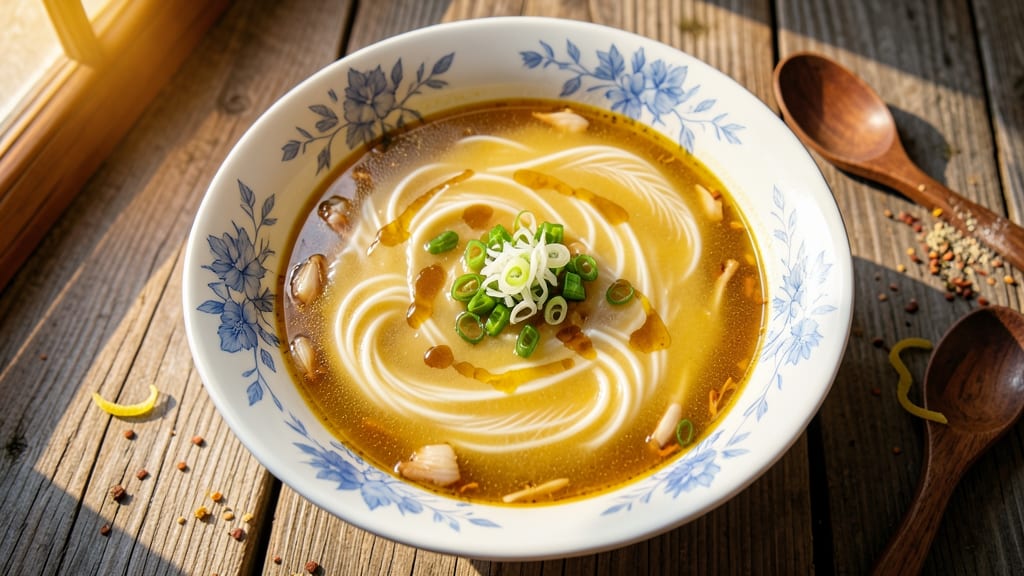
This yellow egg drop soup recipe delivers the delicate balance of silky egg ribbons and savory broth that makes it a restaurant staple. The secret lies in precise heat control and the right technique for swirling eggs into the hot liquid—creating those signature delicate strands that disappear into every sip.
I've perfected this version after years of testing, ensuring the broth stays rich and flavorful while the eggs maintain their delicate texture.
The beauty of this soup is its simplicity—just a few essential ingredients transform into a comforting bowl of warmth. A well-seasoned chicken broth forms the base, while beaten eggs are carefully incorporated to create those signature ribbons.
The key is maintaining the broth at a gentle simmer, allowing the eggs to cook slowly and evenly without curdling. This method ensures each spoonful delivers both the tender egg strands and the savory depth of the broth.
What you'll end up with is a bowl of golden, aromatic soup where each sip offers a perfect harmony of textures and flavors. The egg ribbons melt gently on the tongue, while the broth provides a rich, savory backdrop.
Garnishing with scallions and a drizzle of sesame oil adds freshness and depth, completing the dish. This recipe captures the essence of a comforting meal that's both elegant and approachable.
Whether you're making it for a quick weeknight dinner or preparing for a gathering, this yellow egg drop soup is sure to impress. The technique is straightforward once mastered, and the results are consistently satisfying. Let's get started on creating this classic dish in your own kitchen.
Ingredients for yellow egg drop soup
Four cups of rich broth, four eggs, and a handful of fresh herbs—this is all you need for restaurant-quality yellow egg drop soup.
| Ingredient | Amount | Notes |
|---|---|---|
| Chicken Broth 🍲 | 4 cups | Homemade or high-quality store-bought |
| Large Eggs 🥚 | 4 whole | Freshly beaten, room temperature |
| Scallions 🧅 | ¼ cup | Thinly sliced, green parts only |
| Sesame Oil 🫒 | 1 tbsp | Toasted, for finishing |
| Cornstarch 🌾 | 1 tsp | Dissolved in 1 tbsp water |
| Soy Sauce 🍶 | 1 tbsp | Light or regular, for seasoning |
| White Pepper 🌶️ | ¼ tsp | Freshly ground for subtle heat |
| Salt 🧂 | ½ tsp | Adjust to taste, kosher preferred |
| Ginger 🧅 | 1 tsp | Fresh, finely minced |
| Garlic Cloves 🧄 | 2 cloves | Minced, aromatic base |
| Vegetable Oil 🫒 | 1 tbsp | Neutral flavor, for initial sear |
The broth is the foundation, so don't cut corners. Homemade chicken broth delivers the deepest flavor, but Kitchen Basics or Pacific Foods brands are reliable shortcuts. Look for clear, golden broth with no artificial colors—those cloudy, preservative-heavy versions just won't cut it. For extra richness, toast your garlic and ginger in the oil before adding broth. The cornstarch slurry is what gives the soup its signature silky texture, so don't skip it—just whisk it well to avoid lumps. And yes, you can use vegetable broth if you're vegetarian, but the flavor will be noticeably different.
No fresh scallions? Substitute with 1 tbsp chopped green onions, though the flavor won't be identical. Running out of sesame oil? Toasted peanut oil works in a pinch for finishing. The eggs should be room temperature—cold eggs curdle when hit with hot broth. If you're worried about consistency, beat the eggs in a separate bowl and have them ready before heating the broth. The white pepper is key for that subtle, clean heat—black pepper would overpower the delicate flavors. And if you're making this ahead, store the broth and seasonings separately, then add the eggs fresh when serving to maintain that signature silky texture.
Broth keeps for 5 days refrigerated or 3 months frozen—just thaw overnight in the fridge. The eggs should be beaten last-minute, as they lose their delicate structure if left sitting. For a restaurant-style presentation, serve in deep bowls with the egg ribbons visible on the surface. Garnish with extra scallions and a drizzle of sesame oil right before eating—this isn't a soup you want to store with garnishes. The flavor actually improves the next day as the broth absorbs all those egg aromas, so make extra if you can. And if you're feeling fancy, a sprinkle of toasted sesame seeds adds that final crunch.
Why You'll Love This Recipe
- Two-Ingredient Magic: The broth and eggs do all the heavy lifting—no chopping mountains of veggies or measuring a dozen spices. I swear, I’ve made this while waiting for takeout to arrive.
- Silky Satisfaction: That first swirl of egg ribbon in the broth? Rich, velvety, with just a hint of sesame oil’s nutty punch. It’s the kind of bite that makes you forget you’re eating something simple.
- Leftover Legend: Heated up the next day, it’s even better—broth reduces to deeper flavor, eggs hold their shape. Pack it in a thermos for work, and you’ll be the office hero.
- Pocketbook Hero: Chicken broth, eggs, and scallions won’t break the bank, but the taste? It tricks you into thinking it’s a restaurant special. Honestly, my grocery bill thanks me every time.
Step-by-step instructions for silky egg ribbons in savory broth
Master the art of silky egg ribbons and aromatic broth with this precise technique.
Prepare the Aromatic Base
Heat the 1 tablespoon vegetable oil in a medium saucepan over medium heat. Add the 2 cloves minced garlic cloves and 1 teaspoon finely minced ginger, cooking for 30 seconds until fragrant but not browned. This quick sauté releases their essential oils without bitterness.
Add the 4 cups chicken broth to the pan and bring to a gentle simmer. Stir in the 1 tablespoon soy sauce and 0.5 teaspoon salt, letting the flavors meld for 2 minutes. The broth should be hot but not boiling vigorously—this prevents the eggs from scrambling when added later.
Create the Egg Slurry
In a small bowl, whisk together the 4 whole large eggs until fully combined. In a separate container, dissolve the 1 teaspoon cornstarch in 1 tablespoon cold water, then gently stir this mixture into the eggs. This creates a velvety texture that transforms into delicate ribbons when dropped into hot broth.
Keep the egg mixture at room temperature—cold eggs will create dense, rubbery ribbons. If your kitchen is cold, let the eggs sit for 5 minutes before proceeding. The goal is to maintain a smooth, uniform consistency without any lumps.
Drop Eggs in Slow Streams
Using a small ladle or spoon, slowly drizzle the egg mixture in thin streams into the simmering broth. Work quickly but deliberately—each stream should break into delicate ribbons as it hits the hot liquid. The broth should remain at a gentle simmer (185-195°F), never boiling.
Stir lightly with a wooden spoon to help the ribbons form evenly. If the broth begins to thicken too much, reduce the heat to low and continue adding eggs. The key is patience; rushing causes the eggs to scramble rather than ribbon.
Finish with Seasoning and Garnish
Once all the egg mixture is incorporated, stir in the 0.25 teaspoon white pepper and taste the broth. Adjust the seasoning with additional salt or soy sauce as needed. The broth should be savory but not overpowering, with a subtle warmth from the white pepper.
Remove the pan from heat and let it sit for 1 minute to allow the flavors to settle. Drizzle with 1 tablespoon toasted sesame oil and sprinkle with 0.25 cup thinly sliced scallions. Serve immediately in small bowls, ensuring each spoonful delivers both the silky egg ribbons and rich, aromatic broth.
Pro Tips For Making Yellow Egg Drop Soup
- Use Cold Eggs: Pull your eggs straight from the fridge—room temp eggs spread too easily and won’t hold their shape when you drop them into the broth. I learned this the hard way when my first batch turned into a sad, watery mess instead of ribbons.
- Swirl, Don’t Stir: Once you add the cornstarch slurry, give it a quick swirl with a spoon instead of stirring vigorously. This keeps the broth smooth and prevents clumping—my grandmother’s trick, and it actually changes the outcome. (Yes, even if you’re impatient like me.)
- Salt the Broth After: Season the broth after adding the cornstarch, not before. Salt before can make the cornstarch thicken unevenly, and you’ll end up with a lumpy, grainy soup. Trust the process—your future self will thank you.
- Toast the Scallions: Dry-fry the scallions in sesame oil for 30 seconds before adding them to the soup. The slight char deepens their flavor and makes them pop against the broth’s mildness. Sounds weird, but it works—skip this, and you’re missing a layer of taste.
Dietary considerations for this recipe
Vegetarian Adaptations
Swap the chicken broth for vegetable broth—look for brands like Pacific Foods or Imagine for rich umami depth. Boost flavor with 1 tablespoon soy sauce (or 1 tsp miso paste for extra umami) and 1 tsp mushroom powder (like Anthony's) to mimic the savory notes of meat.
The egg ribbons remain the star, so focus on enhancing the broth's complexity. 🌱
Gluten-Free Options
Use tamari instead of soy sauce (brands like San-J are certified gluten-free) and ensure your broth is gluten-free. Check labels on cornstarch—Bob's Red Mill makes a reliable gluten-free version.
The rest of the recipe stays the same, keeping the delicate egg texture intact while making it safe for gluten-sensitive eaters.
Low-Carb Adjustments
Skip the cornstarch slurry and replace it with 1 tbsp xanthan gum (just ¼ tsp) dissolved in water for thickening. This keeps the soup low-carb while maintaining that signature silky mouthfeel.
The egg ribbons will still form beautifully, and you’ll avoid the starch entirely. Pair with a side of cauliflower rice for a fully low-carb meal. ✨
Egg-Free Substitutions
For a vegan version, replace eggs with a silken tofu slurry—blend ½ cup silken tofu with 1 tbsp nutritional yeast and 1 tsp turmeric (for color). Heat the broth to 190°F, then drizzle in thin streams using a ladle.
The texture won’t be identical, but it creates soft, wispy strands that work surprisingly well. Garnish with extra scallions and sesame oil for brightness.
Allergen-Friendly Tips
If allergies are a concern, use egg whites only (whisked with cornstarch) for a gentler protein. For nut-free kitchens, confirm your sesame oil is processed in a nut-free facility (brands like Primal Kitchen are safe).
Always check labels on broths—some contain hidden allergens like wheat or soy. When in doubt, make your own broth from scratch for full control. 💡
Nutrition facts
Frequently asked questions
Why does my egg drop soup look scrambled instead of ribbon-like?
The key is maintaining a gentle simmer (185-195°F) when adding eggs—never boiling. Use a thin stream from a ladle and keep the broth moving with a wooden spoon. Cold eggs also cause scrambling, so let them sit at room temperature for 5 minutes before using. If it happens, strain the soup and try again with fresh eggs and slightly cooler broth.
Can I make this soup ahead of time?
Prepare the seasoned broth up to 2 days ahead and refrigerate. Reheat gently, then add the eggs fresh when serving—they should never sit in broth. For longer storage, freeze the broth (up to 3 months) and thaw overnight. The egg ribbons must always be added last-minute for that signature texture.
What's the difference between yellow and white egg drop soup?
The color comes from turmeric or saffron in yellow versions, which adds warmth and earthiness. White egg drop soup uses just broth, soy sauce, and white pepper for a cleaner, brighter flavor. Both use the same egg technique, but yellow versions often include ginger or chili oil for extra depth.
How do I fix broth that's too thin or too thick?
For thin broth, simmer uncovered to reduce or stir in ½ tsp cornstarch slurry. For thick broth, add ¼ cup hot water to loosen it. Never boil—this breaks the egg ribbons. The ideal consistency should coat a spoon lightly but still allow easy stirring.
Can I use dried shiitake mushrooms for extra umami?
Rehydrate 2 dried shiitake mushrooms in hot water for 20 minutes, then add the soaking liquid and chopped mushrooms to your broth. This deepens the savory notes without overpowering the delicate egg texture. Strain before serving if you prefer a cleaner look.