
Main Courses
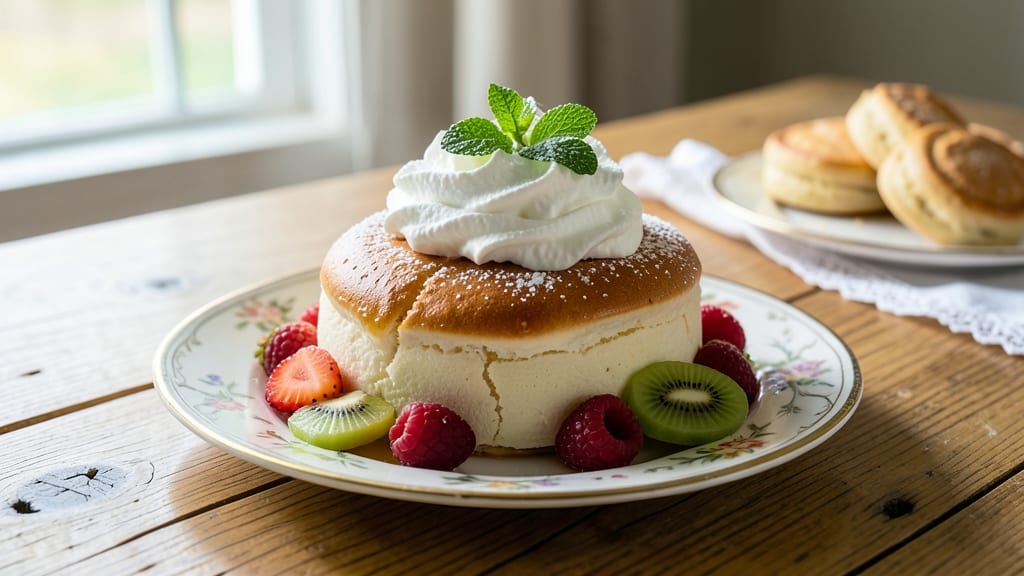
Mary Berry's 6-egg pavlova delivers that perfect balance of crispy shell and light-as-air meringue—the kind that holds its shape while still feeling delicate enough to melt in your mouth. ✨ The secret lies in baking at a low, steady heat and ensuring your bowl is completely grease-free, just as Mary herself recommends.
I've baked countless pavlovas, and this method never fails to impress.
What makes this recipe special is the technique: beating the egg whites to stiff peaks before gently folding in sugar, then baking at 250°F for 1 hour and 20 minutes. The slow bake creates that signature crispy exterior while keeping the inside soft and marshmallow-like.
Cooling it upside-down on a wire rack is equally crucial—it prevents the meringue from absorbing moisture and collapsing.
Once cooled, you'll top it with whipped cream and fresh fruit—strawberries, kiwi, or passionfruit work beautifully. The contrast between the crispy base, creamy topping, and juicy fruit creates a dessert that's both elegant and comforting.
This is the pavlova I reach for when I want something impressive yet simple to make.
Perfect for summer gatherings or special occasions, this recipe scales easily for crowds. The key is patience—rushing the cooling or topping too soon ruins the texture. But when done right, every bite is pure magic. Let's get started!
Ingredients for 6 egg pavlova recipe mary berry
Six eggs and a few clever tricks—this is how Mary Berry makes her legendary pavlova.
| Ingredient | Amount | Notes |
|---|---|---|
| Large Egg Whites 🥚 | 6 whole | Room temperature for best volume |
| Granulated Sugar 🍚 | 1 ½ cups | Superfine preferred for smooth texture |
| Cornstarch 🌾 | 1 tbsp | Lightly toasted for extra stability |
| White Vinegar 🍶 | 1 tsp | For extra stability and shine |
| Heavy Whipping Cream 🥛 | 2 cups | Cold and full-fat for best whipping |
| Powdered Sugar 🍚 | 1 cup | For sweetening whipped cream |
| Vanilla Extract 🍯 | 1 tsp | Pure vanilla for authentic flavor |
| Fresh Strawberries 🍓 | 2 cups | Hulled and sliced for topping |
| Fresh Kiwi 🥝 | 2 whole | Peeled and sliced for vibrant color |
| Unsalted Butter 🧈 | ¼ cup | Melted for greasing bowl |
| Diamond Crystal Kosher Salt 🧂 | ¼ tsp | Fine grain for delicate seasoning |
The eggs are non-negotiable here—room temperature makes all the difference for volume. Grangemount or Petershill eggs (if you're in the UK) have thicker whites, but any large eggs work. For the sugar, superfine dissolves better, but regular granulated works if you pulse it in a food processor. The bowl? Grease-free is critical—use melted butter, then wipe with a damp paper towel. I always bake mine on a parchment-lined tray for easy transfer. And don't forget the wire rack—cooling upside-down is what gives it that signature crisp.
No cornstarch? Arrowroot powder works 1:1, but it's worth tracking down for that extra stability. The vinegar might seem odd, but it's what gives Mary Berry's pavlova that signature glossy finish. For the fruit, strawberries and kiwi are classic, but passionfruit or mango work beautifully too. The whipped cream? Cold bowl and beaters are key—don't skip this. And if you're feeling fancy, add a sprinkle of edible gold leaf before baking for that restaurant-worthy touch. The pavlova can be assembled up to 4 hours ahead, which makes it perfect for dinner parties.
This keeps 3 days in an airtight container at room temperature, though it's best enjoyed fresh. Store the meringue base and toppings separately—assemble just before serving to prevent sogginess. For leftovers, reheat meringue at 300°F for 5 minutes to crisp it back up. The whipped cream? Make it fresh each time—it's the only topping that truly shines. And if you're serving a crowd, double the recipe—this scales beautifully for 12 servings. Just remember, patience is key with pavlovas. No rushing the cooling, no skipping the vinegar, and always use a stand mixer for those egg whites.
Why You'll Love This Recipe
- No-Fuss Technique: I swear by the vinegar trick—just a splash while whipping the egg whites—and it cuts the guesswork. No overmixing, no collapsing meringue, just that perfect crunch every time.
- Mary Berry’s Crunch: That sugar-cornstarch dusting? It’s magic. The meringue holds its shape like a dream, and the cream topping? Light, fluffy, and exactly sweet enough—no cloying aftertaste here.
- Weekend or Weeknight: Make it ahead for a dinner party or whip it up last-minute for a lazy Sunday. The base keeps for days, and the cream? Add it fresh when you’re ready to serve—zero stress.
- Pantry Staple Power: Six eggs, sugar, vinegar—ingredients you already own. No specialty gear, no obscure swaps. Honestly, it’s the kind of recipe that makes me feel like I’m cheating the system.
Step-by-step instructions for perfect pavlova
Master Mary Berry's signature technique for a pavlova with a crisp shell and cloud-like center.
🍳 Step 1: Prepare the Meringue Base
Preheat your oven to 250°F with the rack positioned in the center. Line a baking sheet with parchment paper and draw a 7-inch circle lightly in pencil—this will be your guide. In a spotlessly clean, grease-free mixing bowl, combine the 6 whole Large Egg Whites and the 0.25 tsp Diamond Crystal Kosher Salt.
Using an electric mixer, whip the egg whites on medium speed for 2 minutes until soft peaks form. Gradually add the 1.5 cups Granulated Sugar and the 1 tbsp Cornstarch, mixing on high speed for 8-10 minutes until the meringue forms stiff, glossy peaks that hold their shape when the whisk is lifted. The bowl should feel cool to the touch—this indicates proper aeration.
Here's the thing—don't rush this step. I've found that under-whipped meringue collapses in the oven, while over-whipped meringue becomes tough. You'll know it's perfect when you can turn the bowl upside down and have the meringue hold its shape without sliding out.
👨🍳 Step 2: Shape and Bake the Crisp Shell
Transfer the meringue to a piping bag fitted with a large round tip. Pipe the meringue onto the parchment circle, building up the edges slightly to create that signature pavlova rim. Use the back of a spoon to gently shape the top into a smooth dome with a slight indentation in the center—this helps it expand evenly.
Bake for 1 hour 15 minutes, then carefully reduce the oven temperature to 200°F and bake for another 1 hour 30 minutes. The key here is patience—the longer low-temperature bake creates that crisp exterior while keeping the inside light. You'll know it's done when the outside is deep golden brown and the center feels firm to gentle touch.
I always let the pavlova cool completely in the oven with the door slightly ajar—this prevents condensation from forming on the underside, which would make it soggy. Don't be tempted to speed this up by turning off the oven completely; gradual cooling maintains that perfect texture.
🥘 Step 3: Prepare the Whipped Cream Filling
While the pavlova bakes, prepare the filling by whipping the 2 cups Heavy Whipping Cream in a chilled bowl until soft peaks form. Gradually add the 1 cup Powdered Sugar and the 1 tsp Vanilla Extract, continuing to whip until the cream holds stiff peaks that stand straight up when the whisk is lifted. The cream should be thick enough to hold its shape when spooned.
For extra stability, I like to add the 1 tsp White Vinegar at this stage—it helps create a glossy finish and prevents the cream from weeping. Fold in any reserved meringue shavings from the baking process for that authentic pavlova look. Keep the whipped cream chilled until ready to use.
🍽️ Step 4: Assemble and Garnish
Once the pavlova is completely cool, carefully transfer it to a serving plate. Using an offset spatula, spread the whipped cream evenly over the top and down the sides, filling the center indentation completely. The cream should be smooth and glossy—if it looks lumpy, give it one final whip before spreading.
Top with the 2 cups Fresh Strawberries and 2 whole Fresh Kiwi, sliced into even rounds. I arrange them in concentric circles for visual appeal, with the kiwi slices forming the outer ring and strawberries in the center. The vibrant colors make this dessert look as good as it tastes.
For that final touch, I melt the 0.25 cup Unsalted Butter and brush it lightly over the meringue shell—this enhances the crispness and adds a subtle richness. Serve immediately while the cream is still fluffy and the fruit is fresh. The contrast of crisp shell, light meringue, and creamy filling makes every bite magical.
Pro Tips For Making 6 Egg Pavlova Recipe Mary Berry
- Whip Egg Whites Cold: Grab a metal bowl and place it in the fridge for 10 minutes before starting—cold surfaces stabilize the whites better. I learned this the hard way after my meringue collapsed mid-whip, and now I never skip it, even when I’m in a rush.
- Sift That Sugar: Don’t just dump the sugar—sift it through a fine-mesh sieve with the cornstarch first. This prevents clumping and ensures the meringue blends smoothly. My grandmother swore by this, and she was right: lumpy sugar = uneven texture.
- Bake Low and Slow: Preheat the oven to 250°F (120°C) and bake the pavlova for 1 hour, not the 30 minutes some recipes suggest. Mary Berry’s method relies on slow, gentle drying to avoid cracking. Trust the process—your future self will thank you.
- Whip Cream Last: Fold the heavy whipping cream into the meringue just before serving—it melts faster than you think. If you whip it ahead, you’ll end up with a soggy base. Sounds weird, but it works: the contrast between crisp meringue and cold cream is what makes this dessert shine.
Flavor customization for 6 egg pavlova recipe mary berry
Citrus Zest Twist
Brighten up your pavlova with 1 tablespoon lemon zest or orange zest folded into the meringue base. The citrus oils add a refreshing tang that cuts through the sweetness beautifully.
I like to use Eureka lemons from the market—they're juicier and more aromatic. For extra zing, add 1 teaspoon fresh lemon juice to the whipped cream filling. 💛
Spiced Vanilla Cream
Infuse your whipped cream with warm spices for a sophisticated twist. Add ½ teaspoon ground cinnamon and ¼ teaspoon cardamom to the powdered sugar before whipping.
For a boozy touch, replace 1 tablespoon of the heavy cream with vanilla-infused vodka (simmer 1 cup vodka with 2 vanilla beans for 10 minutes, then cool). This works especially well with tropical fruit toppings like mango.
Chocolate-Dipped Base
For chocolate lovers, dip the bottom half of your cooled pavlova into melted dark chocolate (I use 70% Valrhona for depth). Let the excess drip off, then place it back on the serving plate before adding whipped cream.
The chocolate adds a rich contrast that balances the light meringue. Top with raspberries and a sprinkle of flaky sea salt for a modern twist.
Coffee-Infused Meringue
Swap 1 tablespoon of the granulated sugar in the meringue for instant espresso powder (about 1 teaspoon). This creates a subtle coffee note that pairs perfectly with chocolate or caramel toppings.
For a stronger flavor, add 1 tablespoon cold brew concentrate to the whipped cream. The bitterness of the coffee enhances the sweetness of the fruit, making each bite more complex.
Tropical Fruit Fusion
Swap the traditional strawberries and kiwi for passionfruit pulp (about ½ cup) mixed into the whipped cream, plus sliced mango and pineapple. The tropical flavors create a vibrant, summery dessert.
For extra flair, add toasted coconut flakes around the base. This variation feels like a vacation in every bite—perfect for summer entertaining.
Salted Caramel Topping
For a decadent variation, drizzle homemade salted caramel (simmer 1 cup sugar with 6 tablespoons butter and ½ cup heavy cream, then finish with ½ teaspoon flaky salt) over the whipped cream.
The caramel's rich sweetness contrasts beautifully with the crisp meringue. Garnish with caramelized pecans for crunch. This version feels like a restaurant dessert but is surprisingly easy to make at home. 🌟
Nutrition facts
Frequently asked questions
Why does Mary Berry use 6 eggs for her pavlova?
Six eggs create the perfect balance for a 7-inch pavlova—enough structure for a crisp shell while keeping the center light and airy. Fewer eggs risk a fragile base, while more can make the meringue too dense. The extra whites also help stabilize the whipped cream topping.
Can I make this pavlova without cornstarch?
Yes, but it won't be as stable. Replace the 1 tbsp cornstarch with 1 tbsp arrowroot powder for similar results. If you're completely without either, reduce the sugar by 1 tbsp—the meringue will still work but may be slightly less crisp. The cornstarch helps create that signature glossy finish too.
How do I fix a pavlova that collapsed?
Most collapses happen from humidity or under-whipped egg whites. If it's slightly deflated, try reheating at 300°F for 5 minutes to crisp it up. For severe collapses, carefully rebuild the edges with extra meringue (whipped with 1 extra egg white and 1 tbsp sugar) and bake at 250°F for 10 minutes. Prevention is key—always cool completely before topping!
What's the best way to store a made-ahead pavlova?
Store the meringue base and toppings separately in an airtight container at room temperature for up to 3 days. Assemble just before serving to prevent sogginess. For longer storage, freeze the meringue base (without toppings) for up to 1 month—thaw at room temperature before adding fresh toppings.
Can I make this pavlova in a smaller or larger size?
For a 6-inch pavlova, use 5 eggs and reduce sugar to 1 cup. For a 9-inch version (serves 8-10), use 8 eggs and increase sugar to 2 cups. Keep the baking time proportional—larger pavlovas need 10-15 extra minutes at the lower temperature. Always adjust the bowl size accordingly!